

Personal injury lawyer leads can force law firms to face a brutal reality: generating quality PI leads has become exponentially harder.
Competition is fierce, prospects are scattered across multiple channels, and distinguishing genuine cases from tire-kickers drains resources fast.
We at On Point Legal Leads have worked with many personal injury attorneys, and we’ve seen firsthand how pursuing the right personal injury lawyer leads can dramatically improve case acquisition. This guide walks you through the exact tactics that separate thriving practices from those stuck in the lead generation grind.
Why Personal Injury Lawyer Leads Are So Valuable: The Struggle Is Real
The personal injury market reached $57.3 billion in 2024, yet most law firms operate at a fraction of their potential.
The problem isn’t market size. Rather, it’s saturation and inefficiency. According to the First Page Sage’s 2025 CPL report, personal injury lawyers now pay a cost per lead$183 to $442 depending on the channel, with Google Search Ads commanding the highest cost at $442. This creates a brutal math problem: if you’re paying $442 per lead and your average case settles for $30,000 at a 33% contingency, you need nearly four leads to break even on acquisition costs alone. Most firms throw money at multiple channels without filtering prospects, meaning they pay for unqualified traffic, expired leads, and cases that don’t fit their practice.
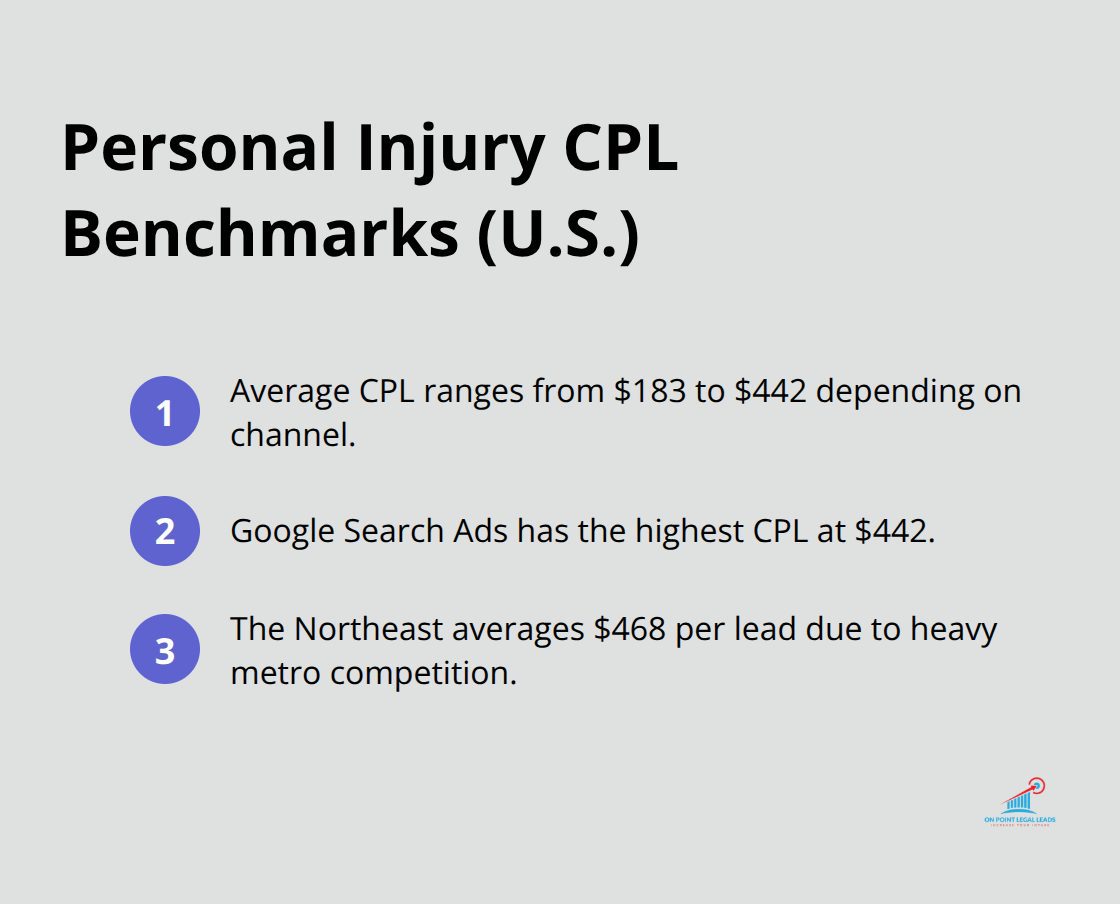
The Northeast region experiences the worst CPL pricing at $468 per lead due to competition in metro areas like New York and Boston, making it nearly impossible to scale profitably without serious qualification discipline.
The Cost of Unqualified Prospects When Generating Personal Injury Lawyer Leads
We engage in generating personal injury lawyer leads by advertising mostly on Meta. Hence, we also know that every unqualified lead that enters our intake pipeline costs us twice: once in acquisition fees and again in staff time.
That said, our team spends hours verifying accident details, confirming injury severity, checking insurance coverage, and determining whether the prospect has already retained counsel elsewhere. Many firms skip these steps, treating every inbound inquiry as equal. This approach wastes time. Our intake team spends hours on prospects with no insurance, injuries too minor for your practice, or cases already represented by competitors. Without multi-point screening before outreach, we’re burning resources on prospects destined to reject your representation. But sometimes, that’s what it takes to generate high-quality personal injury lawyer leads.
Personal Injury Lawyer Leads and the Multi-Channel Qualification Nightmare
The time drain accelerates when you operate across multiple channels for personal injury lawyer leads, like Google Ads, Facebook, SEO, Local Service Ads-because each channel delivers leads in different formats with varying quality standards. Consolidating and qualifying these personal injury leads across platforms demands systems most smaller firms don’t have. You manage spreadsheets, missed follow-ups, and duplicate entries across tools. Your intake team wastes energy reformatting data instead of talking to prospects. Each platform uses different intake forms, different data fields, and different delivery methods. One channel sends leads via email, another through a webhook, another through a phone call. Standardizing this chaos requires infrastructure investment that smaller practices can’t justify.
Why Exclusive Personal Injury Lawyer Leads Eliminate the Qualification Problem
Exclusive personal injury lawyer leads can solve this problem entirely because they’re vetted before delivery and never shared with competing attorneys. When you receive an exclusive lead, you’re the only attorney contacting that prospect. This means your conversion rate depends on your legal skill and client service, not on beating other firms to the phone. You don’t compete on speed-you compete on quality. Pre-qualified exclusive leads arrive with accident details already verified, injury severity confirmed, insurance coverage checked, and legal representation status confirmed. Your intake team connects only with prospects who meet your case acceptance criteria. This transforms lead generation from a volume game into a conversion game, where fewer, better-qualified prospects generate more cases and higher ROI than hundreds of unqualified inquiries.
How to Build a Lead Strategy That Actually Converts
Target Motor Vehicle Accident Cases for Maximum Profitability
Motor vehicle accident cases remain the most profitable entry point for personal injury practices, yet most firms treat all MVA leads identically. The reality is sharply different. A car accident case with verified soft tissue injury, clear liability, and active insurance coverage converts at rates three to five times higher than generic accident leads. Auto accident CPL sits at $391, significantly lower than medical malpractice at $512 or product liability at $476.
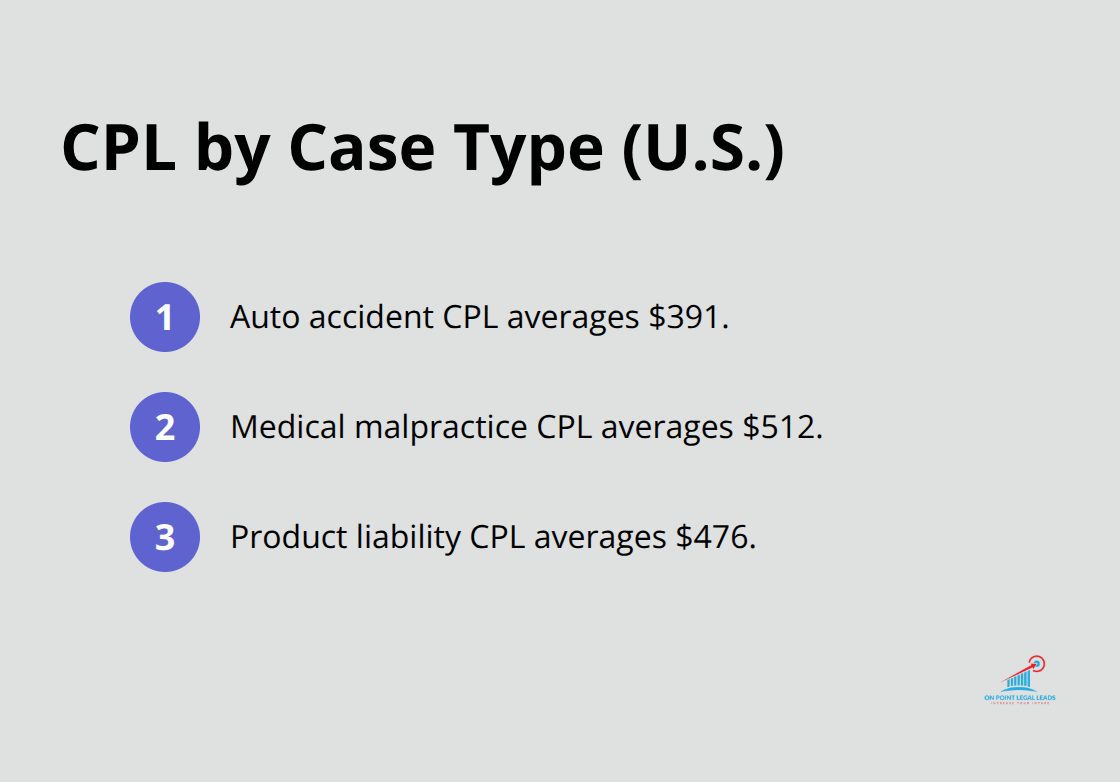
This means you should concentrate your acquisition budget on motor vehicle accident targeting rather than spreading resources thin across injury types your practice doesn’t prioritize.
Firms that specialize in specific case types-say, motorcycle accidents or commercial vehicle collisions-command higher conversion rates because prospects self-select into your expertise. Your messaging should reflect this specificity. Instead of promoting yourself as a general personal injury attorney, position your firm around the exact accident scenarios you handle best. This eliminates prospects with incompatible case types before they enter your pipeline.
Screen Personal Injury Lawyer Leads Before Your Team Makes Contact
Implementing rigorous lead screening before any outreach occurs transforms your intake efficiency. Pre-qualification determines whether a prospect meets your minimum case acceptance criteria: injury severity threshold, liability clarity, insurance availability, and absence of competing representation. Firms operating without this discipline waste forty to sixty percent of intake capacity on prospects destined for rejection. Hence, vetting personal injury lawyer leads by disqualifying users that submit incorrect answers on your landing page can help reduce labor expenses with your intake team. And we’ve also seen it can improve your cost per lead with digital marketing because it helps the algorithm train to attract higher quality personal injury lawyer leads.
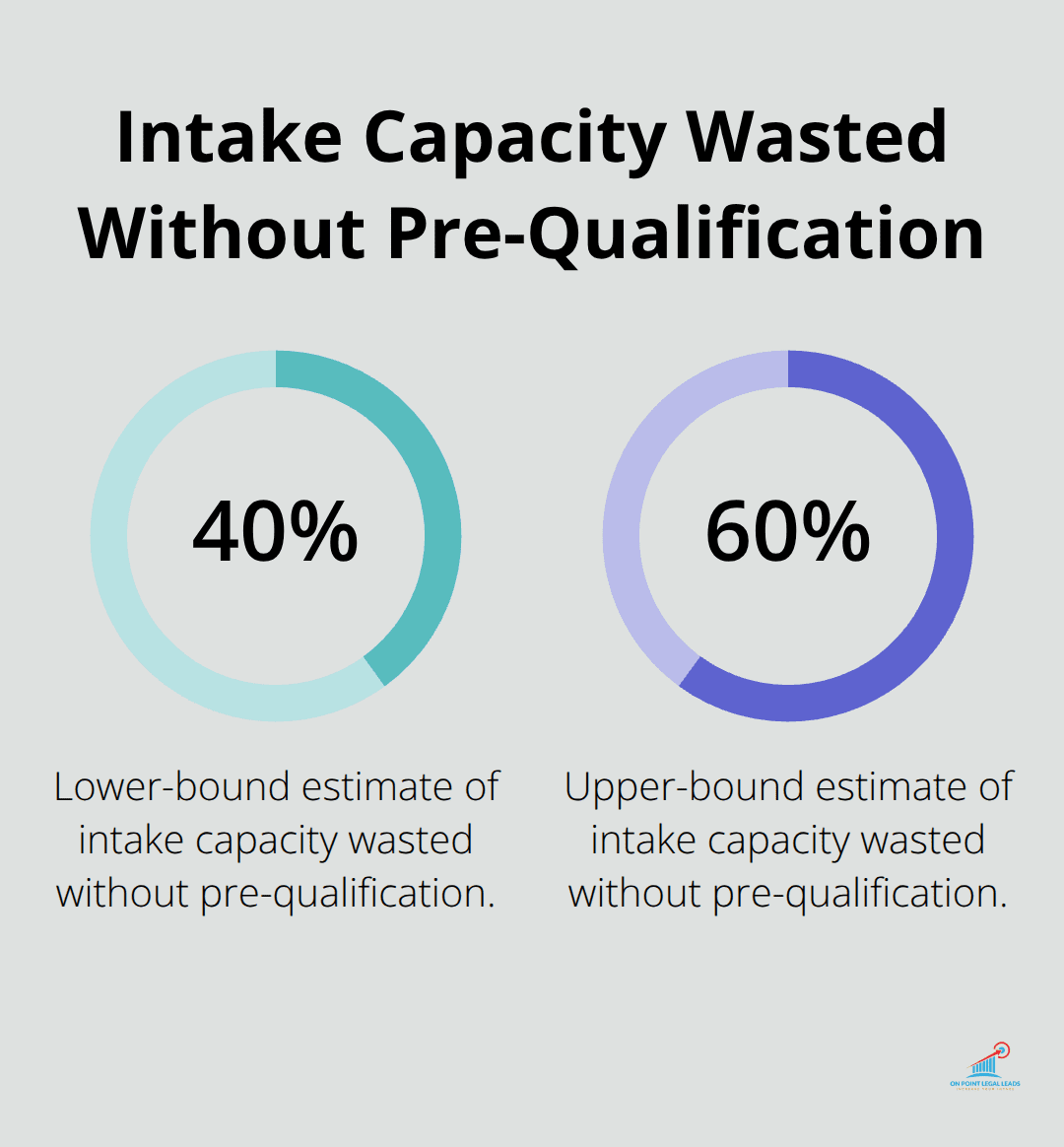
Multi-point verification confirms accident details, validates injury claims, checks insurance status, and verifies no existing attorney representation before your team contacts anyone. This approach means your intake specialists never waste time on prospects who lack insurance or whose injuries fall below your settlement floor. The efficiency gain is immediate-your team focuses on genuine cases instead of managing rejection conversations.
Prioritize Exclusive Leads Over Non-Exclusive Options
Exclusive leads magnify this advantage because they’re never sold to competing attorneys. When you receive an exclusive lead, conversion depends entirely on your legal capability and client service quality, not on racing other firms to the phone. Non-exclusive leads create a speed trap: your team must contact prospects within minutes or lose them to competitors, inflating labor costs and forcing rushed intake decisions.
Exclusive leads eliminate this pressure, allowing deliberate qualification conversations that surface case details, build client confidence, and confirm case fit before representation begins. The economics are compelling. Paying more per exclusive lead while closing two to three times as many cases beats paying less per non-exclusive lead while converting only one in ten prospects. Your next step involves building the systems that turn these qualified leads into signed retainers.
Converting Personal Injury Leads Into Cases Before Competitors Do
Contact Personal Injury Lawyer Leads Within the Critical Two-Hour Window
The timing of your first contact with personal injury lawyer leads determines whether they retain your firm or a competitor’s. Many personal injury attorneys wait days to reach out, assuming leads arrive throughout the week. This assumption costs cases. Prospects injured in motor vehicle accidents contact attorneys within hours of the incident, often while sitting in emergency rooms or immediately after police reports. If your intake team doesn’t connect within the first two hours, conversion probability drops dramatically. The window closes fast because injured parties contact multiple firms simultaneously, and whichever attorney builds rapport first typically wins the retainer.
This means your intake process must operate on a two-hour response standard, not a two-day standard. Firms using automated intake systems with real-time lead delivery convert prospects at higher rates than those managing leads manually through email. Your team needs immediate notification when a lead arrives, direct phone numbers to reach prospects while they’re still in decision mode, and pre-written intake scripts that qualify cases in under five minutes. Establishing this infrastructure costs money upfront but generates exponentially higher conversion rates.
Implement Written Case Acceptance Criteria
Clear case acceptance criteria eliminate wasted conversations before they start. Your intake team should have a written decision tree that answers three questions for personal injury leads before any substantive conversation occurs: Does the injury meet your minimum severity threshold for settlement value? Is liability clear enough to support a claim? Does the prospect have insurance coverage or alternative recovery sources?
Many firms skip this discipline, allowing intake specialists to engage with every prospect regardless of case fit. This creates false hope, damaged client relationships, and wasted billable hours on cases destined for rejection. Firms that implement written criteria see their intake efficiency jump immediately because specialists stop investing emotional energy in poor-fit cases.
The criteria should be specific to your practice. If you focus on cases settling above thirty thousand dollars, your minimum injury threshold eliminates prospects with soft tissue injuries that typically settle for five to ten thousand. If you handle only clear-liability motor vehicle accidents, you reject pedestrian cases or complex commercial claims. If you require adequate insurance coverage, you automatically reject uninsured motorist situations unless you have specific experience with underinsured motorist claims. Writing these criteria forces difficult conversations with partners about case selection, but the clarity transforms intake from a guessing game into a filtering system.
Deploy Multi-Channel Contact Strategies for Maximum Reach
Rapid follow-up systems multiply the impact of qualified personal injury lawyer leads. Your firm needs a structured process that contacts prospects through multiple channels simultaneously: phone call, text message, and email within the first thirty minutes of lead delivery. This redundancy ensures you reach prospects despite missed calls or incorrect phone numbers.
Many firms rely exclusively on phone contact, then blame lead quality when they can’t connect. Texting reaches prospects who ignore calls but respond immediately to messages. Email captures prospects who prefer written communication or need time to consider options. Firms using multi-channel approaches consistently report connecting with prospects at higher rates than phone-only operations.
Your intake specialists should have standardized responses for each channel, reducing decision fatigue and ensuring consistent messaging. This combination of rapid response, clear criteria, and multi-channel contact transforms average lead sources into high-conversion assets. When you pair these systems with exclusive leads that arrive pre-qualified and never shared with competitors, your conversion rates accelerate dramatically because your team focuses entirely on case quality rather than racing against other attorneys.
Final Thoughts on Personal Injury Lawyer Leads
The personal injury lawyer leads market rewards firms that combine strategic targeting with operational discipline. You’ve learned how the brutal economics of lead acquisition demand rigorous qualification before your team invests time in prospects, and how firms paying $391 per auto accident lead cannot afford to waste intake capacity on unqualified inquiries or compete on speed against other attorneys. The solution requires three interconnected changes: target specific case types like motor vehicle accidents where conversion rates justify acquisition costs, implement written screening criteria that eliminate poor-fit prospects before contact, and deploy multi-channel follow-up systems that connect with prospects during their critical decision window.
Quality leads transform practice growth because they shift your competitive advantage from speed to capability. When you work with exclusive leads that arrive pre-qualified and never shared with competing attorneys, your conversion depends entirely on your legal skill and client service, not on racing other firms to the phone. This eliminates the speed trap that inflates labor costs and forces rushed intake decisions, allowing your team to focus on case quality rather than volume and close more cases from fewer leads.
On Point Legal Leads specializes in pre-qualified, exclusive motor vehicle accident leads that undergo rigorous multi-point screening before delivery. Every lead arrives with verified accident details, confirmed injury severity, and insurance coverage checked, ensuring your intake team connects only with prospects ready to retain counsel, and real-time delivery means you reach potential clients while they actively seek representation, maximizing your conversion rates and eliminating competition from other firms.