

Verified SSDI leads that are ready to convert into cases require prospects who have been vetted for qualifying factors. The most popular criteria screens for age range, type of injury or medical condition, treatment, work history, tax credits, no current legal representation, and not receiving Social Security.
These leads are genuinely qualified and ready to move forward after being fully-vetted by an experienced intake agent.
Generic leads often waste your time and resources because most aren’t serious about hiring representation.
At On Point Legal Leads, we generate in-house, exclusive, verified SSDI leads specifically to eliminate that friction. Hence, you only work with prospects who are positioned to convert into compensable cases. We also have a 100-point verification intake process to ensure accurate,
complete, and comprehensive information,
How We Screen and Verify SSDI Leads
Work History and Eligibility Validation
Verified SSDI leads aren’t just names pulled from a database. We at On Point Legal Leads put every prospect through a multi-point screening process that confirms medical eligibility, work history gaps, and genuine intent to hire before delivery. The screening starts with work history validation. So, we confirm the claimant has been out of work for at least one year and has worked 5 out of the last 10 years, which are baseline requirements SSA examiners scrutinize closely.
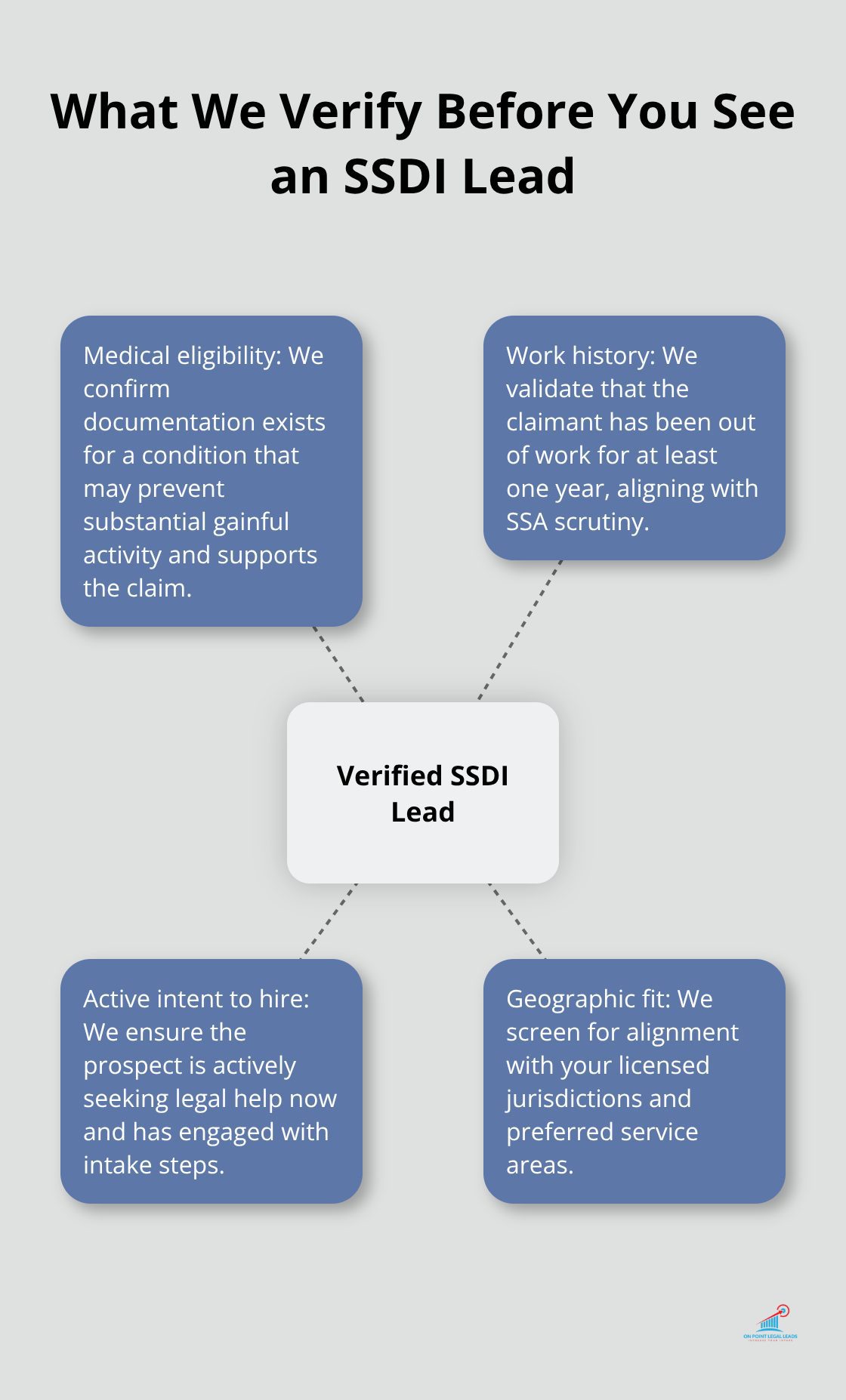
Next, we verify medical documentation exists and relates to a condition that could prevent substantial gainful activity.
Disqualifying Factors We Filter Out
We also confirm the prospect is not already receiving SSDI or SSI benefits and has no current attorney, eliminating prospects who won’t convert. This is where many generic lead providers fail; they send you leads that don’t meet SSA criteria or have already hired representation elsewhere.
Our verification step catches these disqualifying factors before they waste your intake team’s time. Think about SOAR-assisted initial applications that have achieved roughly a 65% approval rate compared to unaided applications. Pre-qualified leads that meet SSA criteria upfront dramatically improve your odds of securing approvals and satisfied clients.
Active Intent and Geographic Alignment
Assessment of client readiness goes beyond paperwork. We verify the prospect actively seeks legal help right now, not someday. This means they took action-contacted us, answered detailed intake questions, provided documents-rather than passively browsing attorney directories. Real-time delivery means you reach them while that intent remains fresh. We also screen for geographic fit, ensuring leads fall within your licensed jurisdictions and preferred service areas.
Converting Verified SSDI Leads
The combination of verified medical eligibility, confirmed work history, active intent to hire, and geographic alignment creates a lead pool that converts at rates significantly higher than shared or generic leads. Verified SSDI leads meet these criteria and know they need help, understand the process, and are ready to move forward with an attorney who can represent them. This foundation of pre-qualification sets the stage for what happens next-how your intake process transforms these verified prospects into signed cases and long-term client relationships.
Why Verified SSDI Leads Convert At Higher Rates
The Verification Gap That Matters
Verified SSDI leads and generic disability leads operate in completely different universes. Verified prospects have already cleared multiple screening gates-they confirmed work history gaps, provided medical documentation, and demonstrated active intent to hire an attorney. Generic leads, by contrast, come from broad directories or unqualified inquiries where prospects may not meet SSA criteria, already have representation, or lack serious intent to move forward. This difference appears immediately in your conversion metrics. SOAR-assisted applications achieved a 65% approval rate compared to roughly 31% for unaided applications. That gap reflects what happens when prospects arrive pre-qualified versus cold. Your verified leads reach intake already knowing they need help and understanding the basic process, which eliminates the education phase that derails so many generic inquiries.
Time Savings That Compound Across Your Team
Generic lead intake absorbs hours on disqualifying questions-Did you work within the last year? Do you already have an attorney? Is your condition actually disabling?-that verified screening has already answered. Your intake team moves directly to case strategy, medical records review, and representation agreement rather than conducting eligibility detective work. One 2025 Legal CX Report found that automating client updates and workflows saves the average firm more than 1,300 hours a year. Verified leads compress that timeline further because prospects arrive pre-qualified, letting your team focus on signed cases instead of qualification calls.
Verified SSDI Leads and The Real ROI Metric: Cost Per Signed Case
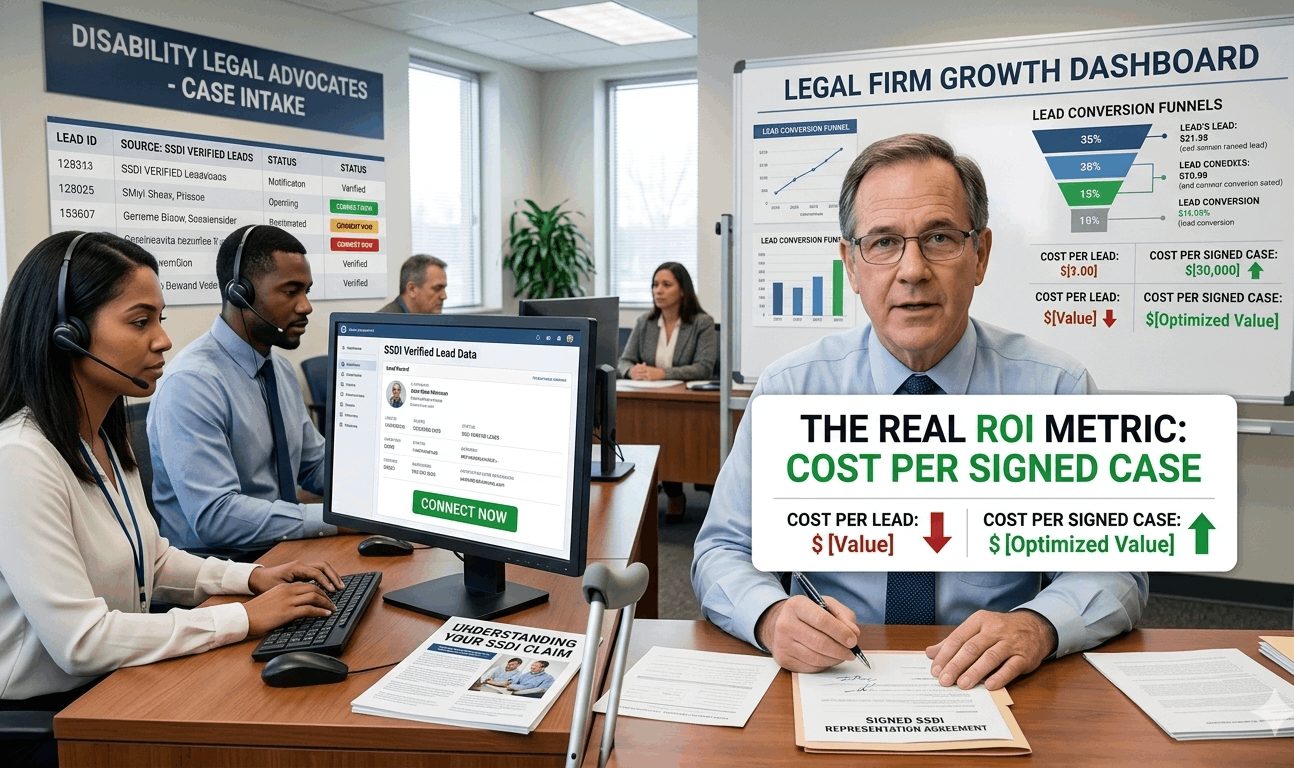
The financial impact compounds quickly. Personal injury leads typically cost between $150 and $500 per lead depending on market competition and case value. Shared or generic leads from platforms like Thumbtack or LegalMatch cost between 10 and 150 dollars depending on location and delivery method, but they demand significantly more intake labor per conversion.
Exclusive verified leads cost more upfront but eliminate wasted hours on prospects who won’t sign, which means your cost per signed case, not cost per lead, improves meaningfully.
Thoughts on Co-Registration Leads
Co-registration leads are generated when consumers complete a single form or survey and, in doing so, opt into multiple offers simultaneously from different advertisers. Typically embedded within sweepstakes, giveaways, or online surveys, these forms present consumers with a series of checkboxes or pre-selected offers, and a single submission can distribute that consumer’s contact information to dozens of companies at once. For law firms, co-registration is primarily deployed in large-scale, low-cost acquisition campaigns where volume is the priority — but the tradeoff is significant.
At On Point Legal Leads, we’ve pursued c0-registration leads to the point they are fully qualified. And we’ve seen first-hand how they require a dedicated, high-capacity intake team capable of handling large inflows of prospects who may have limited recall of or interest in legal services. Although co-registration leads worked well with mass tort campaigns in years past, our intake team has seen a steady decrease in conversion rates that has led to a corresponding increase in client acquisition cost (CAC).
Measuring What Actually Matters with Verified SSDI Leads
Firms that measure cost per signed SSDI case rather than raw lead volume consistently allocate more budget to verified sources and fewer dollars to generic directories. This shift in focus transforms how you evaluate lead providers and budget allocation. Prospects who meet verification criteria know they need help, understand the process, and stand ready to move forward with an attorney who can represent them. This foundation of pre-qualification sets the stage for what happens next-how your intake process transforms these verified prospects into signed cases and long-term client relationships, and how you structure that intake to capture maximum value from every qualified inquiry.
Turning Verified SSDI Leads Into Signed Cases Fast
Contact Social Security Disability Prospects Within Five Minutes

Your intake process determines whether verified SSDI leads become paying clients or disappear. Speed matters enormously because verified prospects arrive with active intent, but that intent cools quickly if your firm takes days to respond. Contact prospects within 5 minutes of delivery. Research shows that firms automating immediate client updates and establishing rapid response workflows improve conversion rates. This isn’t about politeness-it’s about capturing the moment when a prospect has made the mental decision to hire an attorney.
Our intake team has a goal of contacting Social Security Disability leads within 60 seconds because we understand that speed to lead is so critical.
Confirm Case Details on the First Call
Your intake call should confirm three things in the first conversation: the prospect’s current SSDI application status, whether medical records exist and are recent enough to support the claim, and whether they can commit to representation immediately. Verified leads have already passed basic screening, so your intake questions should focus on case-specific details, not eligibility detective work. Ask about treatment gaps, current treating physicians, and work history details that matter for strategy. Document everything in your case management system in real time. Clio and similar platforms let you track intake speed, which directly correlates with conversion. Firms that measure time-to-contact and time-to-representation agreement consistently outperform those that don’t.
Align Case Acceptance Criteria With Lead Quality
Case acceptance criteria must align tightly with the lead quality you receive. Verified SSDI leads already meet baseline SSA requirements-one year out of work, disabling condition, no current attorney-so your criteria should focus on what determines profitability and manageable caseload. Define minimum medical documentation standards upfront: you need at least two years of treatment records from a treating physician, not just diagnoses. Reject prospects with less than 18 months out of work, even though verified leads confirm one year minimum, because marginal cases consume disproportionate resources.
Verified SSDI Leads are about Tracking Cost Per Signed Case, Not Lead Volume
When pursuing verified SSDI leads, track cost per signed case (not cost per lead) and approval rate within 24 months. If initial applications cost you $3,000 to take through approval and appeals cost $8,000, your budget allocation changes immediately. Firms that separate initial applications from appeals in their lead strategy see 40% better ROI because they can price and resource each category appropriately. This single shift in how you measure performance forces better decision-making about which leads to purchase and how to structure your intake.
Set Monthly Targets and Measure Relentlessly
Set monthly targets: if you need 15 signed cases monthly and verified leads convert at 35%, you need roughly 43 qualified prospects. Track this relentlessly. Most disability firms guess at their conversion rates and waste budget on low-performing channels. Measure everything instead. Your conversion metric shouldn’t be cost per lead-it should be cost per signed case and approval rate within 24 months (which directly reflects case quality and your firm’s ability to build strong claims from the ground up).
Final Thoughts on Verified SSDI Leads
Verified SSDI leads eliminate the guesswork that drains disability practices by delivering prospects who have already cleared medical eligibility screening, confirmed work history gaps, verified injury and medical treatment, and demonstrated genuine intent to hire representation. Your intake team shifts from qualification detective work to case-building conversations, which directly improves your conversion rate and reduces wasted hours on prospects who won’t sign. The financial impact appears immediately when you track cost per signed case instead of cost per lead, revealing exactly how much verified screening saves your team.
Growing your disability practice requires abandoning the generic lead model entirely and allocating budget exclusively to sources that deliver pre-qualified prospects. Set monthly targets based on your conversion rate, measure cost per signed case relentlessly, and watch your approval rates improve because you build claims from stronger foundations. This disciplined approach to lead acquisition compounds over time, creating a predictable pipeline of qualified cases that your firm can actually close.
On Point Legal Leads specializes in delivering exclusive, pre-qualified SSDI prospects who meet strict verification criteria before reaching your intake team. Every lead undergoes rigorous screening for medical eligibility, work history, and active intent to hire, ensuring your firm connects only with prospects ready to retain counsel. Real-time delivery means you reach them while intent remains fresh, and exclusivity means no competing attorneys contact the same prospect.