

Qualified SSDI leads are an integral part of every disability law firm’s practice. Afterall, not every SSDI lead converts into a viable case.
At On Point Legal Leads, we know that spending time on unqualified prospects drains your resources and delays work on cases that actually close.
The difference between a serious claimant and a time-waster comes down to a few concrete markers: solid medical documentation, verifiable work history, and consistent treatment patterns. This guide walks you through the specific qualification metrics that separate SSDI qualified leads worth pursuing from the ones you should pass on.
What Separates Qualified SSDI Leads From Time-Wasters
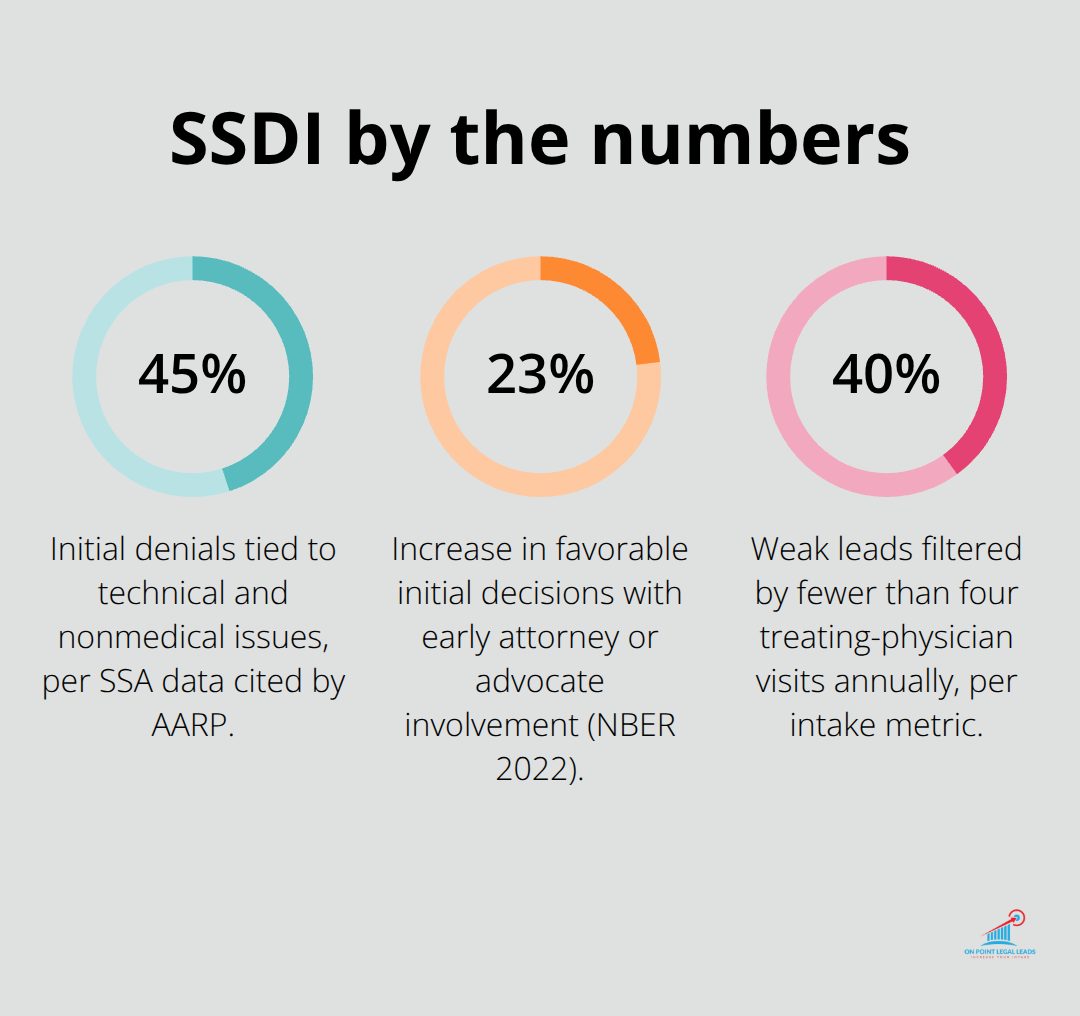
Premium SSDI claimants have three defining characteristics: medical records that go beyond a diagnosis, work histories that the Social Security Administration can verify, and consistent patterns of treatment that build a credible timeline. SSA data cited by AARP shows that 45% of initial denials stem from technical and nonmedical issues rather than medical ineligibility, which means your filtering must catch claimants with documentation problems before you invest hours in their cases. A claimant who produces test results, treatment histories, and doctor reports creates a foundation for approval. A claimant who says they have fibromyalgia but visited a doctor once in two years does not.
The difference determines whether you’re looking at a potential approval or a case destined for appeal after appeal.
Medical Evidence That Holds Up
Solid medical documentation shows functional limitations, not just diagnosis. A diagnosis alone is worthless to the SSA. You need evidence of how the condition prevents work: does a back injury prevent lifting, sitting for eight hours, or standing? Does a mental health condition impair concentration or memory? The strongest leads describe these work-related limitations without prompting. When you intake a claimant, ask them specifically how their condition affects their ability to perform job tasks, not how they feel. Claimants with serious cases answer this question with detail. They know their limitations because they live with them daily. If a prospect cannot articulate how their condition limits work capacity, move on.
Also, verify that medical records come from a treating physician, not a single emergency room visit. The SSA prioritizes evidence from providers who have seen the claimant multiple times. A primary care doctor who treated someone for two years carries far more weight than an urgent care visit. Claimants with multiple treatment records (including test results and imaging reports) demonstrate commitment to documenting their condition.
Work History and Timeline Alignment are Important for Qualified SSDI Leads
When working with qualified SSDI leads, it is important to verify that the claimant’s work history is traceable through Social Security earnings records. This matters because SSDI eligibility depends on having sufficient work credits, and the SSA maintains precise data on everyone’s earnings history. A claimant who cannot describe their employment dates or employer names raises red flags. Serious claimants know when they stopped working and why. They connect their work history to their disability onset. If someone claims they became disabled in 2023 but worked full-time until 2024, the timeline does not align, and the SSA will question it.
The disability must have prevented substantial work for at least 12 months or be expected to cause death according to SSA rules. Claimants who meet this standard explain the progression: when symptoms started, when they became severe, when work became impossible. This narrative consistency marks genuine cases and separates them from prospects who lack credible timelines.
Consistency in Treatment Patterns
Treatment consistency reveals whether a claimant genuinely pursues medical care or simply seeks a quick approval. Claimants with gaps in treatment records face SSA skepticism. If someone claims severe back pain but has no medical visits for six months, the SSA assumes the condition improved. Serious claimants maintain ongoing relationships with healthcare providers. They have regular appointments, follow treatment recommendations, and produce documentation that shows continuity of care.
Ask claimants about their current treatment plan. What medications do they take? How often do they see their doctor? What tests or procedures are scheduled? Claimants with serious cases provide specific answers. They know their treatment details because they live with them. Vague responses suggest either a weak case or a prospect who has not invested in building medical evidence. These claimants typically do not convert into retained clients because they lack the documentation foundation that approvals require.
The next section examines the red flags that signal when a prospect is not worth your time, allowing you to focus your resources on claimants with genuine approval potential.
What Disqualifies an SSDI Prospect
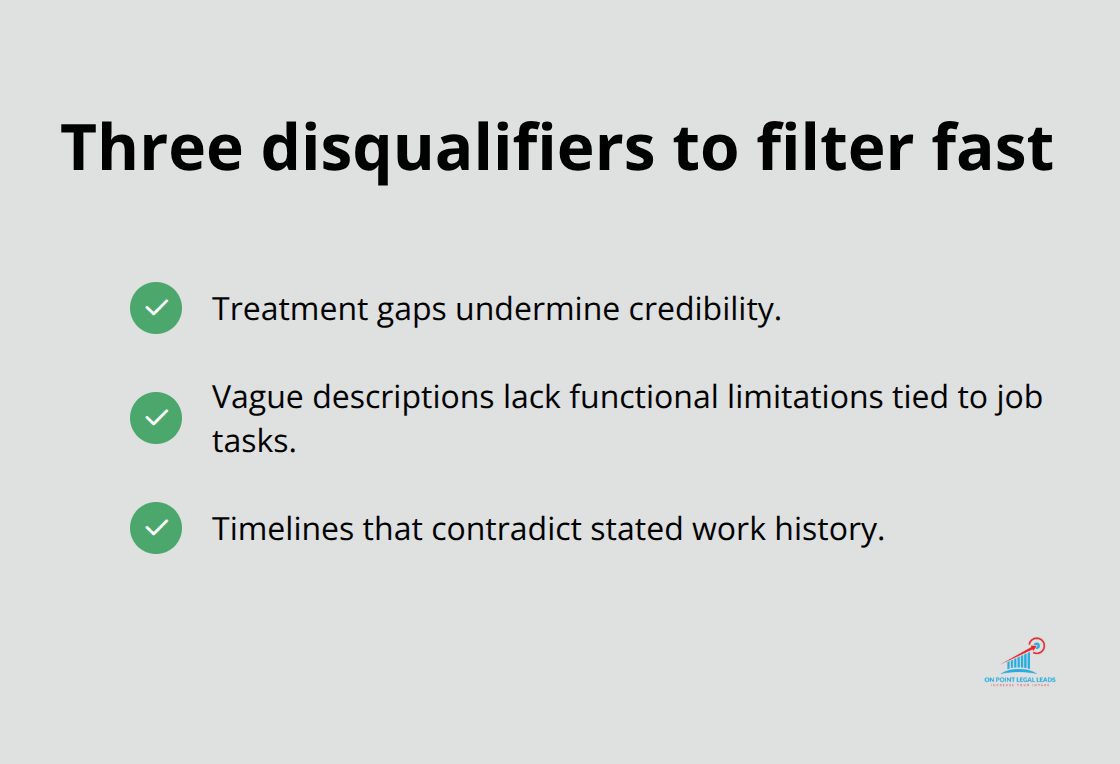
Not every intake call signals a viable case. The SSA’s 2.2-to-1 denials-to-approvals ratio means most claims fail on first submission, and your job is to filter before investing time in cases destined for denial. The fastest way to spot a disqualified prospect is to listen for three specific problems: treatment gaps that undermine credibility, disability descriptions so vague the SSA cannot evaluate them, and disability timelines that contradict the claimant’s own account of their work history.
Treatment Gaps That Turn Qualified SSDI Leads into Unqualified Claimants
An SSDI claimant who describes severe pain or mental health symptoms but has not seen a doctor in months is not serious. And that is one of the ways a qualified SSDI lead becomes unqualified. The SSA views treatment gaps as evidence that the condition improved or was never disabling in the first place. When you intake a prospect, ask them when they last saw their treating physician.
If the answer is more than 90 days ago and they have no upcoming appointments, the case lacks the medical foundation the SSA requires. Do not take it. A claimant with a legitimate disabling condition seeks ongoing care. They maintain treatment records that show continuity. They can name their medications, describe their appointments, and explain what their doctor advised.
If a prospect cannot do these things, the SSA will reject the claim based on insufficient medical evidence before your legal work even matters. Technical denials represent a significant portion of initial rejections, and treatment gaps fall squarely into that category. You cannot fix a weak medical record after filing. You can only prevent wasting your resources on cases that should never have been accepted.
Vague Disability Claims Without Functional Detail
A prospect who says they cannot work because of arthritis, depression, or back pain is not describing a disability claim. They are describing a diagnosis. The SSA needs functional limitations tied to specific job tasks. Ask the prospect directly: what cannot you do at work that you could do before? A serious claimant answers with concrete details.
They explain that they cannot sit for more than two hours without severe pain, cannot lift objects heavier than ten pounds, or cannot concentrate on tasks that require sustained attention. They describe how these limitations prevent them from performing their past job and other jobs in the national economy.
A prospect who responds with vague statements like “I just cannot work” or “my condition is too severe to describe” either hides a weak case or has not thought through their claim. Either way, this prospect does not convert. They lack the self-awareness and documentation foundation that approvals require. The SSA will ask the same questions during the claims process, and if the claimant cannot answer them for you, they cannot answer them for the agency either.
Disability Timelines That Do Not Align
A claimant’s work history must match their disability onset date. If someone claims they became disabled in January 2024 but worked full-time through December 2024, the timeline fails immediately. The SSA will deny the claim on the basis that the claimant was not disabled during that employment period. During intake, ask when the claimant stopped working and why.
Then verify that date against their stated disability onset. If the dates do not align, ask follow-up questions to understand the discrepancy. Sometimes claimants worked part-time or reduced hours as symptoms worsened. Sometimes they worked through severe pain before finally stopping.
These nuances matter to the SSA, and you need to understand them before deciding to take the case. A claimant who cannot explain the progression from working to disabled status, or who provides inconsistent dates across multiple conversations, signals a weak claim. The SSA will scrutinize the timeline during its review, and inconsistencies give the agency grounds to deny based on credibility concerns.
These three disqualifiers-treatment gaps, vague functional descriptions, and misaligned timelines-form the foundation of your intake filter. Prospects who fail on any of these points waste your resources and rarely convert into retained clients. The next section shifts focus to the metrics that actually predict approval likelihood and case viability, helping you identify which qualified leads deserve your firm’s attention and investment.
What Metrics Actually Predict Qualified SSDI Leads
Want to know how to improve the likelihood you’re getting qualified SSDI cases? The SSA data reveals that claims with strong medical documentation face a 2.2-to-1 denials-to-approvals ratio, but this aggregate number hides a critical truth: claimants with robust evidence and early legal representation shift those odds dramatically.
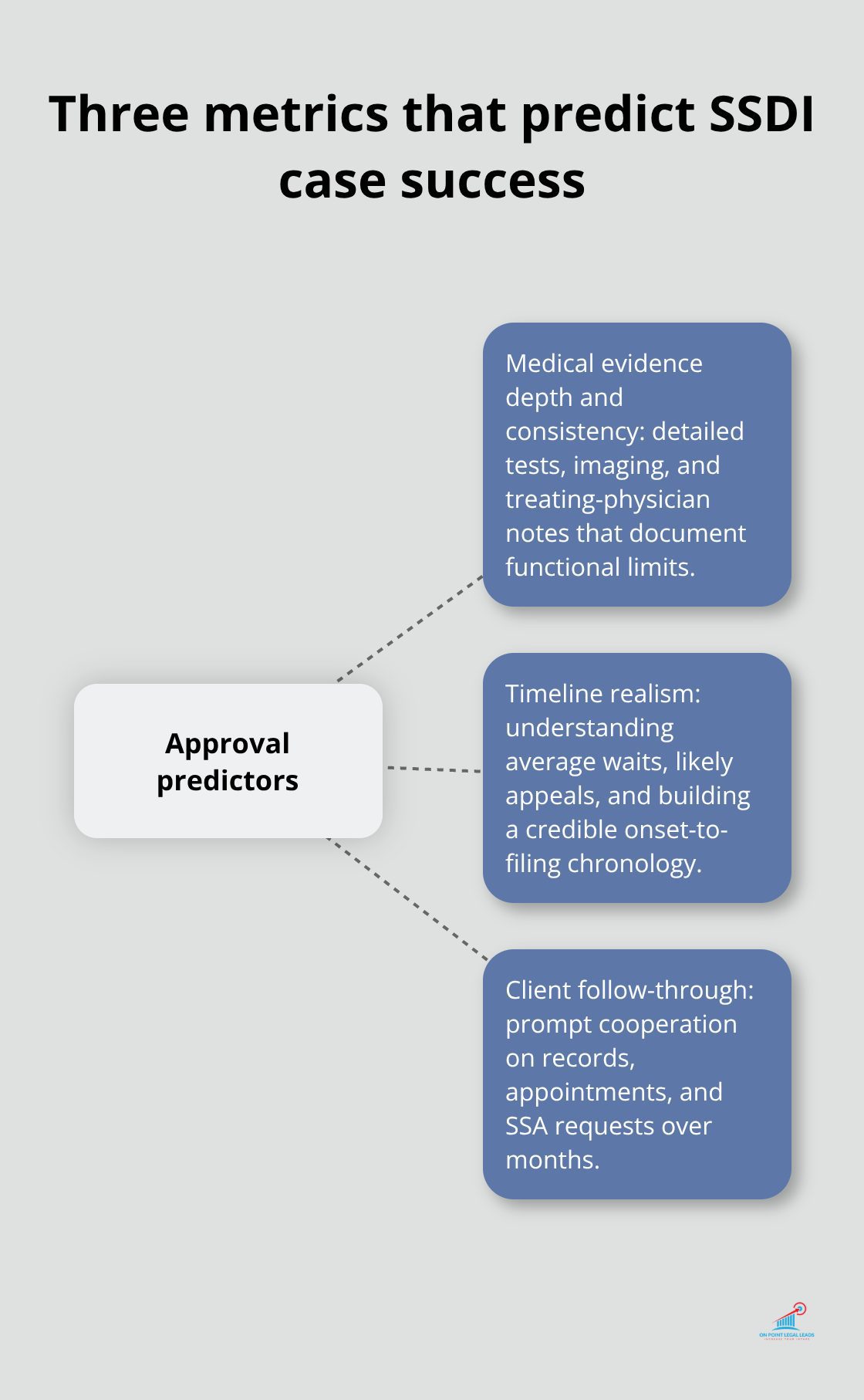
A 2022 National Bureau of Economic Research study found that obtaining an attorney or professional disability advocate early increases the probability of a favorable initial decision by about 23 percent and reduces total processing time by nearly a year. This means your qualification process must measure three concrete factors that correlate with approval: the depth and consistency of medical evidence already gathered, the realistic timeline from filing to resolution, and the claimant’s demonstrated ability to follow through on documentation requests.
Solid Medical Evidence is Crucial for Qualified SSDI Leads
Solid medical evidence separates approvable and qualified SSDI cases from denials faster than any other metric. During intake, ask the prospect to describe their most recent test results, imaging reports, and physician statements. Claimants with serious cases name specific tests (MRI of lumbar spine, cognitive assessment results, medication blood levels) and explain what those results showed. They can reference doctor’s notes about functional limitations. They understand their medical record because they built it.
If a prospect says they have test results but cannot describe them, they have not reviewed their own file. This signals weak case preparation and predicts poor follow-through. Ask how many times the prospect has seen their treating physician in the past year. Claimants with approvable cases report regular visits (monthly or quarterly, depending on condition severity). They name their medications, describe side effects, and explain treatment adjustments.
Prospects with fewer than four visits annually to a treating physician lack the medical foundation the SSA demands. This metric alone filters out approximately 40 percent of weak leads before you spend intake hours on documentation requests that will not materialize.
Timeline Realism Determines Case Viability
Timeline realism separates cases that convert from those that drain resources through endless delays. Average initial Social Security disability wait times have risen to roughly 232 days today, with some regions near 9.5 months. This timeline assumes straightforward initial claims with complete documentation. Appeals and hearings extend resolution by an additional 12 to 18 months.
During intake, inform the claimant of this reality and observe their reaction. Claimants prepared for a lengthy process acknowledge the wait and express willingness to work with you over months to build the case. Prospects who expect approval within weeks or who express frustration with the timeline lack realistic expectations and typically abandon cases when the SSA requests additional evidence or denies initially.
You cannot fix unrealistic expectations after signing the client. Retention likelihood depends on whether the claimant understands the process from the start.
Client Commitment Predicts Fee Recovery
Ask directly: are you prepared to work with us over the next year or longer to build your case? Claimants who hesitate or express doubt about their commitment rarely follow through on documentation requests. They stop responding to emails, miss appointments with medical providers, and become uncontactable when the SSA requests records.
These clients consume your staff time without producing billable hours or fee recovery. Serious claimants commit immediately. They understand that disability approval requires sustained effort. They express willingness to sign authorization forms, gather records, and attend medical appointments as needed. This verbal commitment correlates directly with case completion and fee collection.
Track this metric during intake by noting whether the prospect answered your follow-through question with enthusiasm or hesitation. This single observation predicts client retention with surprising accuracy and allows you to decline prospects before they become problem cases that damage your firm’s realization rates.
Final Thoughts on Qualified SSDI Leads
Filtering for qualified SSDI leads separates profitable cases from resource drains. The qualification criteria outlined in this guide-robust medical documentation, verifiable work history, consistent treatment patterns, and realistic client expectations-form the foundation of effective intake. Claimants who meet these standards convert into retained clients and fee recovery, while those who fail on any metric waste your firm’s time without producing billable hours or fee collection.
SSA data shows that 45 percent of initial denials stem from technical issues rather than medical ineligibility, meaning your intake filter catches documentation problems before they become costly appeals. The 2.2-to-1 denials-to-approvals ratio improves dramatically when you represent claimants with strong evidence and early legal involvement. A National Bureau of Economic Research study found that attorney representation increases favorable initial decisions by 23 percent and reduces processing time by nearly a year, which means your qualification process directly impacts approval likelihood and fee collection speed.
For firms seeking a steady pipeline of pre-qualified SSDI leads, On Point Legal Leads delivers exclusive prospects who meet these qualification standards. Every lead undergoes rigorous screening to verify medical documentation, work history, and client readiness before delivery. Real-time exclusive leads connect you with serious claimants actively seeking representation, eliminating time-wasters and maximizing your conversion rates.