


Employing lead quality assurance systems separates firms that grow from those that stagnate. Afterall, not every lead that lands in your inbox is worth pursuing.
We at On Point Legal Leads know that personal injury firms waste thousands monthly on prospects who never convert into cases.
The difference comes down to having systems that filter out time-wasters before they consume your team’s resources.
Three Criteria for Lead Quality Assurance: Separating Convertible Leads from Dead Weight
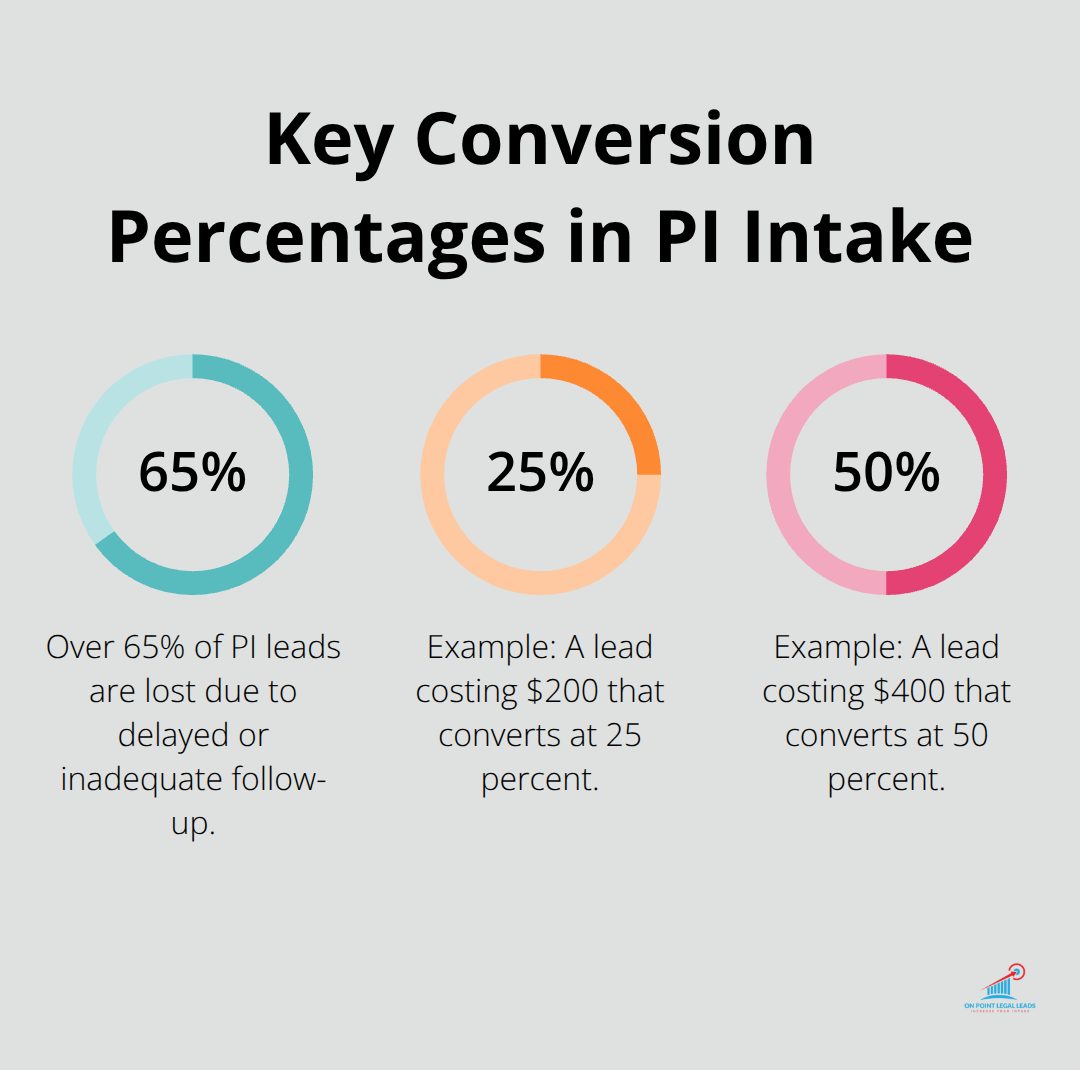
A high-quality personal injury lead must meet three non-negotiable criteria before it reaches your intake team: documented injury evidence, clear fault assignment, and genuine intent to hire counsel. Without all three, you fund someone else’s exploration process. Over 65% of PI leads are lost due to delayed or inadequate follow-up, but the real problem starts earlier-firms accept leads that were never qualified in the first place.
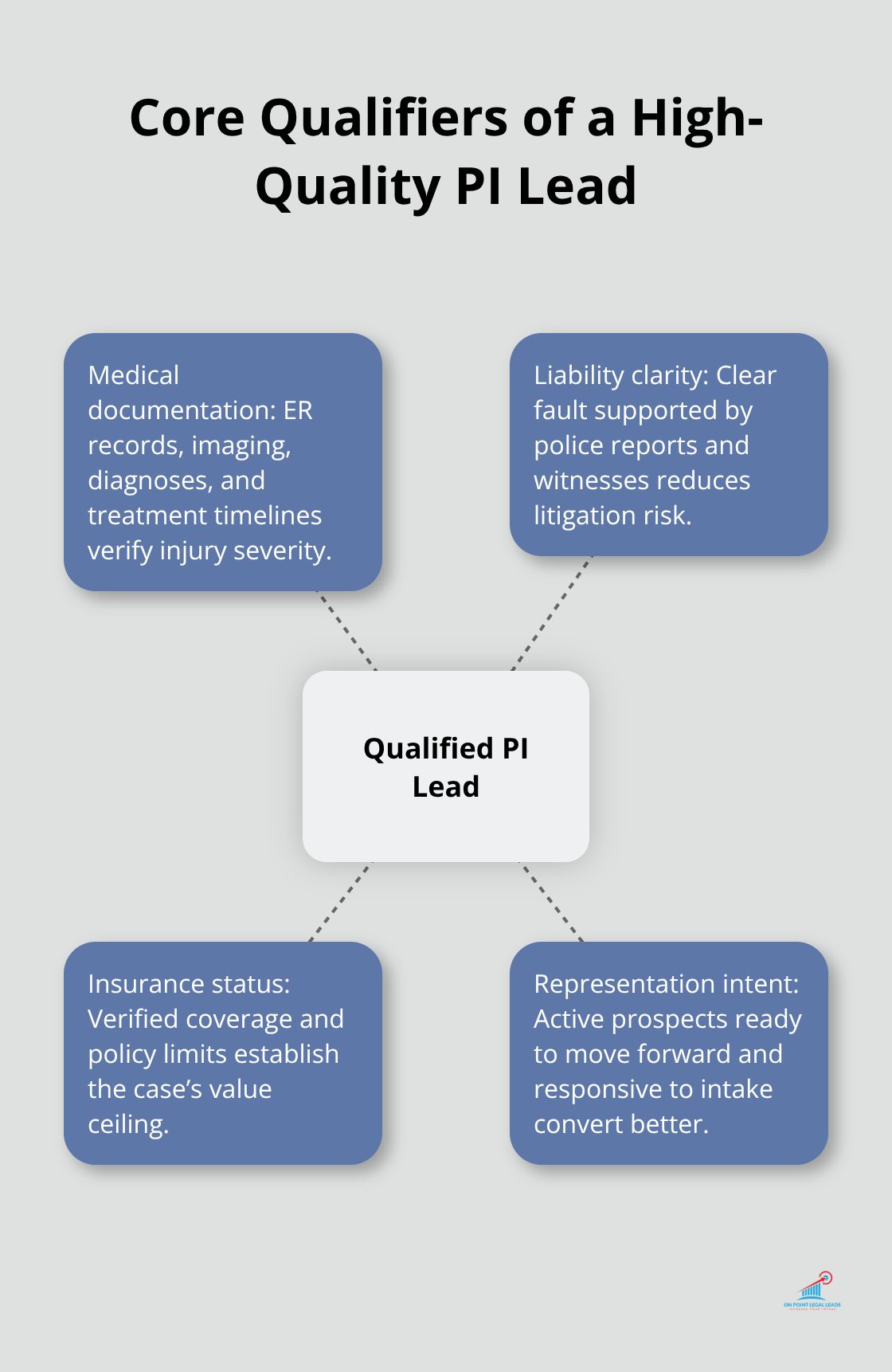
A prospect with a minor soft-tissue claim, ambiguous liability, and no insurance information will consume your intake staff’s time without converting. Medical records establish injury severity and create a factual foundation for settlement negotiations. Insurance verification determines case value ceiling and whether the defendant can actually pay. Representation intent separates active prospects from tire-kickers who called while researching options. Ensuring these elements are in place is required for top-level lead quality assurance.
Medical Records and Injury Documentation Is Another Staple for Lead Quality Assurance
The best lead quality assurance systems require actual documentation, not just the prospect’s word. Although not always possible to do that, a lead claiming whiplash from a minor fender-bender without imaging studies, physical therapy records, or ongoing treatment is speculative.
Conversely, a prospect with emergency room records, follow-up imaging, prescribed medication, and documented specialist visits signals a legitimate claim worth pursuing. When evaluating injury documentation, assess treatment consistency and duration. Someone who visited an ER once six months ago and never sought care again presents differently than someone with ongoing physical therapy appointments.
The latter indicates sustained injury and higher settlement value. Request specific details: imaging results (X-rays, MRI findings), diagnoses from licensed providers, and treatment timelines. This filters out exaggerated claims immediately and protects your firm from accepting cases with weak medical foundations that undermine settlement leverage.
Liability Clarity and Insurance Status
Fault determination separates viable cases from liability nightmares. A prospect involved in a clear rear-end collision with police documentation and witness statements represents strong liability. A prospect in a left-turn accident at an unmarked intersection with conflicting witness accounts represents litigation risk. Insurance verification directly impacts case economics. A defendant with six-figure policy limits and clear liability creates different ROI than a defendant with minimal coverage and shared fault. Pull insurance information during intake: policy limits, coverage type, and whether the defendant’s carrier has already accepted liability. Prospects who know their own insurance details and the defendant’s contact information demonstrate engagement and awareness. Those who cannot provide basic accident information or insurance details often lack documentation and follow-up capability, signaling low conversion probability.
Representation Intent and Prospect Status
Active intent separates leads from prospects who waste your time. Accident injury prospects who’ve called your firm because they found you through search results and are comparing three attorneys represents active intent. A prospect who was referred by a medical provider or called after seeing your advertisement also signals active engagement. Distinguish between prospects actively seeking representation now and those exploring options passively. Ask directly: Have you contacted other attorneys? Are you ready to move forward this week? Prospects who hesitate or indicate they are still deciding typically convert at lower rates.
Prospects who answer intake questions completely, provide documentation willingly, and express urgency to resolve the claim are conversion-ready. Those who provide vague answers, avoid sharing information, or indicate they will call back later belong in a nurture sequence, not your active intake pipeline.
The next step involves building systems that enforce these standards consistently across every lead your firm receives.
Red Flags and Filtering Techniques
Proper Lead Quality Assurance Requires Spotting Exaggerated Claims Through Medical Inconsistencies
Exaggerated claims reveal themselves through inconsistencies between reported injury severity and documented treatment. A prospect claiming debilitating back pain but attending only one chiropractic visit three months post-accident signals misrepresentation. Medical records showing progressive treatment aligned with injury severity-imaging studies, specialist referrals, ongoing therapy appointments. When treatment stops abruptly without medical clearance or explanation, the prospect likely recovered faster than their initial complaint suggested.
Request detailed accident descriptions during the intake call and compare them to police reports and medical records. Prospects who embellish accident circumstances or injury impact often contradict themselves when pressed for specifics. Ask about pre-existing conditions directly; prospects hiding prior back or neck issues before the accident inflate current claim value artificially. Cross-reference treatment dates against employment records when possible-someone claiming total disability who returned to work full-time within weeks demonstrates claim inflation.
Verifying Insurance Coverage and Identifying Liability Gaps
Insurance information gaps expose prospects who lack genuine intent or case viability. Demand the defendant’s policy details, coverage limits, and carrier information immediately. Prospects who cannot provide basic insurance information or claim ignorance about policy limits often lack follow-up capability or documentation. Contact the defendant’s insurer directly to verify coverage exists and obtain reserve amounts; this reveals whether the insurance company has already assessed liability and case value.
Prospects with defendants carrying only minimum state-required coverage in high-damage scenarios present poor ROI regardless of claim merit. Those unable to articulate how the accident occurred or identify the responsible party typically lack the documentation needed for settlement leverage. Insurance verification determines case value ceiling and whether the defendant can actually pay a judgment.
Identifying Time-Wasters Through Communication Patterns
Time-wasters expose themselves through communication patterns and responsiveness. Prospects who answer intake questions with vague responses, avoid providing contact information for medical providers, or refuse to authorize medical record releases belong in nurture sequences, not your active pipeline. Those who indicate they are still deciding between attorneys or planning to contact other firms first show lower conversion probability; prioritize prospects expressing urgency and exclusive representation intent instead.
Track callback patterns-prospects who miss scheduled consultation appointments or repeatedly reschedule without legitimate reasons consume resources disproportionate to conversion likelihood. Implement a simple qualification gate: ask whether the prospect has contacted other attorneys and whether they are ready to sign a retainer agreement this week. Prospects answering yes to both questions convert at significantly higher rates than those hesitating. Document these responses in your intake system and flag low-intent prospects for email nurture rather than attorney consultation time.
Setting Hard Filtering Rules for Resource Protection
Prospects from geographic regions outside your service area or with case types outside your practice areas waste intake resources; filter these during the initial call and refer them appropriately. Those with statute of limitations concerns-claiming accidents from years ago without prior legal consultation-often face dismissal risk that outweighs case value. Set hard rules: minimum case value thresholds, geographic service boundaries, and case type restrictions eliminate prospects who drain resources without conversion potential.
These filtering mechanisms work only when your intake team applies them consistently. The next section covers how to build systems that enforce quality standards across every lead your firm receives, transforming intake from a reactive process into a strategic conversion engine.
How to Build an Intake System That Actually Works
Quality assurance for an law firm’s leads lives or dies in your intake process. Without a standardized screening protocol, your team applies different standards to each lead, allowing weak prospects to consume attorney time and strong prospects to slip through cracks. Start with a standardized intake form that every staff member completes identically for every incoming lead. This checklist captures five core data points before any prospect reaches an attorney: accident date and location, injury type and treatment status, defendant identification and insurance details, prospect contact information and availability, and representation intent level. Assign point values to each criterion-medical documentation present equals five points, insurance information verified equals five points, prospect answers all questions completely equals three points-and establish a minimum threshold of 12 points before scheduling attorney consultation.
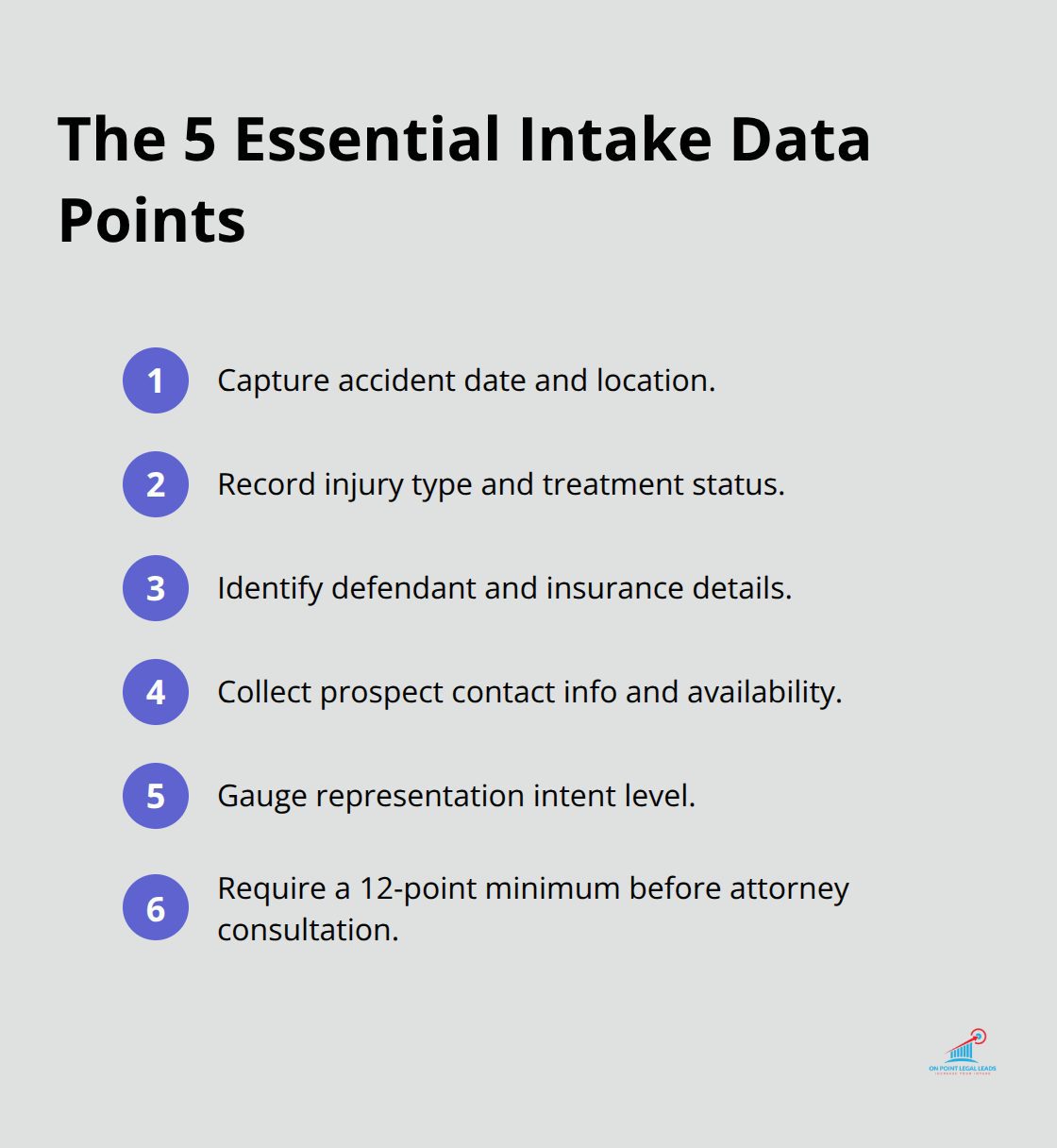
Prospects scoring below 12 move to email nurture sequences instead of consuming billable time. This system prevents your highest-paid team members from screening leads that should have been filtered during intake.
Document Everything in Your System
Document all information in your personal injury practice management system or CRM tool immediately during the call; relying on memory or handwritten notes guarantees inconsistent application and lost data. Train your intake staff to ask direct disqualification questions upfront: Is the accident within your service area? Does the prospect have medical documentation? Has the defendant been identified? Are you ready to move forward this week? Prospects answering no to any question either get filtered or routed to nurture based on specific criteria you establish in advance. This approach transforms intake from a reactive conversation into a structured qualification process that your entire team executes consistently.
Measure the Right Metrics to Ensure Personal Injury Lead Quality Assurance
Tracking performance of premium personal injury leads for law firms requires measuring two distinct metrics that most PI firms conflate incorrectly. Cost per lead measures what you paid to acquire the prospect; cost per acquisition measures what you paid to convert that prospect into a signed client. A lead costing $200 that converts at 25 percent generates a cost per acquisition of $800, while a lead costing $400 that converts at 50 percent generates a cost per acquisition of $800. The second source is superior even at double the upfront cost. Calculate conversion rate by dividing closed clients by total qualified leads received each month, then track this metric by lead source to identify which channels actually generate signable prospects.
Automated lead nurturing through CRM systems improves conversion performance compared to manual follow-up processes. Implement automated text and email sequences immediately after intake for prospects scoring below your consultation threshold; these nurture campaigns keep prospects engaged without consuming staff time. To ensure lead quality assurance, tag every lead in your system with its source, intake date, qualification score, and outcome status so you can analyze performance patterns monthly.
Train Your Team on Consistent Standards
Staff training determines whether your system executes consistently or fails through human error. Conduct monthly training sessions focused on real intake calls from your firm-play recordings of successful conversions and unsuccessful rejections, then discuss what screening questions identified each outcome. Rotate staff through these sessions so everyone understands your standards and the reasoning behind them. Assign one person accountability for system compliance; this person audits intake forms weekly to verify all required fields are completed and flags instances where staff skipped questions or accepted unqualified prospects. This accountability structure prevents drift and maintains the filtering discipline that separates high-converting firms from those that waste resources on weak leads.
Final Thoughts on Lead Quality Assurance
Lead quality assurance directly determines your firm’s profitability and growth trajectory. A prospect costing $200 who never converts wastes that entire investment plus the intake staff time spent screening them, while a prospect costing $400 who converts into a $50,000 settlement generates exponential ROI that justifies the higher acquisition cost. Firms that filter ruthlessly at intake convert more cases per dollar spent and grow faster than those accepting every lead that arrives.
Your bottom line improves when you stop treating all leads equally and implement the screening protocols outlined here. High-quality prospects with documented injuries, clear liability, and genuine representation intent convert at rates five to ten times higher than unqualified prospects, which means fewer wasted consultation hours, higher case acceptance rates, and better attorney utilization. You shift your intake team’s focus from processing volume to converting qualified cases when you establish minimum qualification thresholds and route prospects below that score into nurture sequences rather than attorney time.
If your current lead sources fail to deliver the quality standards outlined here, consider partnering with On Point Legal Leads, which delivers exclusive motor vehicle accident leads that undergo rigorous multi-point screening before delivery to ensure your intake team connects only with qualified prospects who meet your case acceptance criteria. Every lead receives verification for accident details, injury severity, insurance coverage, and representation status, eliminating the time-wasters that drain your resources and tank your ROI.