


SSDI lead generation firms aren’t all created equal. The difference between a partner that drives real cases and one that wastes your time comes down to quality, speed, and transparency.
At On Point Legal Leads, we’ve seen firsthand how the wrong provider can drain resources while delivering prospects who never convert. The right partner, though, accelerates your case growth and protects your reputation through ethical, compliant practices.
That’s why we generate SSDI leads in-house. In fact, the same Social Security Disability Leads we sell are the ones we use, which allows us to optimize for the highest quality prospects that are ready to convert.
Top SSDI Lead Generation Firms Don’t Just Sell Volume
Chasing volume in SSDI lead generation is a trap that costs disability law firms thousands monthly. The Social Security Administration rejects the majority of initial SSDI claims, which means unqualified prospects flood your intake team and waste valuable attorney hours on cases that were never viable from the start. A single unqualified lead that ties up your team for weeks represents lost opportunity cost that no firm can absorb.
Disability practices receiving 50 poor-quality leads convert fewer cases than firms receiving 10 pre-screened prospects because intake capacity gets consumed by prospects who don’t meet SSA eligibility standards, lack sufficient medical documentation, or haven’t worked long enough to accumulate necessary work credits. The real damage isn’t just the wasted intake time-it’s the attorney review hours spent on cases that fail at the initial development stage because the claimant’s medical condition doesn’t meet SSA’s durational requirement or the income and assets disqualify them from SSI benefits.
Screening Methods Separate Winners from Time-Wasters
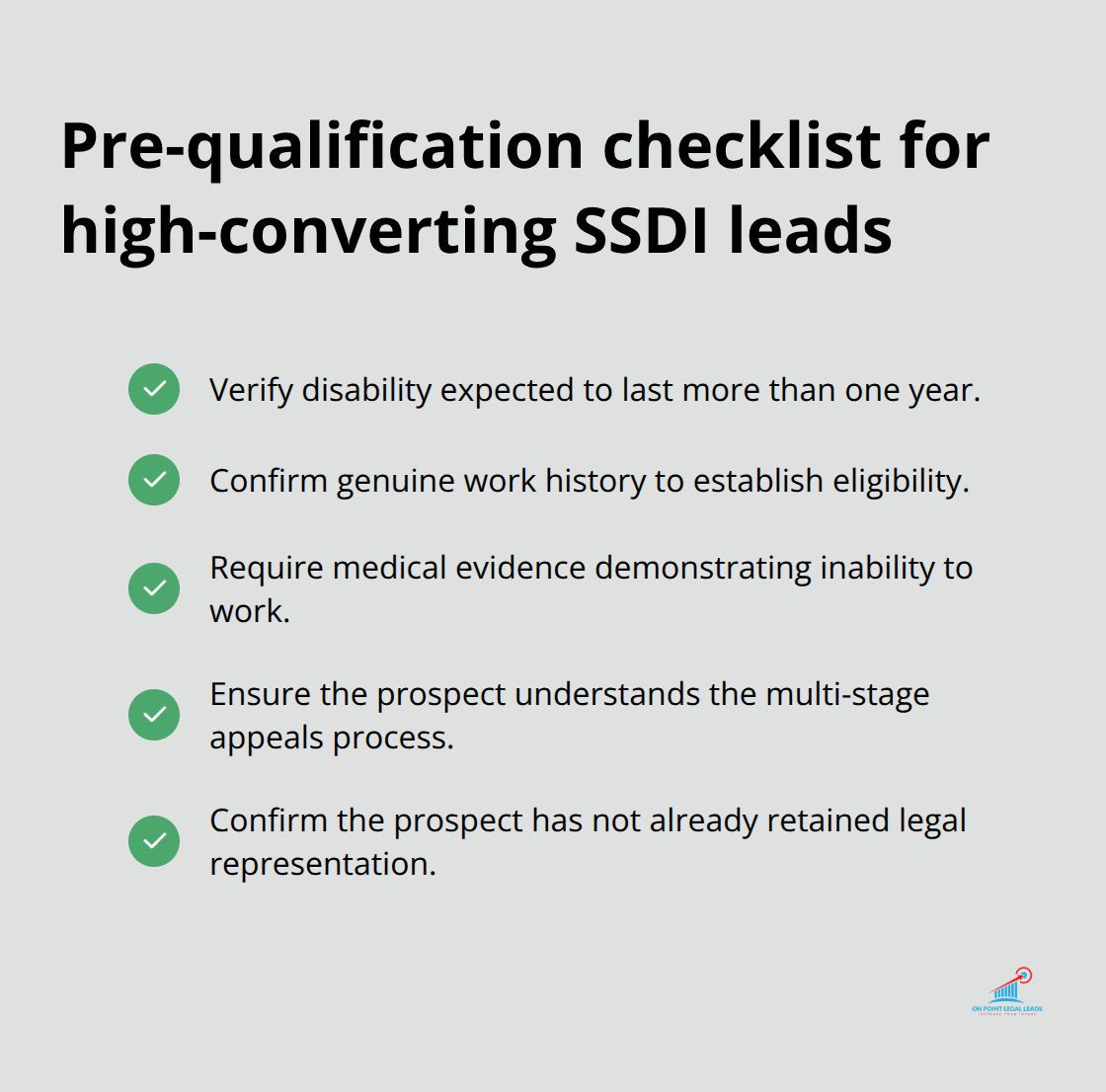
High-converting SSDI leads come from providers who filter for specific criteria before delivery. Your lead partner must verify that prospects have disabilities expected to last more than one year, have genuine work history to establish eligibility, and understand the multi-stage appeals process if their initial claim faces denial. Providers who skip medical verification or fail to confirm work history deliver leads that collapse during case development.
This pre-qualification means your intake form captures actionable information rather than baseline screening questions that should have been answered upstream. Providers operating without rigorous screening metrics-those unwilling to share their qualification standards or conversion benchmarks-are essentially guessing at lead quality.
Demanding Transparency From Your Lead Partner
Ask potential partners for their lead-to-client conversion rates, average case cycle time, and the specific SSA eligibility criteria they verify pre-delivery. Firms that can’t produce these metrics are prioritizing lead volume over your case acceptance rate. The best partners operate with complete transparency around how they screen prospects and what standards they apply before sending leads your way.
When evaluating a provider, request documentation of their screening process. Legitimate partners will explain exactly which eligibility factors they verify (work history, medical severity, financial status) and provide data on how their leads perform once they reach your firm. This transparency protects you from wasting resources on leads that sound qualified but fail conversion testing.
Top SSDI Lead Generation Firms Don’t Skip Verification Steps
Social Security Disability leads that bypass rigorous verification create cascading problems throughout your practice. An intake team spends hours gathering medical records and work history only to discover the claimant doesn’t meet durational requirements or has already retained another attorney. Appeals cases require even more scrutiny-a prospect who received a denial without understanding why wastes your resources if their case lacks the medical evidence needed to overturn the initial decision.
The providers worth partnering with invest in verification upfront so your team invests time only in cases with real conversion potential. This approach (filtering for disability severity, work impact, and financial eligibility before delivery) transforms your intake process from a screening operation into a case-building operation. Your next step involves identifying which providers actually deliver on these screening promises and which ones cut corners to inflate their lead counts.
What Makes an SSDI Lead Generation Partner Actually Reliable
Exclusivity and Speed Transform Your Conversion Rates
The providers worth partnering with operate on three non-negotiable principles: exclusivity, speed, and verifiable screening standards. Most disability law firms waste money on leads that get recycled to five or ten competing attorneys in the same market, which tanks your conversion potential before your intake team even calls. Exclusive leads mean you’re the only firm contacting that prospect, and the difference in conversion rates is substantial. Firms receiving exclusive SSDI leads report significantly higher close rates because they engage prospects while motivation is highest and before competitors establish relationships.
Real-time delivery amplifies this advantage. Leads that arrive within minutes rather than hours or days convert at meaningfully higher rates because prospects haven’t yet contacted other attorneys or lost momentum in their decision-making process. When you contact a prospect within five minutes of their inquiry, you’re competing against possibility; when you call hours later, you’re competing against other law firms. Your lead partner must deliver leads immediately through email, live-transfer, SMS, or direct CRM integration so your intake team moves fast.
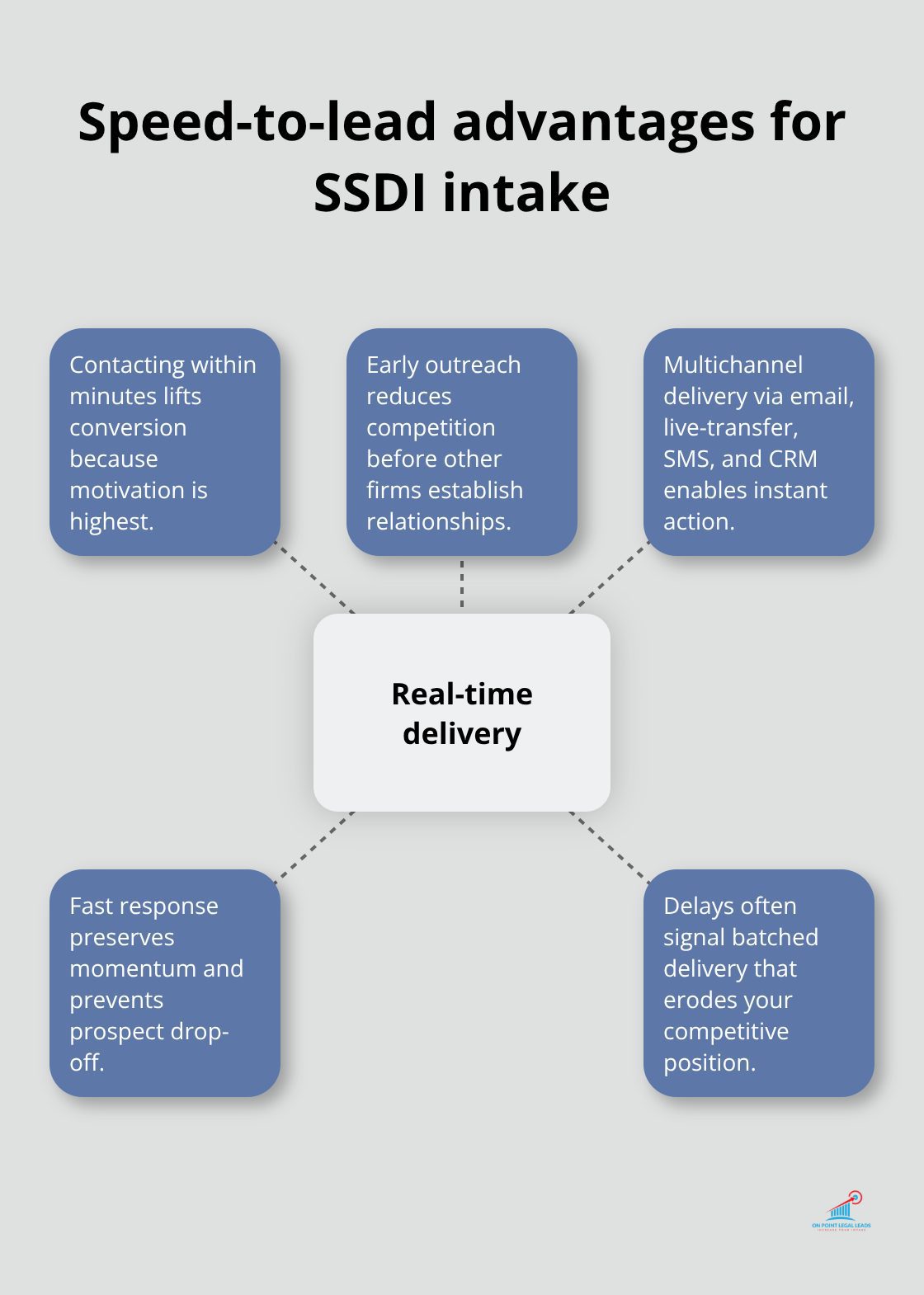
Delayed delivery signals the provider is batching leads or prioritizing other clients ahead of you, which destroys your competitive position.
Screening Standards Determine Lead Quality
Rigorous screening separates partners worth retaining from those burning your resources. The best providers verify specific criteria before sending leads your way: documented disability lasting over one year, sufficient work history to establish SSDI eligibility, medical evidence demonstrating inability to work, and financial circumstances that don’t disqualify SSI applicants. They confirm prospects haven’t already retained counsel and genuinely want legal representation.
Ask potential partners for their exact screening methodology and demand they share conversion benchmarks-what percentage of their delivered leads actually sign as clients. Providers unwilling to disclose these metrics are hiding poor performance. The screening process should capture actionable information (work history details, medical severity indicators, financial status) rather than baseline questions that should have been answered upstream.
Compliance Protects Your Firm and Reputation
TCPA compliance and ethical advertising practices matter equally because one misstep exposes your firm to regulatory penalties and reputational damage. Your partner must verify consent before contacting prospects, maintain transparent advertising without misleading claims about benefit approval odds, and adhere to state bar advertising rules specific to your jurisdiction. This means they should understand that Ohio’s State Bar has specific attorney referral service requirements, and similar regulations exist in every state where you practice.
Partners operating transparently about their compliance procedures protect your firm while delivering leads you can trust. They document their verification processes, explain how they obtain prospect consent, and provide evidence that their advertising complies with FTC guidelines and state bar rules. When you evaluate a potential partner, request documentation of their compliance protocols and ask how they handle state-specific advertising restrictions. The right provider treats compliance as a competitive advantage rather than a checkbox exercise, which means your firm avoids the costly mistakes that plague firms partnering with providers who cut corners on regulatory requirements.
Red Flags When Evaluating SSDI Lead Providers
Shared Leads Destroy Your Competitive Edge
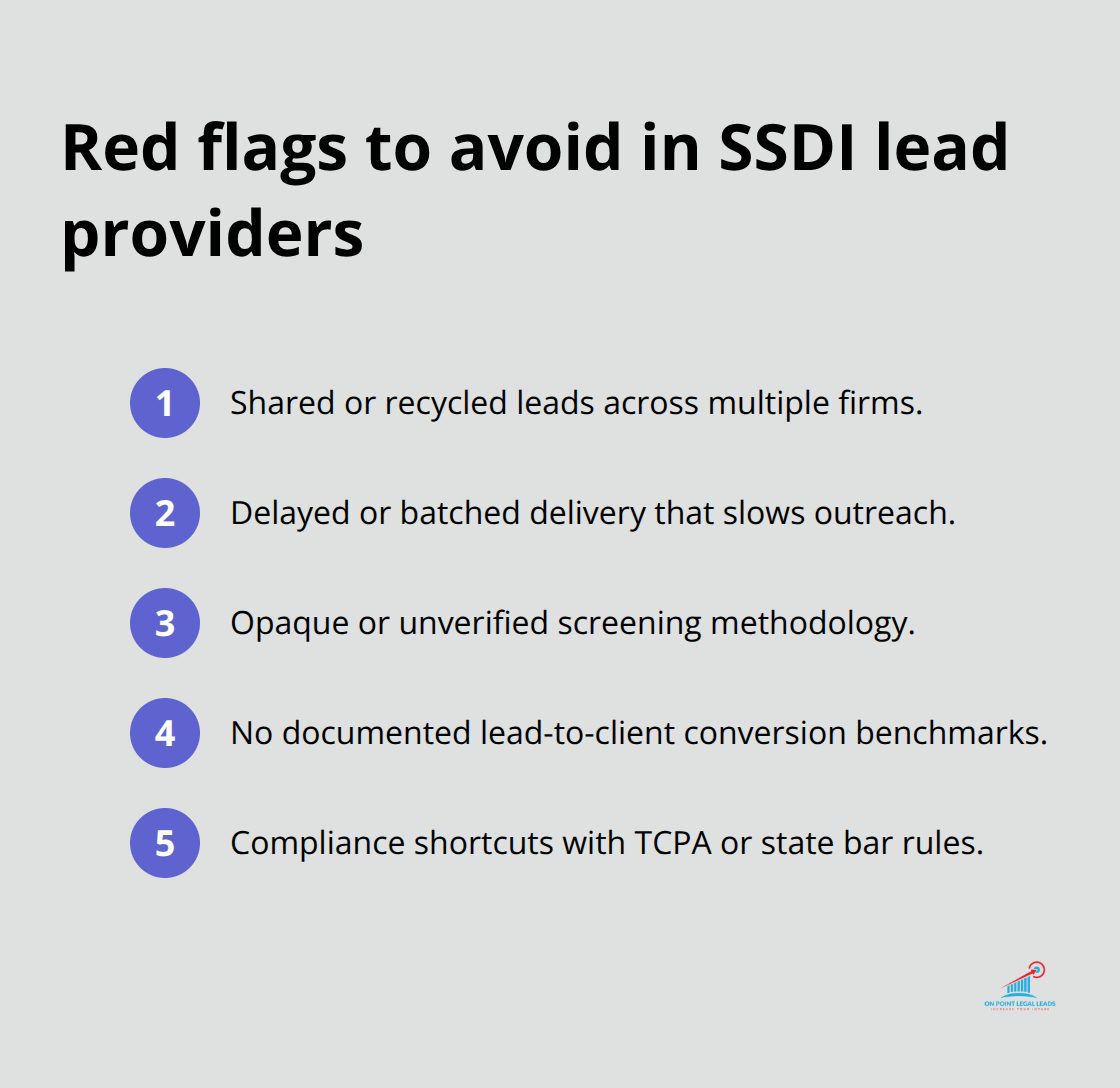
Partners who recycle leads across multiple firms eliminate your conversion advantage before your intake team picks up the phone. When a prospect receives calls from five different disability attorneys within an hour, your conversion odds plummet because they’re shopping rather than deciding. Shared leads signal the provider prioritizes volume revenue over your case outcomes, which means they stack your market with competitors and expect you to outwork other firms for the same prospect.
Exclusive leads delivered only to your firm cost more upfront but generate substantially higher conversion rates because you engage prospects during their peak decision-making window without competing against other attorneys who received the same lead. Ask potential partners directly whether they resell leads to multiple firms in your geographic area and request written confirmation of exclusivity terms. Providers who hedge on this question or offer vague exclusivity guarantees are selling the same prospect to your competitors.
Leading SSDI Lead Generation Firms Offer Real-Tim Delivery
Delayed delivery from hours to days destroys conversion potential faster than almost any other factor. That’s why leading SSDI lead generation firms offer real-time and exclusive services.
Prospects inquiring about SSDI representation at 2 p.m. on a Tuesday have motivation and momentum; when your lead partner batches inquiries and delivers them the next morning, that momentum has evaporated and the prospect has already contacted other attorneys. Contacting leads within five minutes produces meaningfully higher conversion rates than calls placed hours later, yet many providers operate on batched delivery schedules that prioritize their operational convenience over your case acceptance.
Notably, our legal intake agents strive to contact leads in 60 seconds or less.
In order to get to the lead fastest, your lead partner must deliver leads immediately through email, live-transfer, SMS, or direct CRM integration so your intake team moves fast.
We’ve found that posting SSDI leads to a law firm’s CRM is best because it allows intake agents to respond faster. And speed to lead is critical, as we’ve discovered firsthand from our own legal intake center.
Ultimately, delayed delivery signals the provider may be batching leads or prioritizing other clients ahead of you, which destroys your competitive position in the market.
Opaque Screening Methods Hide Weak Processes
Transparency around screening methods separates partners worth retaining from those hiding weak processes. Legitimate providers explain exactly which eligibility criteria they verify before sending leads your way: documented disability lasting over one year, sufficient work history for SSDI qualification, medical evidence confirming work inability, and confirmed absence of current legal representation. When a provider refuses to disclose their screening methodology or claims they verify everything without specifics, they run minimal intake processes and flood your team with unqualified prospects.
Request their written screening checklist and ask which SSA eligibility factors they confirm with every lead. Providers unwilling to share this documentation cut corners to inflate lead counts. The screening process should capture actionable information (work history details, medical severity indicators, financial status) rather than baseline questions that should have been answered upstream.
Top SSDI Lead Generation Firms Offer Conversion Rates
Demand conversion rate data from potential partners because metrics don’t lie. If a provider cannot produce documented conversion benchmarks showing what percentage of their delivered leads actually sign as clients, they operate without accountability. Track this yourself by monitoring how many leads convert to signed cases monthly, then compare your results against the provider’s claims.
Firms receiving high-quality and fully-vetted SSDI leads typically see lead-to-client conversion rates that justify the investment, while partnerships with low-conversion providers waste resources regardless of lead volume. A provider’s willingness to share conversion data demonstrates confidence in their screening process and commitment to your success.
Compliance Shortcuts Expose Your Firm to Risk
TCPA compliance and ethical advertising practices matter equally because one misstep exposes your firm to regulatory penalties and reputational damage. Your partner must verify consent before contacting prospects, maintain transparent advertising without misleading claims about benefit approval odds, and adhere to state bar advertising rules specific to your jurisdiction. Partners operating transparently about their compliance procedures protect your firm while delivering leads you can trust.
Request documentation of their compliance protocols and ask how they handle state-specific advertising restrictions. The right provider treats compliance as a competitive advantage rather than a checkbox exercise, which means your firm avoids the costly mistakes that plague firms partnering with providers who cut corners on regulatory requirements.
Final Thoughts on SSDI Lead Generation Firms
Selecting the right SSDI lead generation firms determines whether your disability practice grows or stagnates. Exclusive leads that reach only your firm, real-time delivery that lets you contact prospects within minutes, rigorous screening that filters for genuine SSA eligibility, and transparent compliance practices that protect your reputation all matter equally. Partners who deliver on these standards accelerate your case growth by eliminating wasted intake hours and connecting your team with prospects ready to retain counsel.
The wrong provider costs you thousands monthly through poor-quality leads, delayed delivery, and opaque screening processes that hide weak intake standards. You’ve now identified the red flags that signal accountability gaps and the specific questions that separate reliable partners from those prioritizing volume over your conversion rates. Demand conversion rate data, request written screening checklists, and verify exclusivity terms in writing when you evaluate potential partners (providers unwilling to share these metrics operate without accountability and will waste your resources).
At On Point Legal Leads, we deliver exclusive SSDI leads through rigorous multi-point screening that verifies accident details, injury severity, and legal representation status before delivery. Every lead reaches only your firm in real-time, and our process maintains strict TCPA compliance and legal advertising ethics standards. Your intake team connects with qualified prospects actively seeking representation, not time-wasters who consume hours without converting.