


Legal lead conversion is the lifeblood of any successful law firm. Without it, even the most talented attorneys struggle to grow their practice.
At On Point Legal Leads, we’ve seen firsthand how mastering the art of converting legal leads can transform a law firm’s success. This post will reveal the strategies that top-performing firms use to turn potential clients into loyal customers.
What Makes High Legal Lead Conversion So Valuable?
The DNA of High-Quality Legal Leads
High-quality legal leads consist of individuals or businesses with a genuine need for legal services and the means to pursue them. These leads have already shown interest in your specific practice area and actively seek legal representation. They’re not just tire-kickers; they’re ready to take action.
A study by the National Law Review found that properly qualified leads are 4-5 times more likely to convert into clients. This statistic highlights the importance of focusing on lead quality over quantity.
The Impact of Lead Quality on Conversion Rates
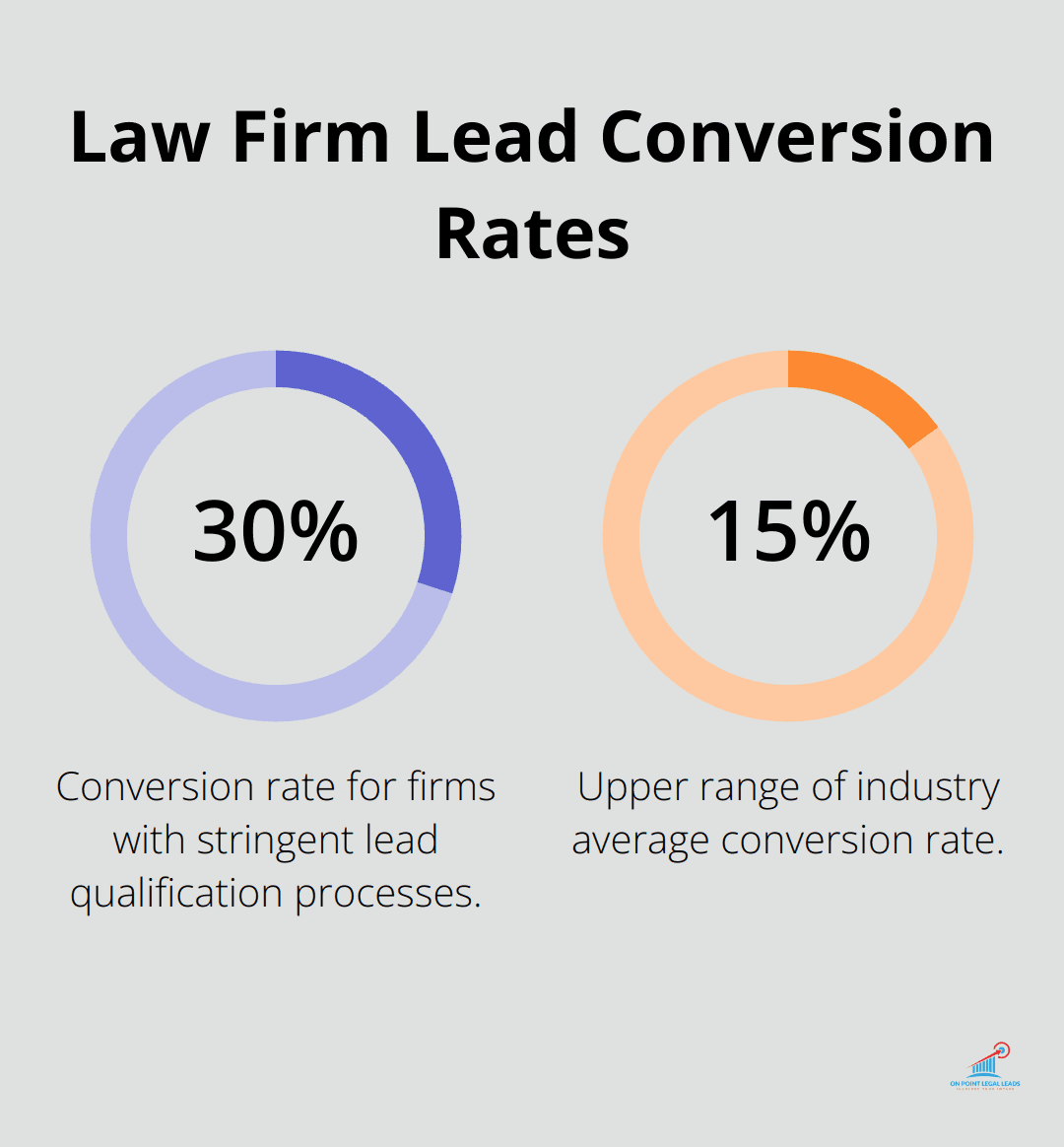
Lead quality forms the cornerstone of high conversion rates. A recent survey by Clio revealed that law firms with stringent lead qualification processes saw conversion rates as high as 30% (compared to the industry average of 10-15%).
Working with high-quality leads improves your chances of conversion and saves time and resources that would otherwise go to unproductive follow-ups. This efficiency allows you to focus your efforts where they matter most.
Key Factors That Determine Lead Quality
Several factors contribute to the quality of a legal lead. Understanding these can help you identify the most promising prospects:
- Timing: Leads who have recently experienced a legal issue or need immediate legal services often prove the most valuable.
- Financial capability: Prospects who can afford your services are more likely to convert.
- Case specifics: The details of the potential case should align with your firm’s expertise and resources.
- Geographic location: Leads within your service area typically hold more value than those outside it.
- Source: Leads from reputable sources tend to be of higher quality than those from generic lead generation platforms.
The Role of Lead Scoring
Lead scoring plays a vital role in determining lead quality. Tracking metrics is crucial for improving your lead generation strategy for lawyers. Common metrics include the number of leads, conversion rates, and other key performance indicators.
For example, you might assign higher scores to leads who have:
- Filled out a detailed contact form (10 points)
- Visited your website multiple times (5 points)
- Downloaded a legal guide or whitepaper (15 points)
This system allows you to quickly identify which leads deserve immediate attention, improving your overall conversion rates.
As we move forward, we’ll explore how to nurture these high-quality leads effectively, turning them from interested prospects into loyal clients.
How to Nurture Legal Leads Effectively
Personalize Your Communication
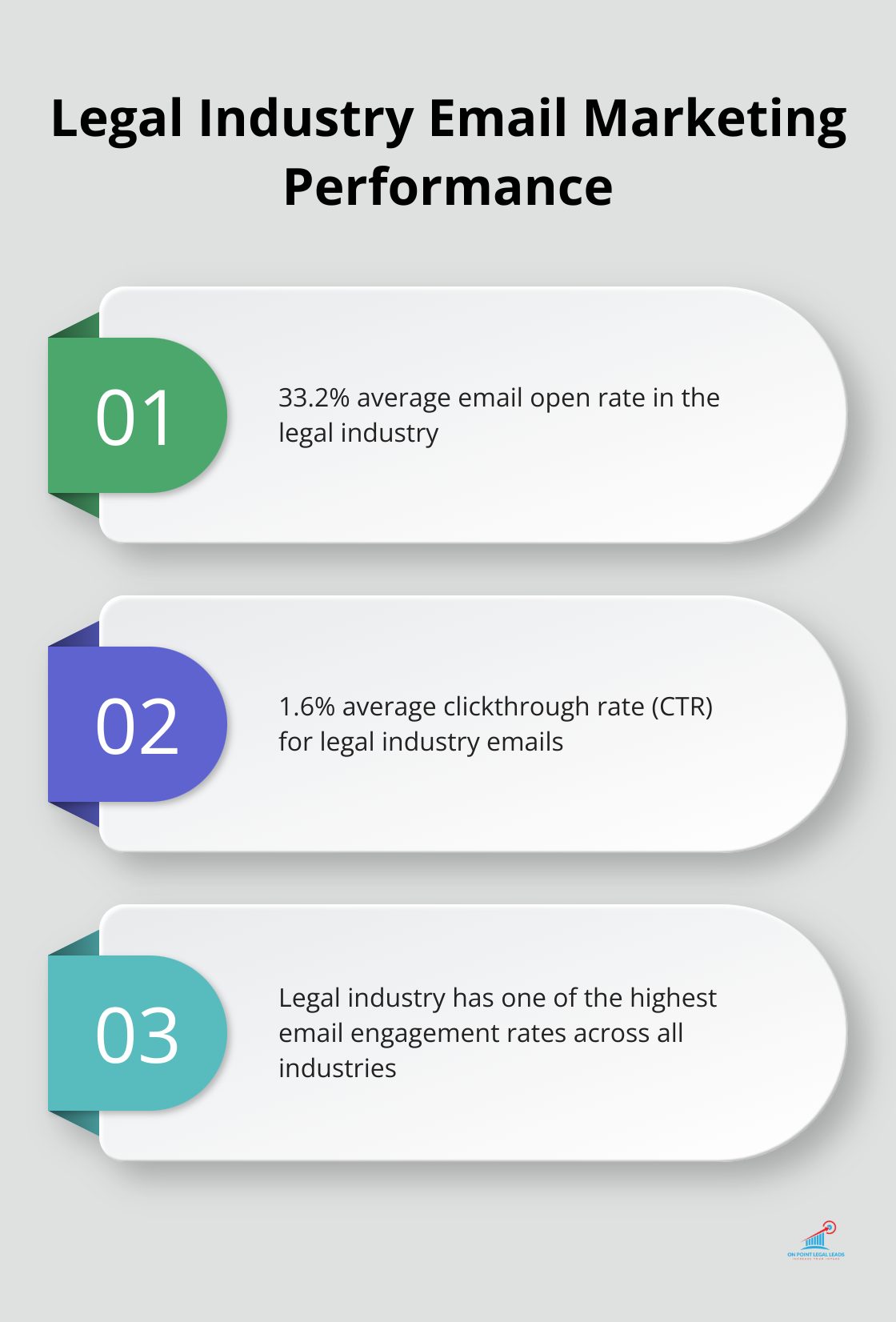
Personalization extends beyond using a prospect’s name. It involves tailoring your message to their specific legal needs and concerns. According to SmartInsights, the average open rate for emails in the legal industry is 33.2%, with a 1.6% CTR (Clickthrough Rate) – one of the highest across all industries.
To achieve this level of personalization:
- Segment your leads based on their legal issues, demographics, and behavior.
- Create content that addresses each segment’s specific pain points.
- Use automation tools to send relevant information at the right time.
For example, if a lead has shown interest in personal injury cases, send them information about recent successful settlements in similar cases. This approach demonstrates your expertise and relevance to their situation.
Master the Art of Timely Follow-ups
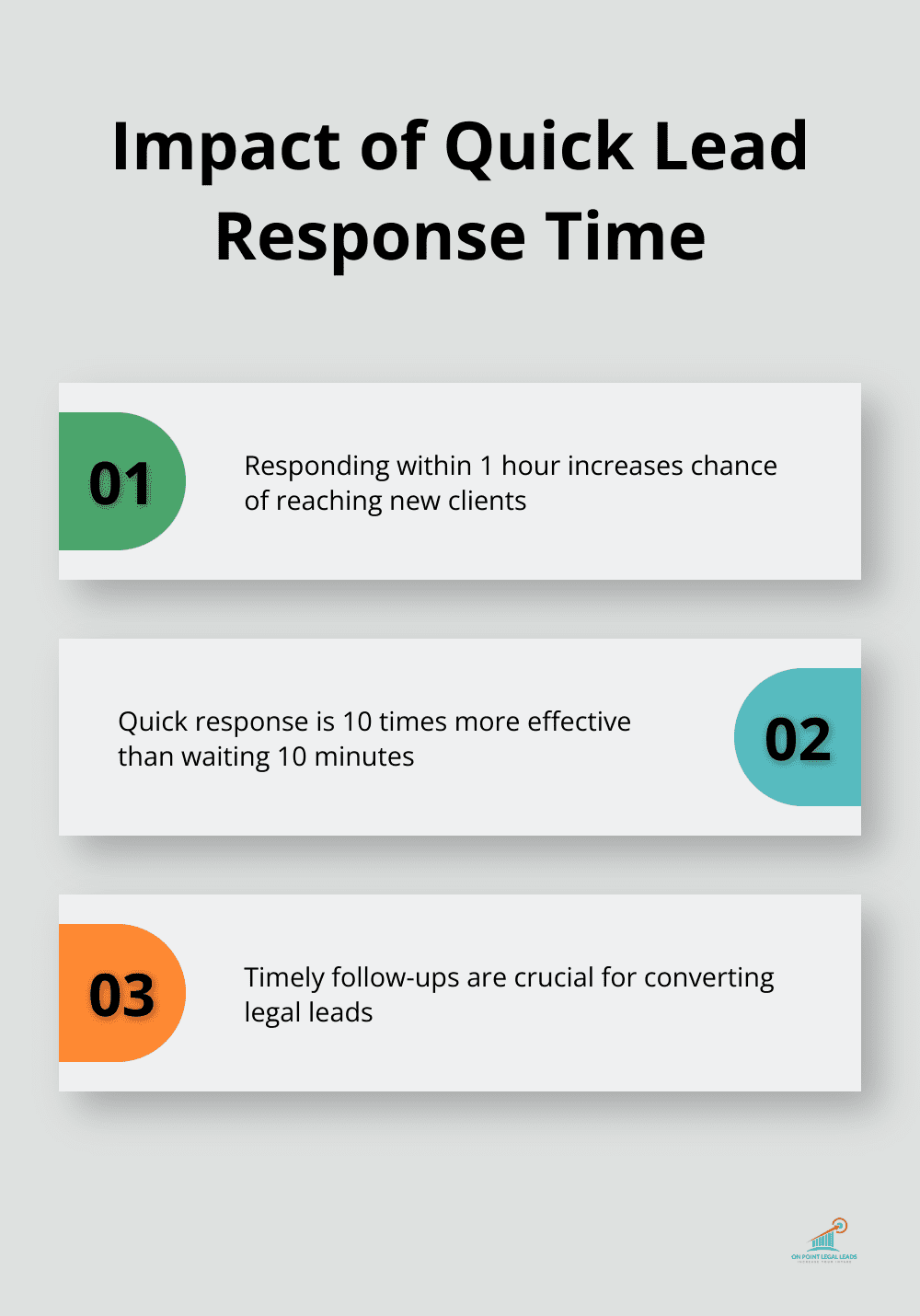
The speed of your follow-up can make or break a potential client relationship. Research shows that responding within an hour increases the likelihood of reaching potential new clients by 10 times compared to waiting 10 minutes.
Implement a system that ensures:
- Immediate automated responses to all inquiries.
- Personal follow-up within 24 hours.
- A structured schedule for subsequent touchpoints.
Many successful law firms use customer relationship management (CRM) systems to automate and track these follow-ups, ensuring no lead falls through the cracks. At On Point Legal Leads, best practices for converting legal leads for mass tort leads and auto accident leads includes utilizing a CRM platform.
Improve Legal Lead Conversion by Building Trust Through Valuable Content
Trust is the currency of the legal industry. Providing valuable, educational content positions your firm as an authority and builds credibility with potential clients.
Recent statistics show that consumers’ purchasing behavior has gradually shifted from the non-digital to the digital context. You can become the resource they turn to by creating and sharing high-quality content.
Effective trust-building content includes:
- Blog posts addressing common legal questions.
- Video explanations of complex legal processes.
- Downloadable guides on navigating specific legal situations.
- Case studies showcasing successful outcomes for clients.
Try to balance providing helpful information with maintaining the need for professional legal services. The goal is to demonstrate your expertise while encouraging potential clients to seek your assistance for their specific case.
Leverage Technology for Lead Nurturing
Modern technology offers powerful tools to streamline and enhance your lead nurturing process. Customer Relationship Management (CRM) systems, email marketing platforms, and marketing automation software can significantly improve your ability to nurture leads effectively.
These tools allow you to:
- Track lead interactions across multiple touchpoints
- Automate personalized email sequences
- Score leads based on their engagement (this helps prioritize your follow-up efforts)
- Analyze the performance of your nurturing campaigns
For instance, a law firm might use a CRM to set up an automated email sequence that sends relevant content to personal injury leads over a period of several weeks. This consistent communication keeps the firm top-of-mind when the lead is ready to make a decision.
Now that we’ve covered effective lead nurturing strategies, let’s explore how to optimize your intake process to capitalize on these nurtured leads and convert them into clients.
How to Streamline Your Intake Process to Improve Legal Lead Conversion
Simplify Initial Client Interactions
First impressions count. Make it easy for potential clients to contact you. Implement a 24/7 phone answering service to capture leads at any time. Acquiring a new client costs 5-25 times more than retaining an existing one, highlighting the importance of repeat clients.
Create a user-friendly online intake form on your website. Keep it short – ask only for essential information. A Hubspot study indicates that reducing form fields from four to three can increase conversions by up to 50%.
Train Your Staff for Peak Performance
Increasing legal client acquisition for auto accident leads may also requires a dedicated intake team. Your intake team represents the frontline of your firm. Invest in their training. Practice common scenarios to sharpen their skills. Teach them to listen actively and show empathy. Adopting artificial intelligence (AI) in the intake process can dramatically improve efficiency and boost client conversion rates.
Develop a standardized script for initial client interactions. This ensures consistency and helps capture all necessary information. Authenticity remains key. Train your team to adapt the script naturally to each unique situation.
Leverage Technology for Efficiency
Embrace technology to optimize your intake process. A robust Customer Relationship Management (CRM) system can automate follow-ups and track lead progression. Legal professionals can leverage technology to future-proof their client relationships.
Consider implementing chatbots on your website for instant responses to basic queries. These can qualify leads 24/7, allowing your team to focus on high-value interactions. A study by Drift found that law firms using chatbots experienced a 36% increase in lead qualification rates.
Personalize the Intake Experience to Increase Legal Lead Conversion
Tailor your intake process to each potential client’s unique needs. Use the information gathered from initial contacts to personalize follow-up communications. This approach shows that you value their individual case and understand their specific concerns.
Try to gather key details about the potential client’s legal issue during the initial interaction. This information allows you to provide more targeted advice and demonstrate your expertise in their particular area of need.
Monitor and Refine Your Process
Regularly analyze your intake process metrics (e.g., response times, conversion rates, client satisfaction scores). Use this data to identify bottlenecks and areas for improvement. Continuous refinement of your intake process can lead to significant improvements in conversion rates over time.
Solicit feedback from both converted and non-converted leads about their experience with your intake process. This valuable insight can help you identify strengths to build upon and weaknesses to address.
Final Thoughts on Legal Lead Conversion
Legal lead conversion requires dedication, strategy, and adaptability. High-quality leads form the foundation of successful conversions, so firms must prioritize leads that align with their expertise and have a genuine need for their services. Personalized communication, timely follow-ups, and trust-building content play key roles in nurturing these leads effectively.
Streamlining the intake process capitalizes on carefully nurtured leads. Firms should simplify initial interactions, train staff to handle leads professionally, and use technology to enhance efficiency. Continuous improvement in the ever-evolving legal landscape demands regular analysis of conversion metrics, feedback collection, and process refinement.
Law firms looking to supercharge their lead generation and conversion efforts can benefit from On Point Legal Leads. Their service provides exclusive, high-quality legal leads in real-time (allowing firms to focus on practicing law and serving clients). Applying these strategies and partnering with the right lead generation service can transform a firm’s approach to legal lead conversion.