


When it comes to buying personal injury leads, which has become a standard practice, many attorneys struggle with poor conversion rates and wasted spend. As competition becomes more fierce, personal injury law firms face mounting pressure to generate quality cases while managing tight marketing budgets.
At On Point Legal Leads, we see firms make costly mistakes when selecting lead providers and managing intake processes. The right approach to lead purchasing can transform your practice’s growth trajectory and profitability.
Understanding Buying Personal Injury And Different Lead Types
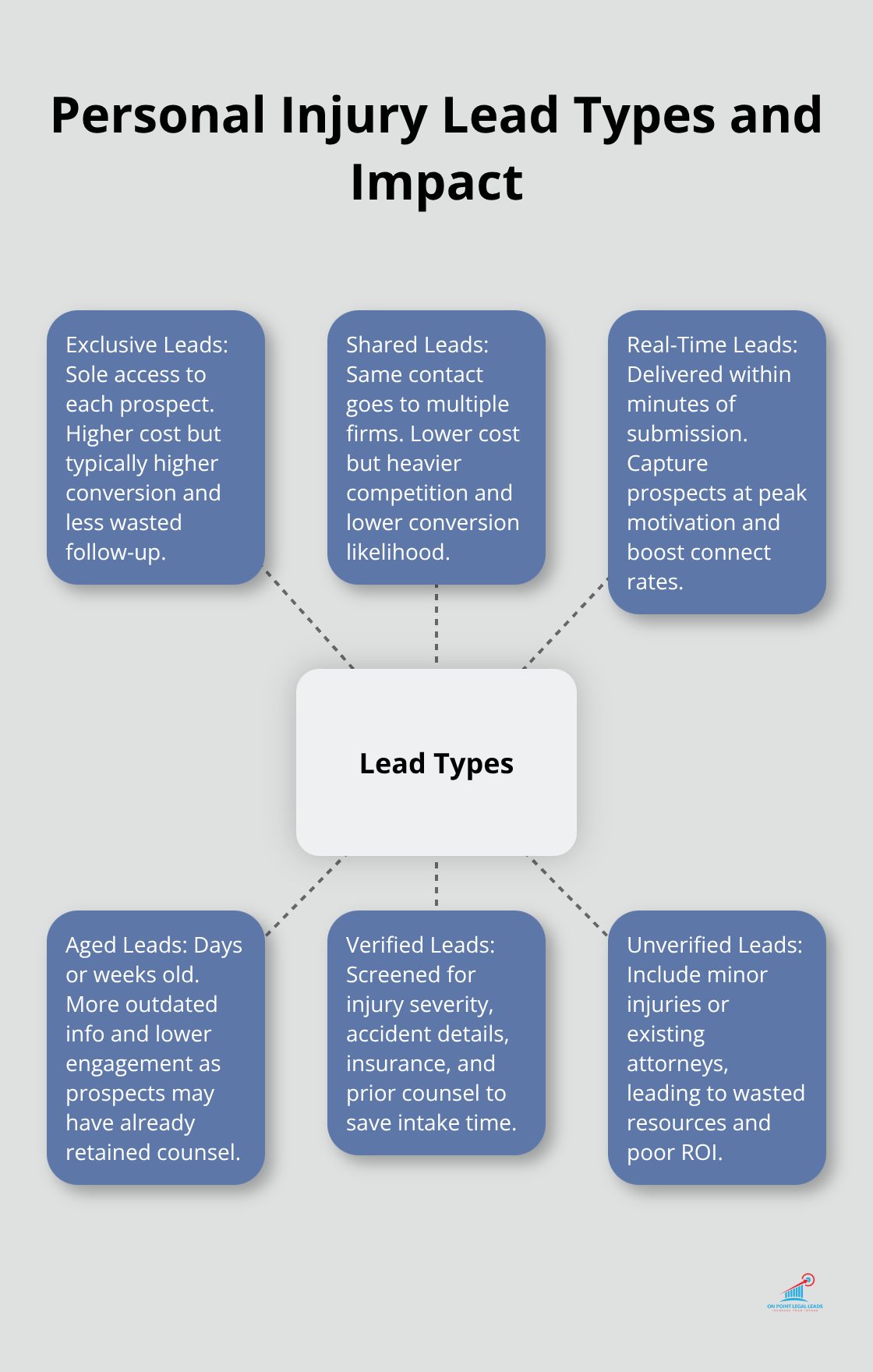
Personal injury leads operate under distinct categories that directly impact your conversion rates and case acquisition costs. Buying personal injury leads that are exclusive may give your firm sole access to prospects, while shared leads distribute the same contact to multiple attorneys. The American Bar Association reports exclusive leads cost between $350-$500 but convert at higher rates compared to shared leads at $100-$200 with 3-8% conversion rates. The math favors exclusivity – you pay triple the cost for significantly better conversion rates, which delivers better ROI.
Buying Personal Injury Leads: Exclusive vs Shared Lead Models
Buying personal injury leads that are exclusive provides your firm with sole contact rights to each prospect. Shared leads split the same contact among multiple attorneys, creating immediate competition. Exclusive models cost more upfront but eliminate the race against competitors. Shared leads force you to compete with 3-5 other firms for the same prospect’s attention. Most successful personal injury practices invest in exclusive leads to maximize their intake team’s effectiveness and avoid wasted follow-up efforts.
Real-Time vs Aged Lead Delivery
Real-time leads arrive within minutes of prospect submission, while aged leads sit in databases for days or weeks. Marketing research shows 74% of law firms respond to leads within the first seven days. Real-time delivery creates urgency and captures prospects at peak motivation levels. Aged leads often contain outdated contact information, prospects who already retained counsel, or individuals no longer actively seeking representation.
Lead Quality Verification Methods
Legitimate lead providers verify injury severity, accident details, insurance coverage, and prior legal representation before delivery. Unverified leads waste intake resources on prospects with minor injuries, questionable liability, or existing attorneys. Medical malpractice leads average $512 per acquisition according to 2024 industry data, while slip-and-fall cases cost $312 but show lower conversion rates. Premium providers screen for case value indicators including emergency room visits, ongoing medical treatment, and property damage exceeding $3,000 (which eliminates low-value prospects and focuses your team on cases with substantial settlement potential).
The next step involves evaluating which personal injury lead generation providers meet your firm’s specific requirements and compliance standards.
Evaluation Process of Buying Personal Injury Leads
Personal injury lead providers vary dramatically in compliance standards, generation methods, and pricing transparency. TCPA violations result in civil penalties of up to $1,000 per incident, with penalties reaching $3,000 for violations involving consumers 60 years or older, making compliance verification your first priority. When buying personal injury leads, consider that legitimate providers maintain documented consent records, implement proper opt-in procedures, and provide TCPA-compliant call recordings. Avoid providers who cannot produce consent documentation or refuse to share their compliance protocols. We have found that using heat maps and companies like ActiveProspect that provide a digital recording of the submission, which includes clicking a box that provides knowledge and consent to receive calls, texts, emails, and AI-generated communications offers a great source of protection.
Compliance Standards and TCPA Requirements
Reputable lead providers generate prospects through compliant digital marketing campaigns, SEO optimization, and attorney-approved advertising content. Questionable providers purchase data from third-party brokers, scrape public records, or use robocall systems that violate TCPA regulations. Request detailed explanations of lead generation sources and verify providers maintain current TCPA compliance certifications. Premium providers like Walker Advertising emphasize regulatory compliance in their lead generation practices, while budget providers often cut corners on consent verification. Your firm assumes liability risks when you work with non-compliant providers, regardless of their pricing advantages.
Lead Generation Methods and Sources for Buying Personal Injury Leads
Quality providers use transparent marketing channels to attract genuine injury claimants. They invest in SEO campaigns, pay-per-click advertising, and content marketing to reach prospects actively seeking legal representation. These methods produce higher-intent leads compared to purchased data lists or cold outreach tactics. The choice of a lead generation partner significantly impacts your lead quality. When buying personal injury leads, look for personal injury lead generators with a proven track record in delivering high-intent leads. Verify that providers screen for injury severity, accident details, and insurance coverage before delivery. Providers who cannot explain their lead generation process or refuse to share conversion data typically operate questionable practices that waste your intake resources.
Pricing Models and ROI Metrics
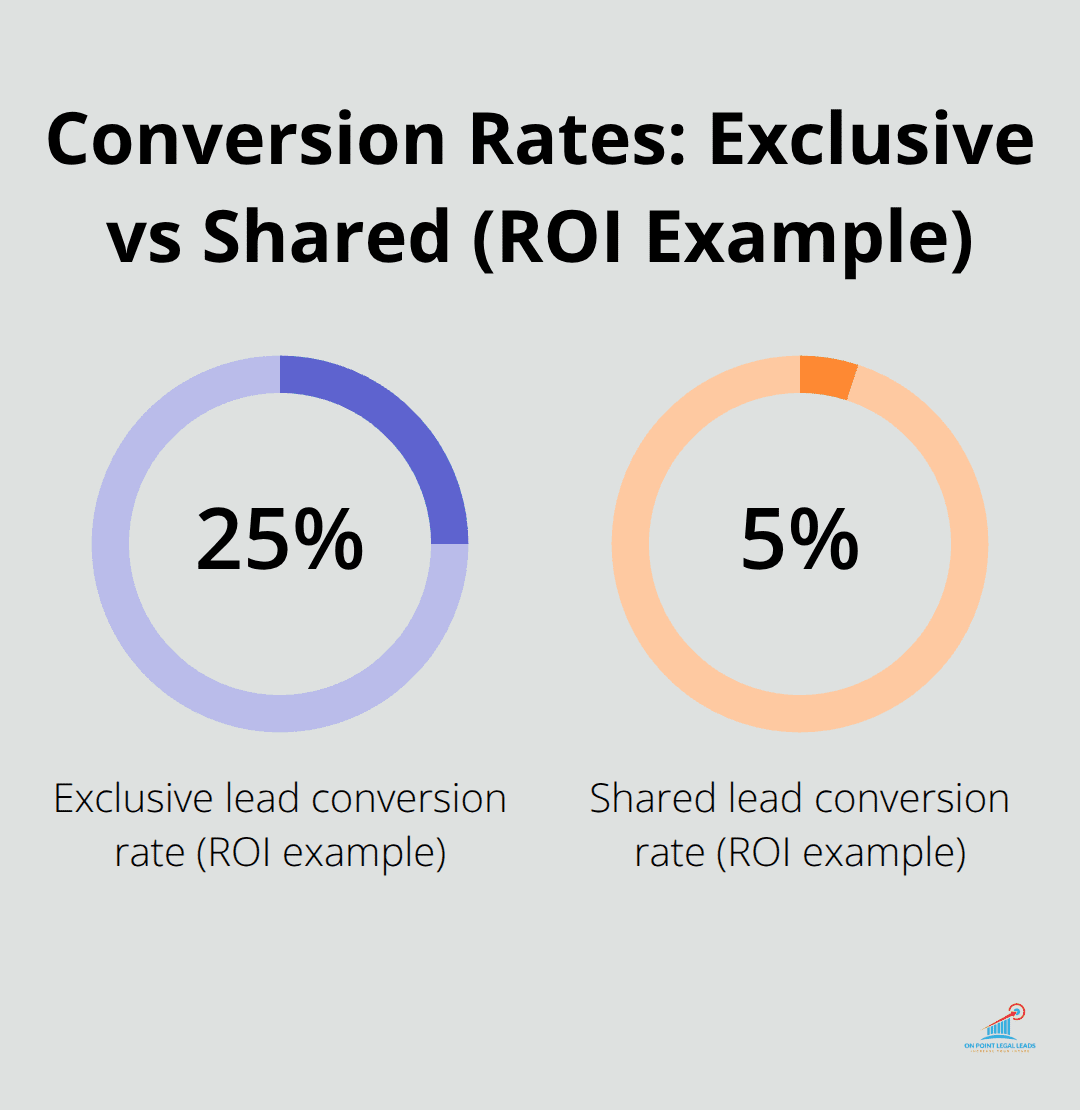
Personal injury leads may cost anywhere from $100 to over $350, depending on many factors and the company you buy the leads from, with geographic location significantly impacting costs. Medical malpractice leads typically command higher acquisition costs due to their complexity and potential settlement values, while auto accident leads represent a significant portion of personal injury cases. In fact, we’ve discovered that medical malpractice leads have among the lowest conversion rates and law firms cost per case is often much higher than other personal injury leads. If your firm is buying personal injury leads, evaluate providers based on cost per signed case rather than lead price alone. A $300 exclusive lead with 25% conversion rates delivers better ROI than $150 shared leads with 5% conversion rates.
The next step focuses on how your firm can maximize conversion rates through rapid response protocols and effective intake processes.
Best Practices for Buying and Converting Personal Injury Leads
Personal injury lead conversion demands speed, precision, and systematic follow-up protocols that most law firms execute poorly. Harvard Business Review research shows companies that responded to leads within an hour were seven times more likely to qualify the lead compared to those that waited longer. Your intake team must contact new leads within five minutes maximum – prospects who don’t receive immediate attention will move to the next attorney on their list.
Implement automated text systems that acknowledge lead receipt instantly, followed by phone calls within two minutes. Train intake staff to make minimum three contact attempts within the first hour using different communication channels: phone, text, and email. Persistence pays off because genuine injury claimants expect immediate attorney availability during their crisis moment.
Rapid Response Systems That Actually Work When Buying Personal Injury Leads
Successful personal injury practices use CRM systems with automatic lead distribution, instant notifications, and built-in follow-up sequences. Tools like CASEpeer enable real-time lead tracking and automated communication workflows that prevent prospects from falling through administrative cracks. At On Point Legal Leads, we started using Law Ruler after years of using a proprietary CRM. The benefits we’ve witnessed were a decreased cost in labor form a tech staff, as well as time spent maintaining and adding features.
When buying personal injury leads, configure your system to send leads directly to available intake specialists rather than general email inboxes where messages sit unread for hours. Set up SMS auto-responders that provide immediate acknowledgment and schedule callback appointments within 15 minutes of lead receipt. Track response times religiously – the data shows just how critical the first few moments are after a potential client reaches out.
Qualification Questions That Identify Valuable Cases
Whether buying personal injury leads or generating legal leads in-house, your intake process must separate high-value cases from time-wasters within the first three minutes of conversation. Ask specific questions about medical treatment received, ongoing pain levels, insurance coverage limits, and work missed due to injuries.
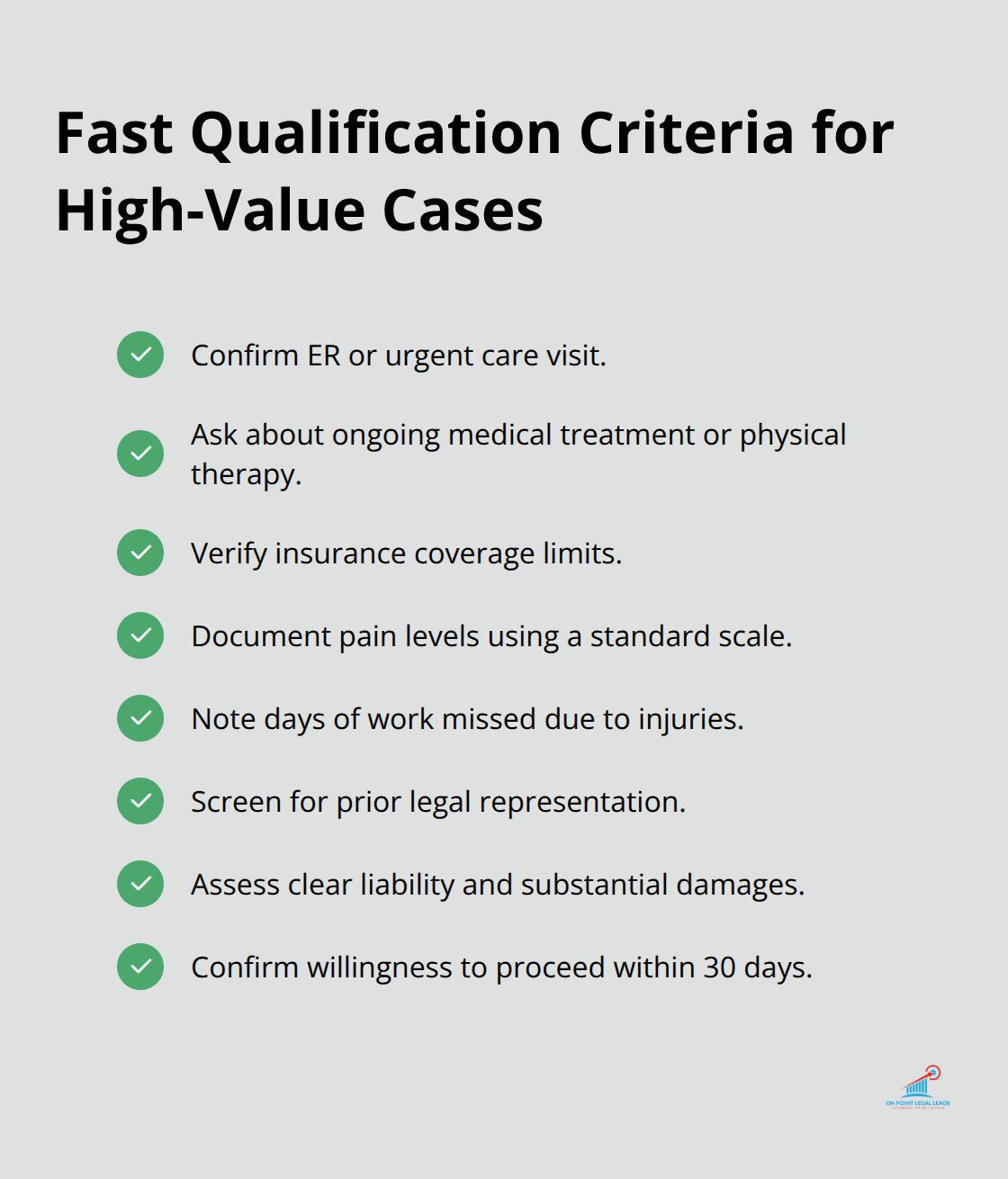
Prospects who visited emergency rooms, require physical therapy, or missed more than three work days typically indicate cases worth pursuit. Screen for prior legal representation immediately – prospects already working with attorneys waste your intake resources. Document injury severity using standardized pain scales and medical terminology that supports case value assessment. Qualified prospects should demonstrate clear liability, substantial damages, and willingness to proceed with legal action within 30 days of initial contact.
Building rapport and overcoming objections during qualification calls significantly improves conversion rates. Call centers that specialize in legal intake can provide the expertise and consistency needed to maximize lead conversion potential.
Final Thoughts on Buying Personal Injury Leads
Buying personal injury leads demands strategic evaluation of provider compliance, lead quality verification, and rapid response capabilities. Exclusive leads consistently outperform shared models despite higher upfront costs, while real-time delivery maximizes conversion potential compared to aged prospects. Your firm’s success depends on selecting TCPA-compliant providers who generate leads through legitimate marketing channels rather than purchased data lists.
Focus on cost per signed case metrics instead of lead price alone (a $300 exclusive lead with 25% conversion rates delivers superior ROI compared to $150 shared leads converting at 5%). Implement five-minute response protocols with automated acknowledgment systems and persistent follow-up sequences. Train intake staff to qualify prospects using standardized questions about injury severity, medical treatment, and insurance coverage within three minutes of initial contact.
We at On Point Legal Leads specialize in delivering pre-qualified, exclusive motor vehicle accident leads with rigorous multi-point screening and real-time delivery. Our exclusive personal injury leads undergo verification for accident details, injury severity, and legal representation status before reaching your intake team. Sustainable lead generation success requires combining purchased leads with organic marketing strategies like SEO and referral networks while tracking conversion metrics religiously.