


At On Point Legal Leads, we know that legal lead conversion tactics is a critical skill for law firms. Lead conversion tactics can make or break your practice’s growth.
This blog post will guide you through the essential steps of transforming legal leads into loyal clients. We’ll cover everything from understanding the conversion process to building trust with potential clients.
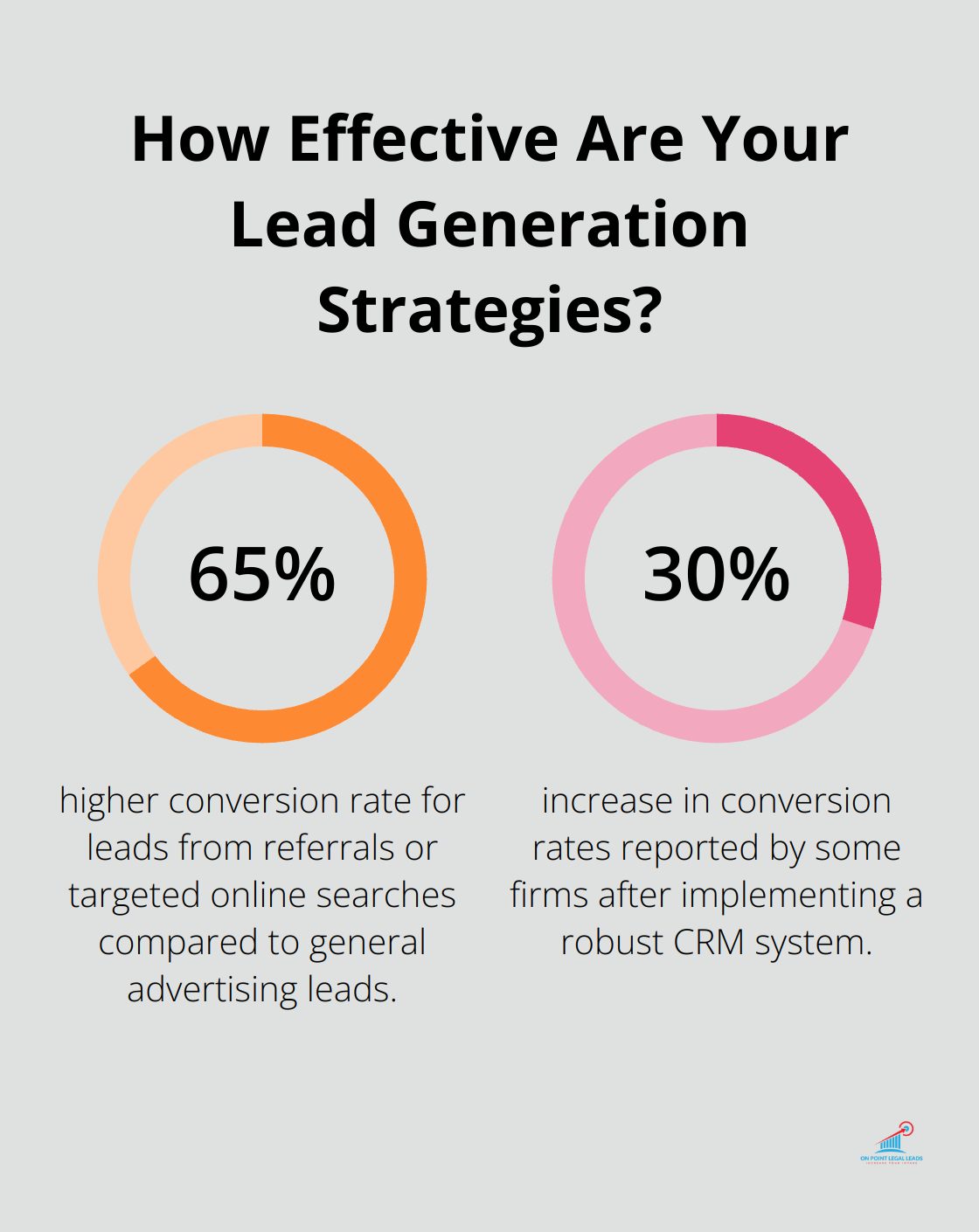 A 2024 American Bar Association study revealed that leads from referrals or targeted online searches have a 65% higher conversion rate than general advertising leads. This statistic underscores the importance of focusing your efforts on channels that attract motivated prospects.
 For example, you might award:
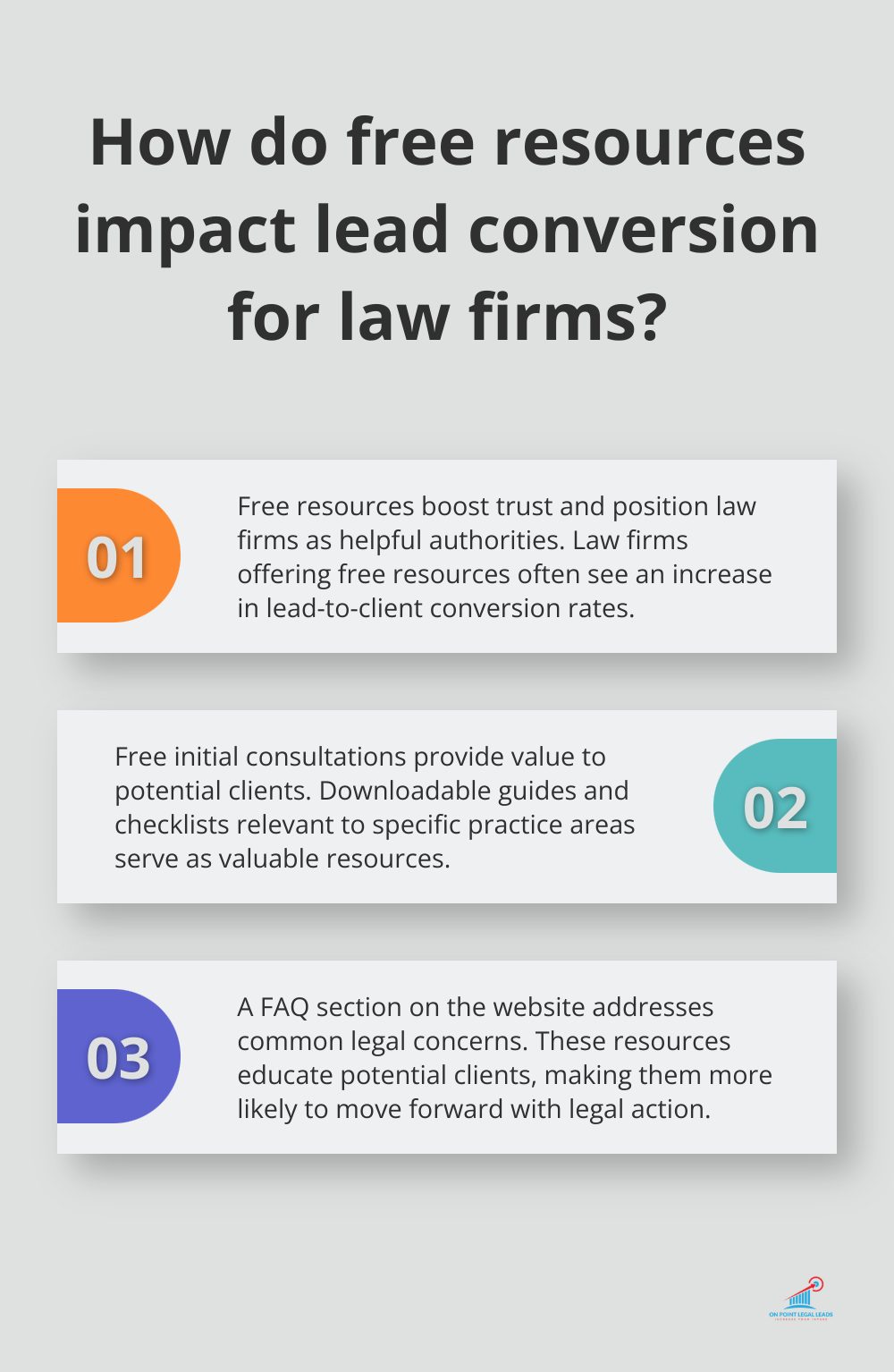 Law firms offering free resources often see an increase in lead-to-client conversion rates. These resources not only build trust but also help educate potential clients, making them more likely to move forward with legal action.
 Implementing these strategies will equip you to turn more leads into clients. You’ll drive the success and growth of your law firm by focusing on what matters most: building strong client relationships and delivering exceptional legal services.
Effective Legal Lead Conversion Tactics
Defining High-Quality Legal Leads
High-quality legal leads form the cornerstone of successful conversions. These potential clients have a genuine need for legal services and align with your firm’s expertise. They typically take specific actions (such as filling out a contact form or calling your office) that indicate a strong intent to seek legal representation.The Impact of Rapid Response for Legal Lead Conversion Tactics
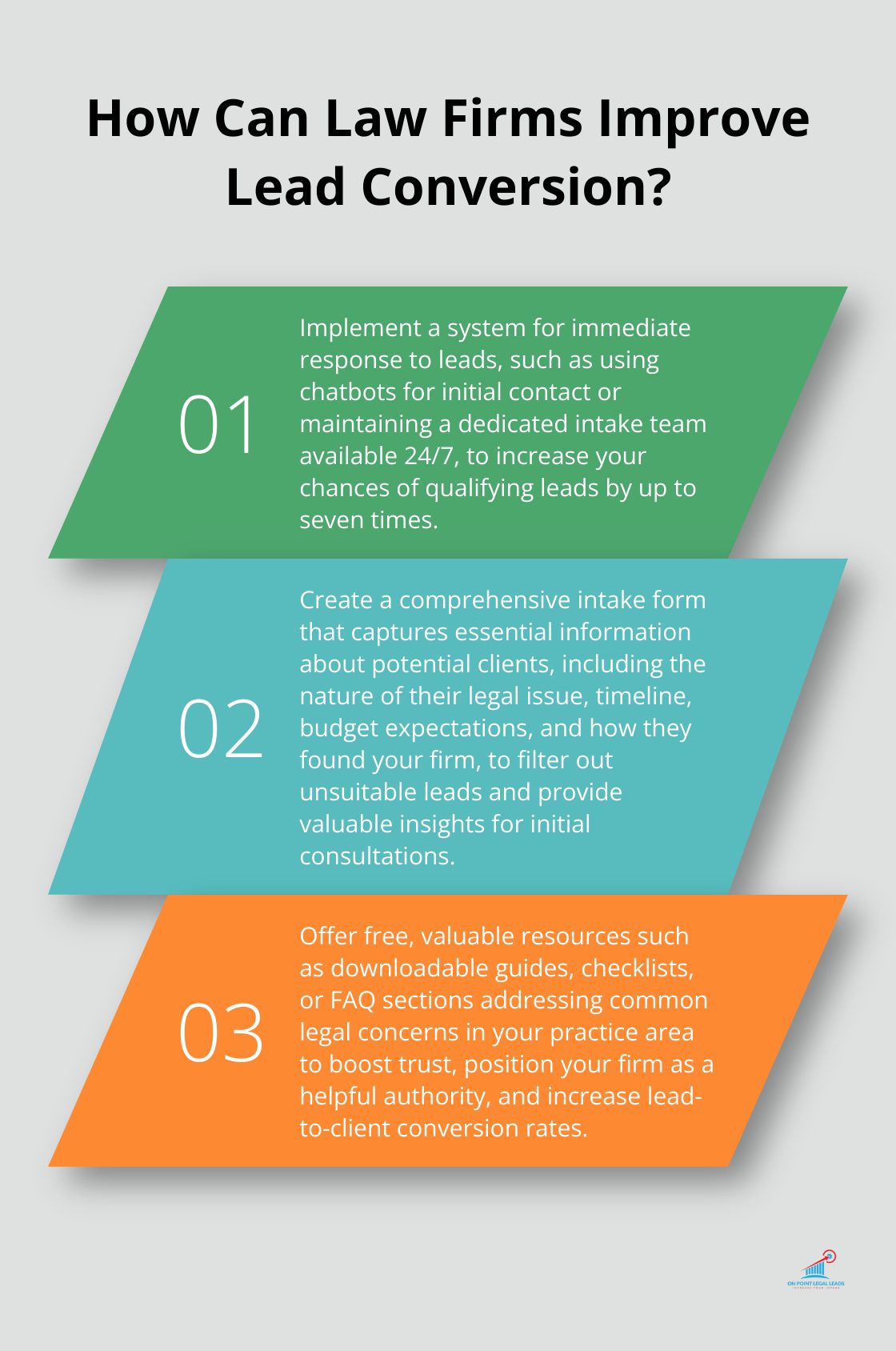
In the competitive legal industry, potential clients often reach out to multiple firms simultaneously. Quick response to leads can make or break your success with legal lead conversion tactics. A Harvard Business Review study found that firms contacting potential clients within an hour of receiving a query were nearly seven times more likely to qualify the lead than those who waited longer. To capitalize on this, implement a system for immediate response, even outside office hours. This could involve using chatbots for initial contact or maintaining a dedicated intake team ready to engage with leads at any time.Mapping the Client Journey for Optimal Conversion
Understanding the path a lead takes from initial contact to becoming a client helps improve your legal lead conversion tactics. This journey typically includes:- Initial Contact: The lead reaches out through your website, phone, or referral.
- Screening: You assess if the lead’s needs match your services.
- Consultation: You provide initial advice and explain how you can help.
- Proposal: You offer a formal agreement for your services.
- Decision: The lead chooses to retain your firm.
Leveraging Technology for Better Legal Lead Conversion Tactics
Modern law firms can use various technological tools to streamline their lead conversion process. Customer Relationship Management (CRM) systems, for instance, can help track interactions with potential clients and automate follow-ups. Some firms (including those using On Point Legal Leads) have reported up to a 30% increase in conversion rates after implementing a robust CRM system. Additionally, AI-powered chatbots can provide instant responses to common queries, keeping leads engaged even outside business hours. These tools can qualify leads, schedule appointments, and provide basic information, freeing up your team to focus on high-value interactions. The next step in mastering lead conversion is to implement effective strategies for lead qualification. This process ensures that you’re focusing your efforts on the most promising prospects, maximizing your firm’s resources and increasing your chances of success.How to Implement Legal Lead Conversion Tactics
Create a Comprehensive Intake Form
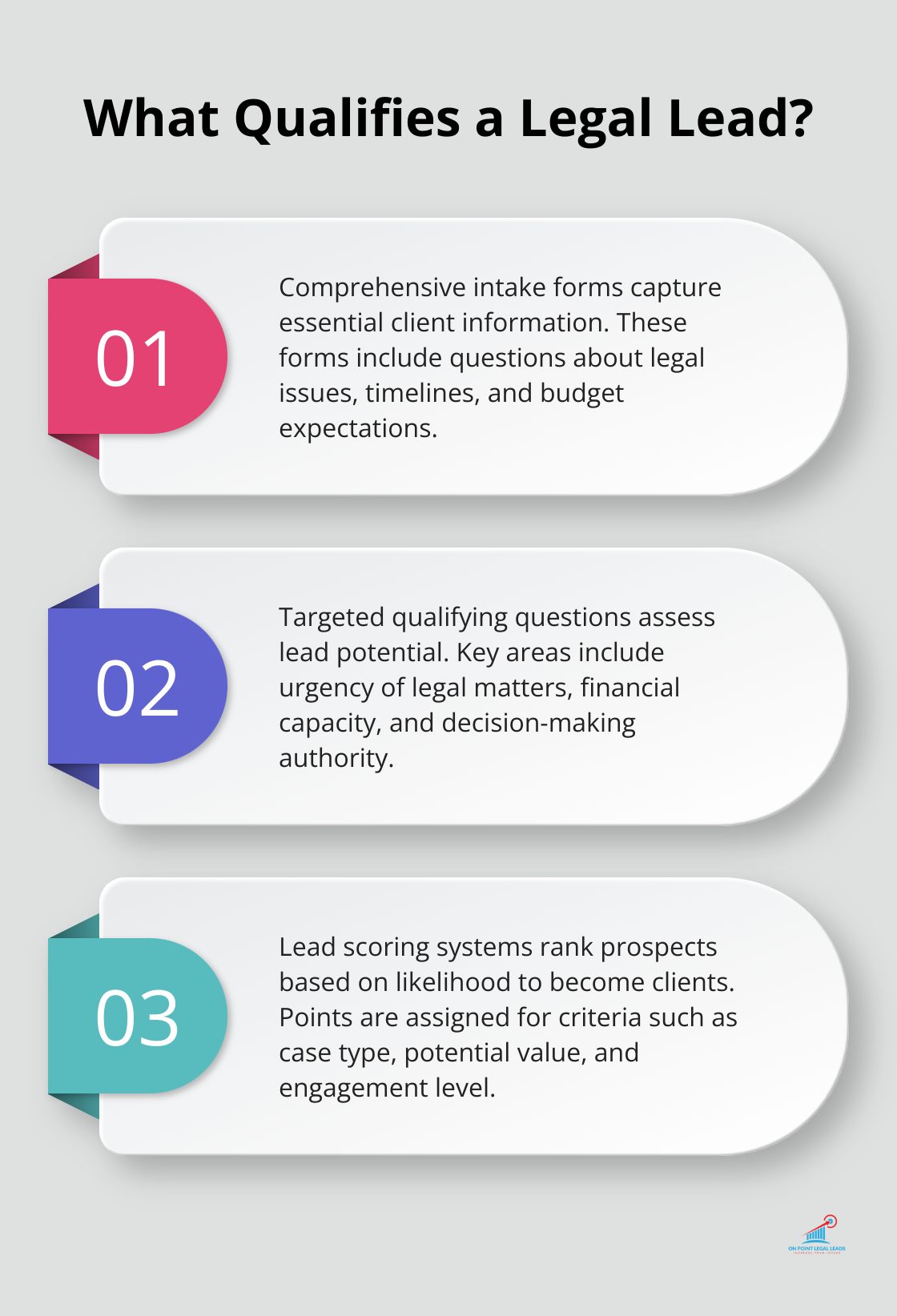
A detailed intake form captures essential information about potential clients. This form should include questions about the nature of their legal issue, timeline, budget expectations, and how they found your firm. A well-designed intake form filters out unsuitable leads and provides valuable insights for your initial consultation.Ask Targeted Qualifying Questions
During initial conversations, ask specific questions to assess lead potential. Key areas to explore include:- Urgency of the legal matter
- Financial capacity to pursue legal action
- Previous experience with legal services
- Decision-making authority (especially for business clients)
Use Lead Scoring Systems
Lead scoring ranks prospects based on their likelihood to become clients. This can help improve your legal lead conversion tactics. Assign point values to different criteria such as case type, potential value, and engagement level. This approach helps prioritize follow-ups and allocate resources effectively.- 10 points for a lead in your primary practice area
- 5 points for a referral from an existing client
- 3 points for engaging with your firm’s educational content
Utilize AI for Initial Screening
Artificial Intelligence streamlines the lead qualification process. AI-powered chatbots conduct initial screenings 24/7, asking preliminary questions and scheduling appointments for qualified leads. These strategies equip you to identify and nurture the most promising leads. The next chapter will explore how to build trust and rapport with these qualified prospects, turning them into loyal clients.Legal Lead Conversion Tactics: How to Build Trust with Legal Leads
Showcase Your Expertise
Demonstrating your expertise in your practice area builds trust with potential clients. Create and share valuable content that addresses common legal issues your potential clients face. A personal injury law firm might publish a comprehensive guide on “What to Do After a Car Accident” or host a webinar on “Understanding Your Rights in a Workplace Injury.”Personalize Your Communication
Tailoring your communication to address each lead’s specific needs is essential. Use the information gathered during the lead qualification process to customize your approach. If a lead mentioned concerns about legal costs, address this proactively by explaining your fee structure or offering flexible payment options.Offer Free Value
Providing free, valuable resources can significantly boost trust and position your firm as a helpful authority. This could include:- Free initial consultations
- Downloadable guides or checklists relevant to your practice area
- A FAQ section on your website addressing common legal concerns
Leverage Client Testimonials
Real-life success stories from past clients can be powerful trust-builders. Feature detailed case studies or video testimonials on your website and social media channels. These should highlight not just the outcome of the case, but also the client’s experience working with your firm. This gives potential clients a clear picture of what they can expect when they choose your services.Implement Transparent Communication
Transparency in your communication fosters trust with potential clients. Clearly explain your legal processes, fee structures, and expected timelines. Address potential challenges or obstacles upfront, demonstrating your honesty and commitment to realistic expectations. Try to provide regular updates throughout the legal process (even before a lead becomes a client). This proactive approach shows your dedication to clear communication and client satisfaction, which can significantly influence a lead’s decision to choose your firm.Final Thoughts on Legal Lead Conversion Tactics
Legal lead conversion tactics require continuous refinement for law firms to thrive in a competitive landscape. Firms must analyze conversion metrics, seek feedback, and adjust strategies to adapt to changing client needs. Exceptional service and regular communication build lasting relationships, often leading to valuable referrals. On Point Legal Leads offers a comprehensive solution for law firms looking to streamline their lead generation and conversion processes. We provide high-quality, pre-screened leads tailored to your practice area (allowing you to focus on converting leads into loyal clients). This approach can significantly improve your conversion rates and practice efficiency.