


At On Point Legal Leads, we know that a solid legal lead screening process is the backbone of successful legal marketing.
Implementing a foolproof system to filter and qualify potential clients can dramatically boost your conversion rates and overall business growth.
This post will guide you through creating an effective lead screening process, from defining your ideal client profile to training your team for optimal results.
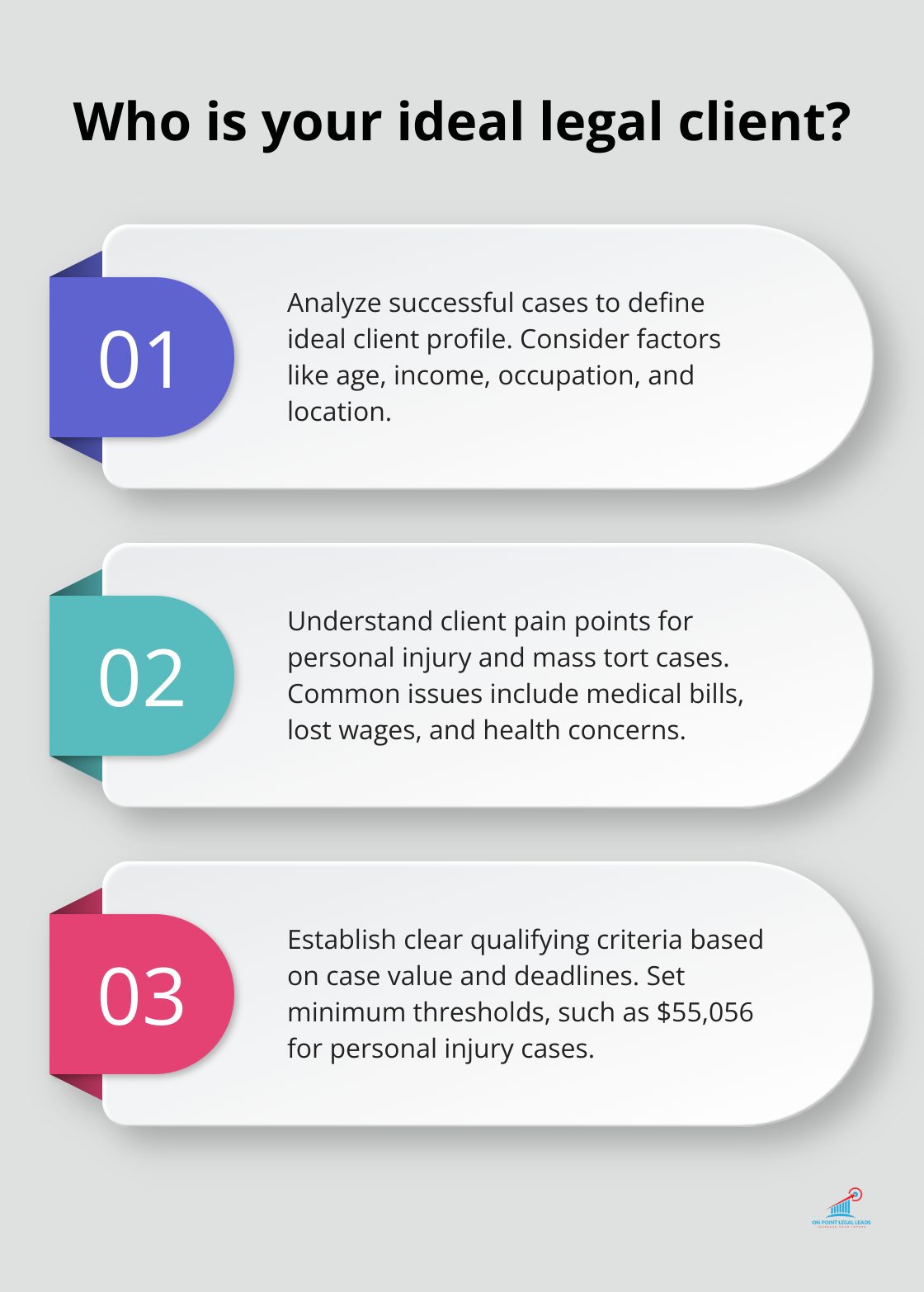 Start by analyzing your most successful cases. What characteristics did these clients share? Consider factors like age, income level, occupation, and location. For personal injury leads, you might find that middle-aged professionals in urban areas are your sweet spot. Mass tort cases might skew towards older demographics affected by specific products or medications.
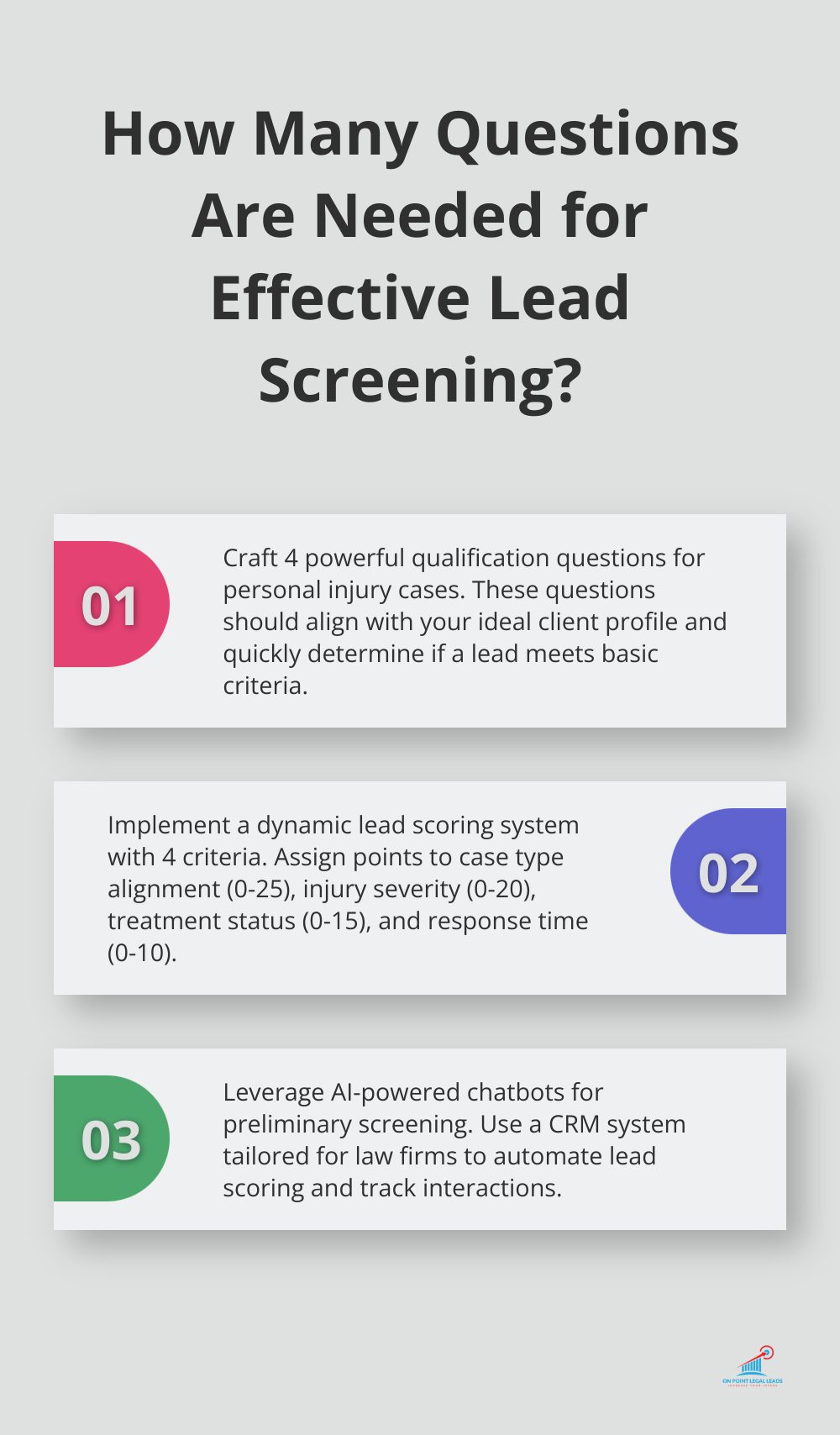 Keep your questions concise and focused.
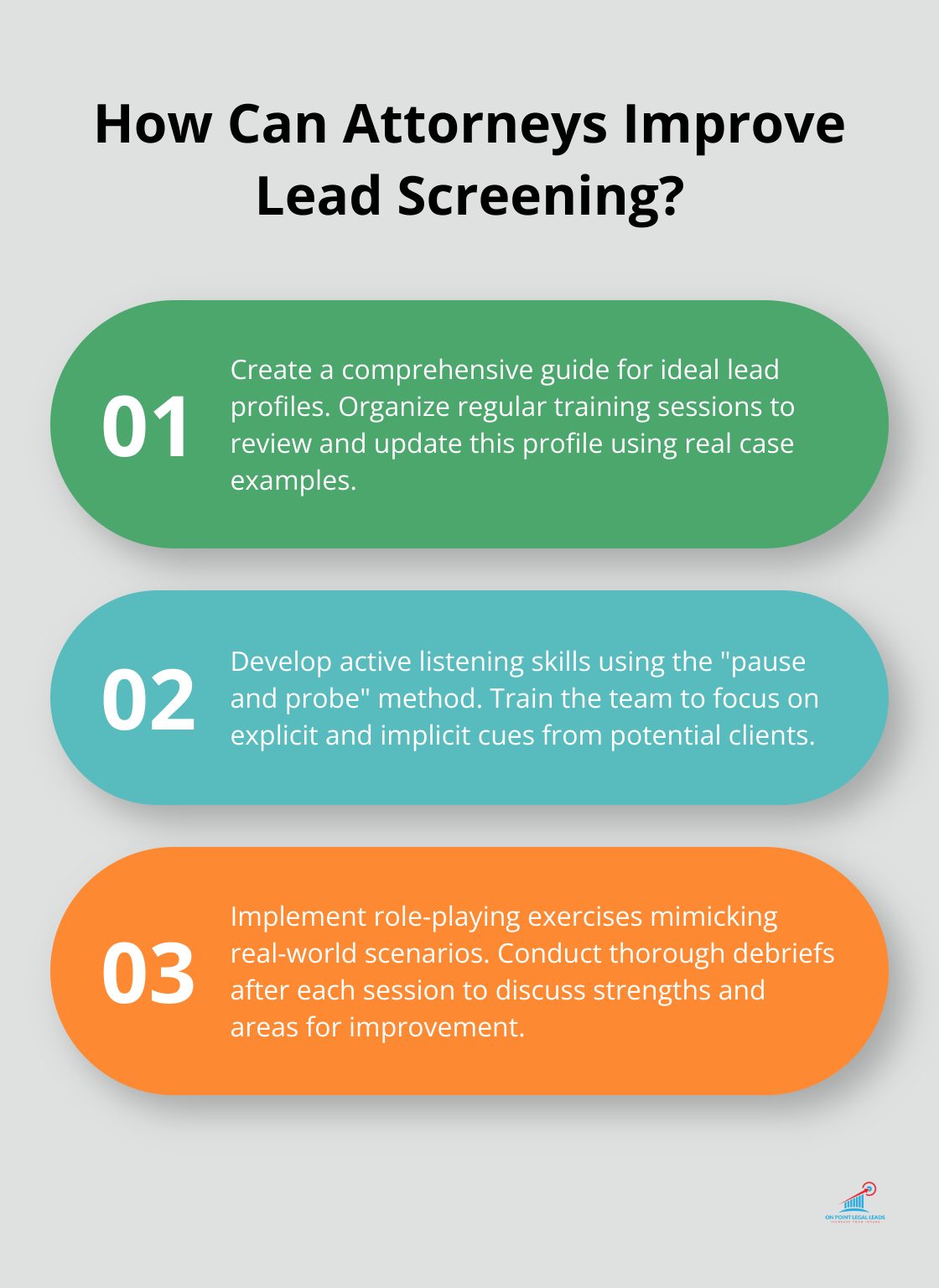 Organize regular training sessions to review and update this profile. Use real case examples from your firm to illustrate what makes a lead valuable. This concrete approach helps staff internalize the profile more effectively than abstract descriptions.
 Law firms that implement effective legal lead screening will see increased efficiency in their marketing efforts and overall success. This targeted approach saves time and resources while leading to higher client satisfaction and more profitable cases. On Point Legal Leads offers a premier service that provides exclusive, high-quality legal leads in real time (customizable to specific firm needs).
On Point Legal Leads positions your practice for sustainable growth in an increasingly competitive legal landscape. A foolproof lead screening process will build a robust pipeline of qualified leads to drive your firm’s growth for years to come. Consistent application and refinement of these principles will ensure long-term success for your legal practice.
Law firms that implement effective legal lead screening will see increased efficiency in their marketing efforts and overall success. This targeted approach saves time and resources while leading to higher client satisfaction and more profitable cases. On Point Legal Leads offers a premier service that provides exclusive, high-quality legal leads in real time (customizable to specific firm needs).
On Point Legal Leads positions your practice for sustainable growth in an increasingly competitive legal landscape. A foolproof lead screening process will build a robust pipeline of qualified leads to drive your firm’s growth for years to come. Consistent application and refinement of these principles will ensure long-term success for your legal practice.
How to Implement Your Legal Lead Screening Process
Pinpointing Your Target Demographic
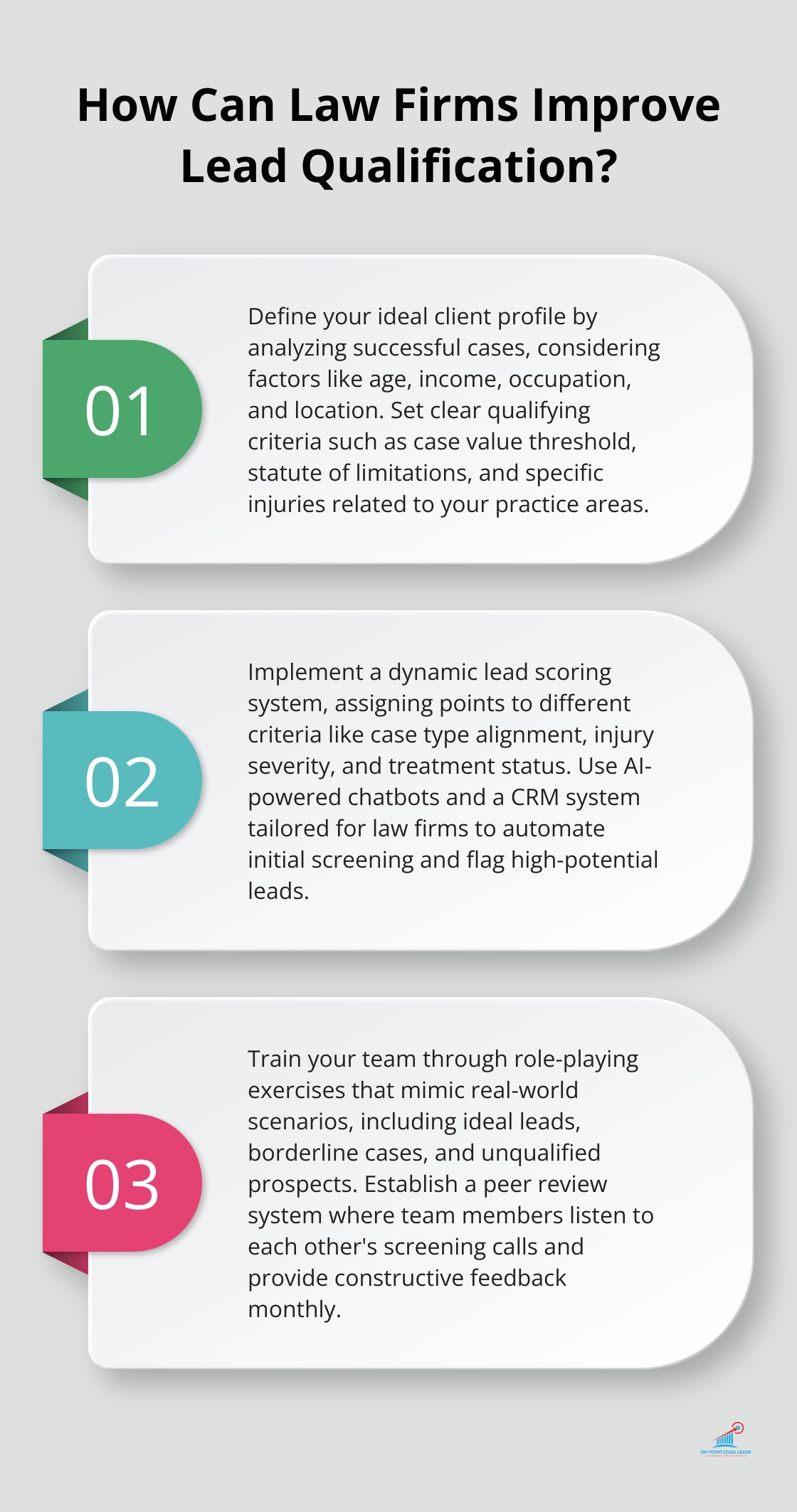
The first step to a foolproof legal lead screening process is to define your ideal lead profile. This step helps you focus your efforts on the most promising potential clients, which saves time and resources.Uncovering Client Pain Points
Understanding the specific problems your ideal clients face is essential. For personal injury cases, common pain points include medical bills, lost wages, and long-term disability concerns. In mass torts, clients might struggle with health issues, financial strain from medical treatments, or frustration with large corporations.Setting Clear Criteria for Your Legal Lead Screening Process
Based on your ideal client profile and their pain points, establish concrete qualifying criteria. These might include:- Case value threshold (e.g., minimum $55,056 for personal injury)
- Statute of limitations (cases within the legal deadline)
- Specific injuries or conditions related to your practice areas
- Geographic location within your service area
Refining Your Ideal Client Profile
As you work with more clients, continuously refine your ideal client profile. Track the characteristics of your most successful cases and adjust your criteria accordingly. This ongoing process (which should be reviewed quarterly) will help you stay aligned with market trends and maximize your firm’s potential.Leveraging Data for Better Targeting
Use data analytics tools to gain deeper insights into your client base. These tools can help you identify patterns and trends that pinpoint when and where growth occurs in your firm. For example, you might discover that clients from certain industries or with specific types of injuries tend to have higher-value cases. Now that you’ve defined your ideal legal client, the next step is to create a multi-step screening process that efficiently identifies and qualifies these potential clients.How to Build an Effective Legal Lead Screening Process
Craft Powerful Qualification Questions
Start your legal lead screening process with a set of initial qualification questions that align with your ideal client profile. These questions should quickly determine if a lead meets your basic criteria. Select topics that resonate with your target audience. For personal injury cases, you might ask:- When did the incident occur?
- What type of injury did you sustain?
- Have you received medical treatment?
- Are you currently represented by another attorney?
Implement a Dynamic Lead Scoring System
A lead scoring system helps prioritize leads based on their engagement levels and potential to become customers. Assign points to different criteria and actions. For example:-
- Case type alignment: 0-25 points
- Injury severity: 0-20 points
- Treatment status: 0-15 points
- Response time: 0-10 points
Leverage Technology for Preliminary Screening
Use automated tools to handle the initial screening process. AI-powered chatbots can enhance productivity for law firms by streamlining manual workflows and lightening the load for small in-house teams. Consider implementing a CRM system tailored for law firms. These systems can automate lead scoring, track interactions, and flag high-potential leads for immediate follow-up.Refine Your Process Continuously
Your screening process should evolve with your practice. Analyze your conversion data regularly to identify trends and adjust your criteria. Try to review your screening process quarterly to ensure it remains aligned with your firm’s goals and market demands. An effective screening process not only identifies potential clients but also sets the stage for successful client relationships. These strategies will help you build a robust pipeline of qualified leads for your legal practice. Now that you’ve established an effective screening process, it’s time to focus on training your team to implement it successfully. The next chapter will guide you through the essential steps to prepare your staff for optimal lead screening performance.How to Train Your Team for Effective Legal Lead Screening
Master the Ideal Lead Profile
The path to generating quality business law leads for attorneys requires a multi-faceted approach that combines digital presence with traditional networking. Create a comprehensive guide that outlines key characteristics, pain points, and qualifying criteria. Make this guide easily accessible to all staff members involved in lead screening.Develop Active Listening Skills
Active listening is a key skill for effective lead screening. Train your team to focus on what potential clients say, both explicitly and implicitly. Teach them to pick up on subtle cues that might indicate a high-value case. One effective technique is the “pause and probe” method. Instruct your team to pause for a few seconds after a lead finishes speaking, then ask a follow-up question based on what was said. This approach shows attentiveness and often uncovers important information. The American Bar Association recommends establishing clear communication channels, practicing active listening skills to comprehend client concerns, and simplifying complex legal terms for client comprehension.Implement Role-Playing Exercises
Role-playing exercises are invaluable for honing lead screening skills. Set up scenarios that mimic real-world situations your team might encounter. Include a mix of ideal leads, borderline cases, and clearly unqualified prospects to give your team practice with various situations. After each role-play session, conduct a thorough debrief. Discuss what went well and areas for improvement. Encourage team members to share their experiences and learn from each other. Sales training benefits include increased revenue, improved productivity, strengthened organization, and overall improvement.Establish a Peer Review System
Implement a system of peer review where team members can listen to each other’s screening calls and provide constructive feedback. This peer-to-peer learning can be highly effective and fosters a culture of continuous improvement. Try to assess your team’s performance regularly (ideally on a monthly basis) and provide additional training as needed. With a well-trained team implementing your legal lead screening process, you’ll identify and convert high-value leads efficiently.Final Thoughts on Developing Your Legal Lead Screening Process
A robust legal lead screening process forms the cornerstone of successful legal marketing. Law firms can enhance their ability to identify and convert high-value clients through clear lead profiles, powerful qualification questions, and dynamic scoring systems. The success of this process depends on well-trained staff who master ideal lead profiles and develop active listening skills.