


Lead follow up strategies can make or break your business success. At On Point Legal Leads, we’ve seen firsthand how a well-executed follow up process can dramatically boost conversion rates and client satisfaction.
In this post, we’ll explore proven techniques to perfect your lead follow up strategy, from timely responses to leveraging cutting-edge technology. Get ready to transform your approach and maximize your impact on potential clients.
Lead Follow Up Strategies: The Critical Role of Speed in
The Golden Hour: A Window of Opportunity
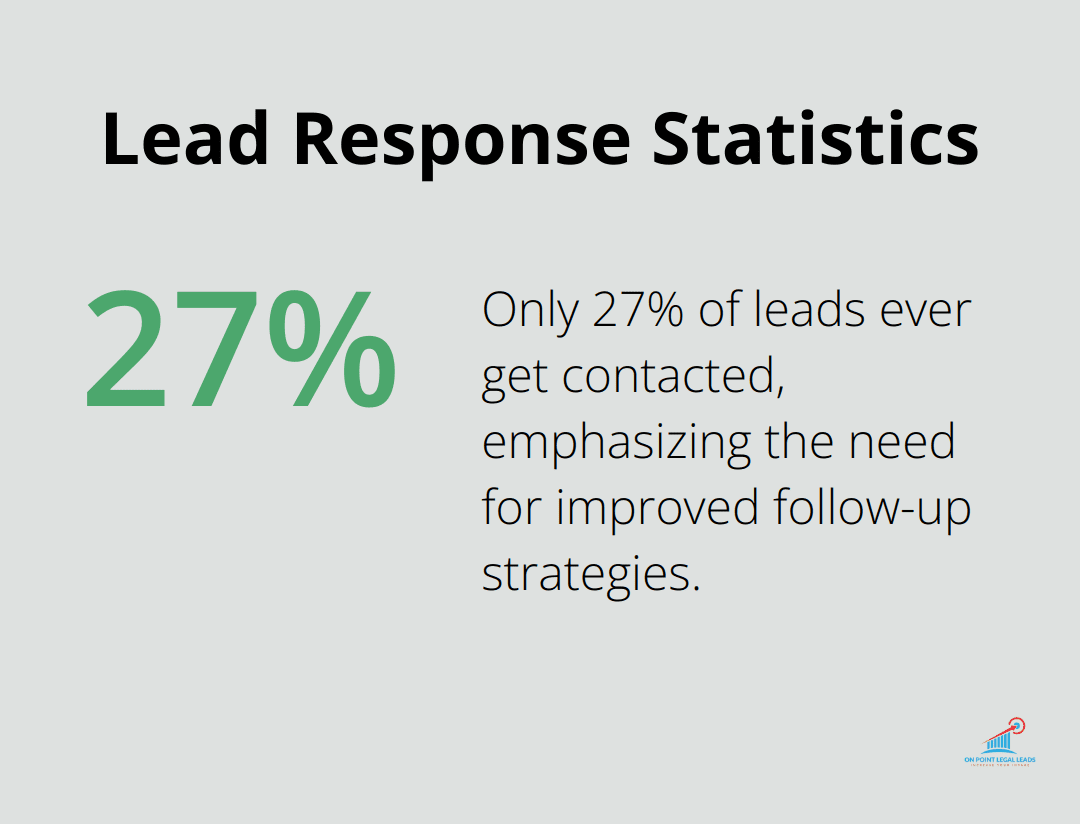
Research from InsideSales.com reveals that the average lead response time is 47 hours, and just 27% of leads get contacted at all. This highlights the importance of the “golden hour” – the peak of lead engagement and receptivity to your outreach.
The High Cost of Delayed Response
Procrastination in lead follow up can prove catastrophic. A Harvard Business Review study confirmed that your odds of qualifying a lead dramatically decrease the longer you take to respond. This statistic underscores the importance of swift action in lead management.
Integrating quick lead follow up strategies: A Customer Satisfaction Booster
Speed doesn’t just impact conversion rates; it significantly affects customer satisfaction. A rapid response demonstrates to potential clients that you value their time and are eager to assist. This positive first impression can set the tone for the entire client relationship, potentially leading to long-term loyalty and positive word-of-mouth referrals.
Rapid Response Systems: A Game-Changer
To harness the power of speed, consider implementing an automated initial response system. This could range from a simple email confirmation to a sophisticated AI-powered chatbot capable of scheduling consultations. Such systems ensure that no lead goes unattended, even outside of business hours.
The Importance of Response Time Metrics
Start tracking your average lead response time. Implement automation tools like HubSpot or Salesforce to automate initial responses and lead routing. Set up alerts to ensure timely follow ups. Regular monitoring of these metrics will help you identify areas for improvement and measure the success of your speed-focused strategies.
The next step in perfecting your lead follow up strategy involves developing a structured process that capitalizes on this need for speed while ensuring personalized and effective communication. Let’s explore how to create such a system in the following section.
How to Build a Structured Lead Follow Up Strategies
Create a Standardized Follow Up Schedule
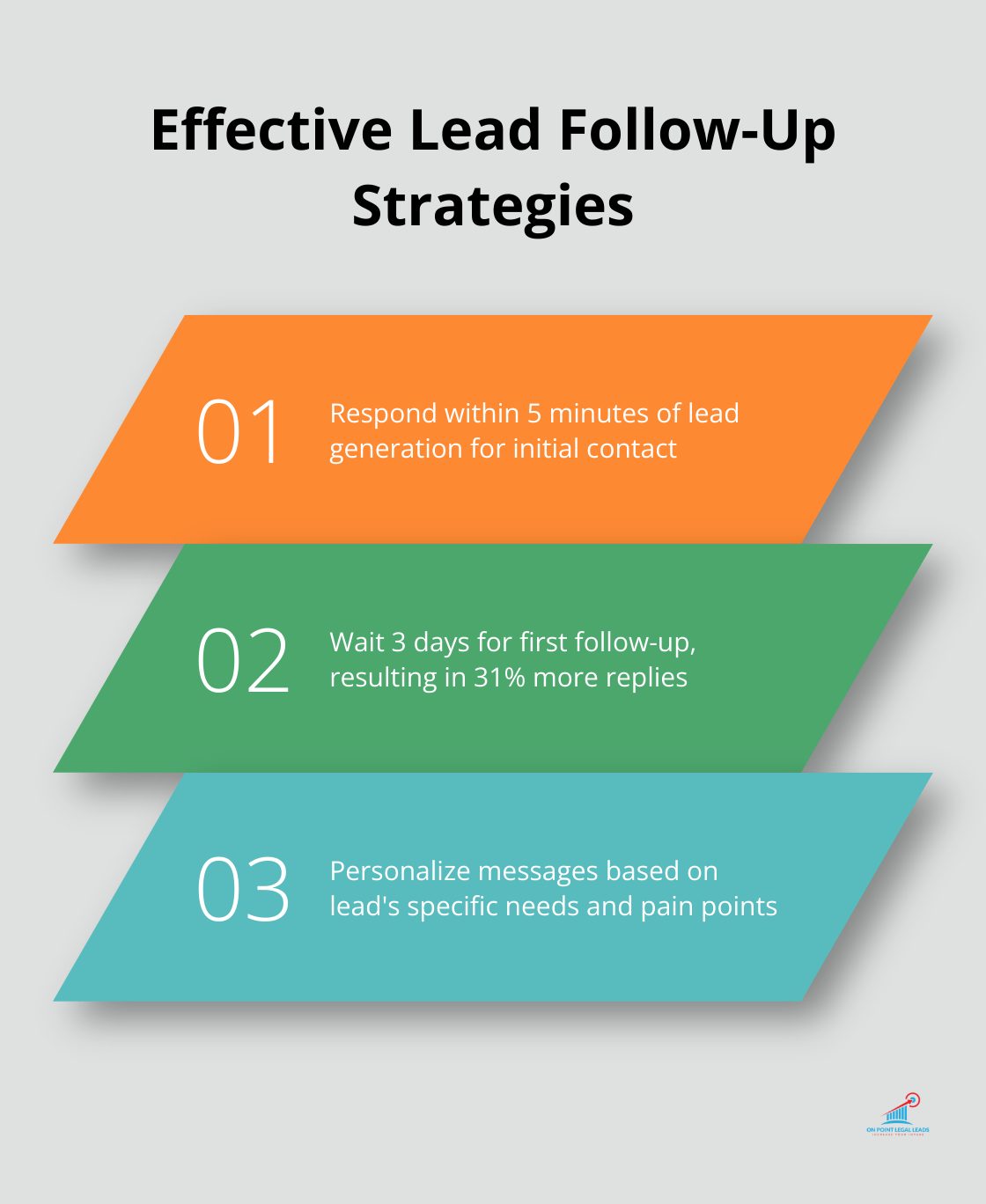
A clear timeline for your follow ups will maximize your contact and conversion rates. Research suggests that waiting three days results in a 31% increase in replies. We recommend this schedule:
Day 0: Initial contact (within 5 minutes of lead generation)Day 1: First follow up Day 3: Second follow up Day 7: Third follow up Day 14: Fourth follow up Day 30: Final follow\ up
Adjust this timeline based on your specific industry and lead behavior. Consistency and persistent follow up (without becoming overbearing) are key.
Implement a Lead Scoring System
Develop a scoring system that ranks leads based on their likelihood to convert. Consider these factors:
- Demographic fit
- Engagement level (website visits, email opens, etc.)
- Budget and decision-making authority
- Urgency of need
Assign point values to each factor and set thresholds for different follow up actions. For example, leads scoring above 80 points might warrant immediate personal outreach, while those below 50 receive automated nurturing emails.
Automate Your Initial Communication
Use automation tools to ensure prompt initial contact. Set up triggered emails or text messages that go out immediately when a lead comes in. These should:
- Acknowledge receipt of their inquiry
- Provide basic information about your services
- Set expectations for next steps
The goal is to strike while the iron is hot – studies show that on average, businesses take 47 hours to respond to leads.
Personalize Your Follow Up Messages
We have implemented lead follow up strategies that include a person’s first names. Because generic messages won’t cut it. Use the data you’ve collected to tailor your follow ups. This might include:
- Referencing specific pain points they’ve mentioned
- Providing case studies relevant to their industry
- Offering personalized solutions based on their needs
Research explores the effects of lead follow up strategies that include personalization in email marketing, especially the lead’s first name. And we’ve also seen success with telling the lead when he or she submitted their information. Take the time to craft messages that speak directly to each lead’s unique situation.
The next step in perfecting your lead follow up strategy involves leveraging technology to enhance your efforts. Let’s explore how cutting-edge tools can streamline your process and boost your results.
How Technology Enhances Your Lead Follow Up Strategies
CRM Systems: The Foundation of Lead Tracking
CRM systems form the cornerstone of effective lead follow up. These tools track every interaction, set reminders, and provide a comprehensive view of your leads. Vtiger offers advanced lead management capabilities, which allow you to keep all your contacts and deals organized, bringing inventory, marketing, and other business functions together.
Email Automation: Consistency in Communication
Email automation platforms (such as Mailchimp or ActiveCampaign) boost follow up consistency. These tools set up triggered email sequences based on specific lead actions or time intervals. You could create a series of five follow up emails sent over two weeks after initial contact. Each email provides valuable information, builds trust, and encourages conversion. Email marketing statistics for 2025 show the effectiveness of automation in boosting campaign success through improved ROI, engagement, and personalization.
AI Chatbots: Round-the-Clock Lead Engagement
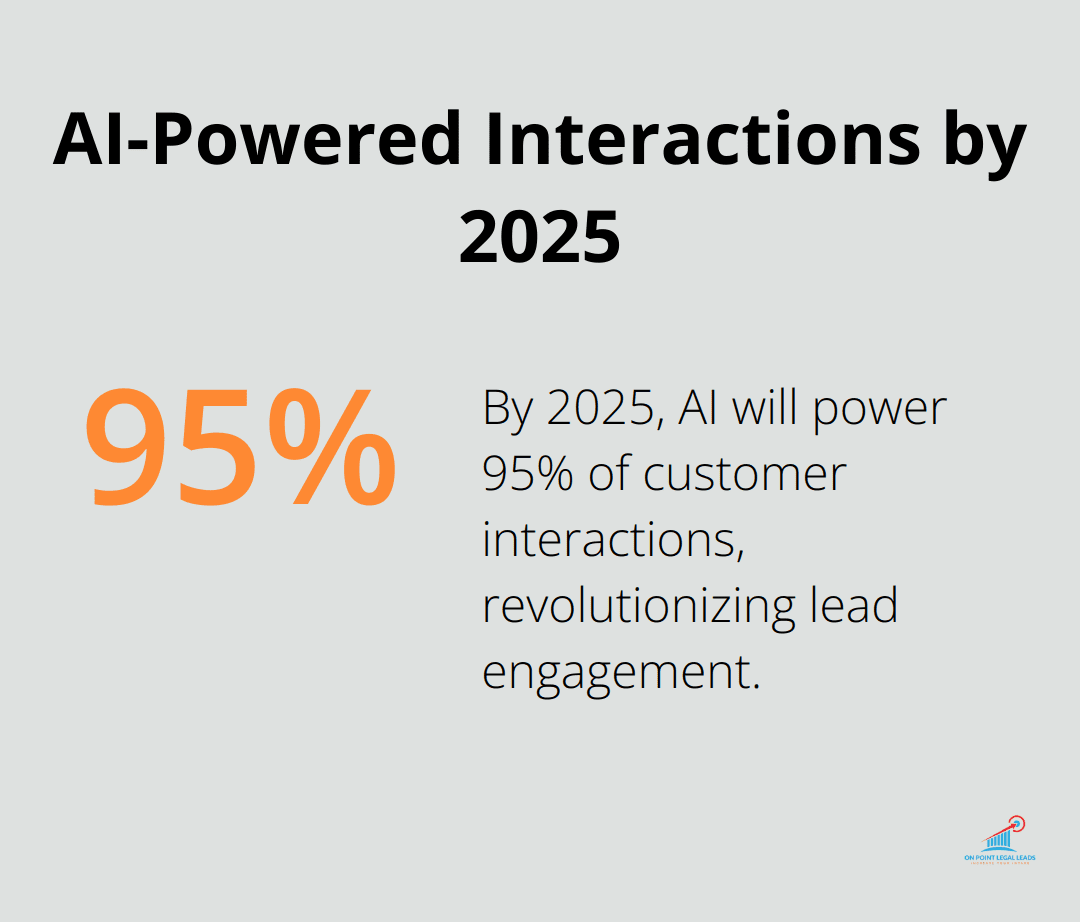
AI-powered chatbots revolutionize instant lead engagement. These digital assistants provide immediate responses to inquiries, qualify leads, and schedule appointments without human intervention. By 2025, AI will power 95% of interactions, boosting AI customer service for higher customer engagement with faster responses and tailored experiences.
Analytics Tools: Measure and Optimize Performance
To perfect your follow up strategies, you must measure its effectiveness. Google Analytics tracks how leads interact with your website after initial contact. Tools like Hotjar provide heatmaps and user recordings, showing exactly how leads engage with your content. At On Point Legal Leads, we use Microsoft Clarity to see firsthand how users view and submit information in our landing pages, which helps with determining pain points. We typically see the biggest pain point with providing their phone number. Additionally, call tracking software (such as CallRail) helps you understand which follow up methods drive phone conversations. This insight proves particularly valuable for law firms where phone consultations play a key role in the conversion process. We use Ringba for our call transfer software.
Integration: The Key to Technological Success
The power of these technologies multiplies when they work together. Your CRM should communicate with your email platform, which in turn should inform your analytics. This interconnected ecosystem ensures no lead falls through the cracks and every interaction optimizes for conversion. (On Point Legal Leads offers seamless integration with leading CRM and analytics tools, enhancing the effectiveness of your lead follow up strategy.)
Final Thoughts on Lead Follow Up Strageties
Lead follow up strategies transform business success. Speed and personalization increase conversion chances and demonstrate understanding of unique client needs. A structured process with lead scoring prevents missed opportunities, while automation maintains consistent communication without overwhelming your team or leads.
Technology modernizes lead follow up strategies. CRM systems, email automation, AI chatbots, and analytics tools create a seamless, data-driven follow up ecosystem. These technologies streamline processes and provide insights to refine your approach continuously.
On Point Legal Leads provides law firms with high-quality, exclusive leads screened for conversion potential. We help attorneys build a robust pipeline for practice growth (while maintaining ethical standards and TCPA compliance). Take action today to refine your lead follow up strategies and watch your business thrive.