


Motor vehicle accident cases are the lifeblood of personal injury practices, yet many firms struggle to source quality cases consistently. The difference between a thriving practice and one that’s constantly chasing leads often comes down to strategy.
At On Point Legal Leads, we’ve seen firsthand that firms with structured lead generation and qualification processes convert motor vehicle accident cases at significantly higher rates. This guide walks you through proven methods to build a sustainable pipeline.
Where Motor Vehicle Accident Cases Actually Come From
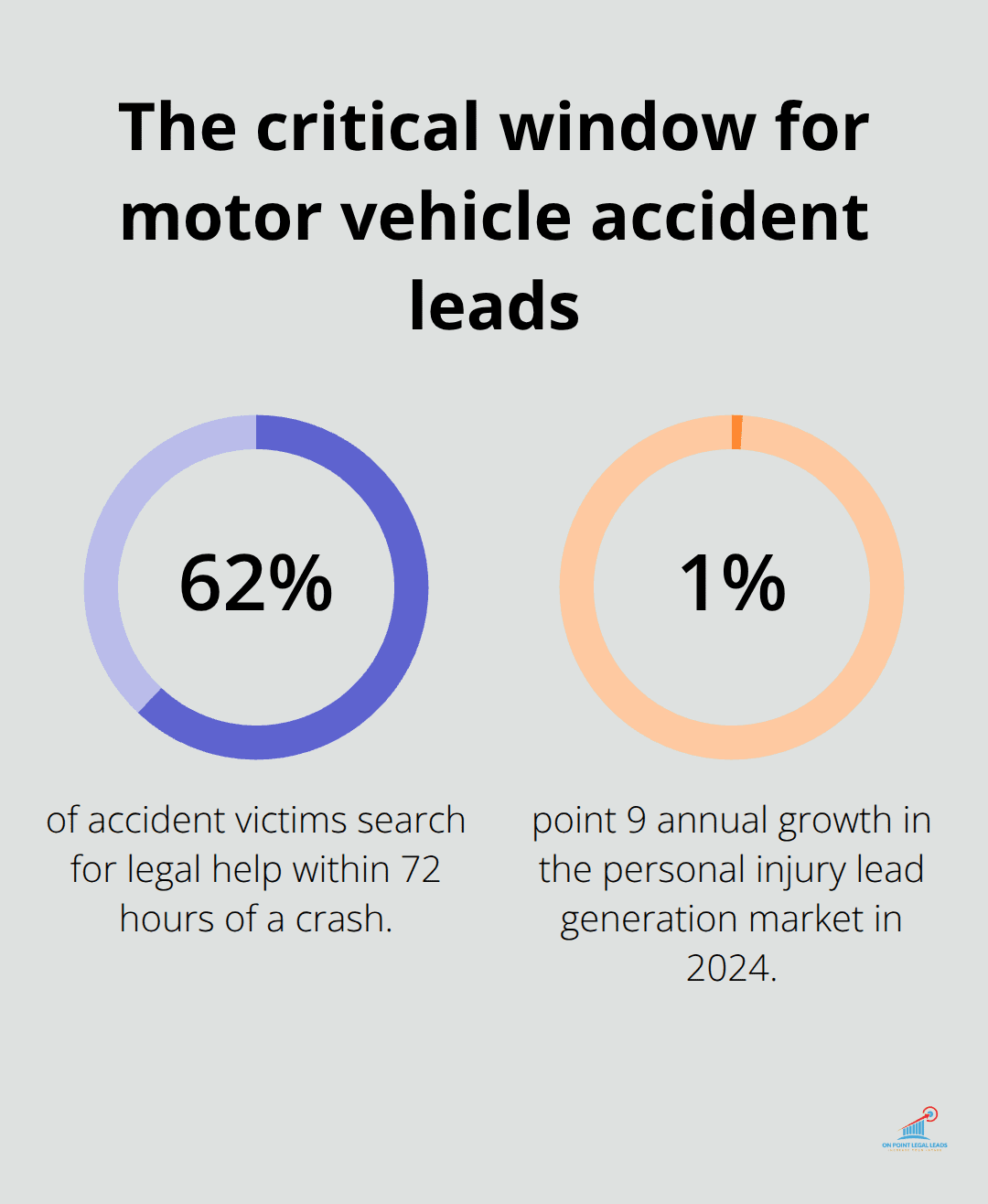
The market for motor vehicle accident cases is massive. 40,901 traffic fatalities occurred in 2023 according to NHTSA, and about 62% of accident victims search for legal help within 72 hours of a crash according to the U.S. Department of Transportation. This urgency creates a window where firms that respond fastest win cases. Your lead sources determine whether you’re capturing prospects during this critical window or competing for cold prospects weeks later.
Traditional Referral Networks Fall Short
Traditional referral networks-relationships with chiropractors, physical therapists, auto body shops, and medical providers-remain valuable but inconsistent. These channels depend on relationship maintenance and compliance with state bar referral rules, yet they rarely scale beyond a handful of cases monthly. Many firms rely on these partnerships out of habit rather than strategic choice, which means they’re leaving money on the table.
Digital Channels Deliver Speed and Scale for Motor Vehicle Accident Cases
Digital channels move faster and deliver volume for motor vehicle accident cases. PPC campaigns targeting keywords like car accident lawyer can place your firm at the top of search results within 24 hours, though costs exceed $200–$300 per click in competitive markets. SEO and organic content take 3–6 months to generate steady flow but cost significantly less per lead once established. The personal injury lead generation market reached $57.3 billion in 2024 with 1.9% annual growth, reflecting strong demand.
Exclusive Leads Eliminate Competition
The real competitive advantage comes from motor vehicle accident cases delivered with signed retainer agreements and accompanying police reports. And based upon our in-house experience, it starts with exclusive MVA leads.
Exclusive leads convert at 25%–40% higher rates than shared leads because prospects contact only your firm, eliminating competition. Lead costs range from $150–$500 for exclusive leads versus $50–$150 for shared leads. When a prospect searches for legal help immediately after a crash, they’re high-intent and ready to hire. Shared leads dilute your conversion rate because the same prospect receives multiple attorney calls simultaneously, reducing your odds. Exclusive, real-time delivery means you’re the only firm contacting that person at the moment they need help most.
Building a Multi-Channel Approach That Works
Firms that depend on a single lead source for motor vehicle accident cases face inconsistent case flow and vulnerability to market shifts. At On Point Legal Leads, we experienced that after the pandemic, as our lead source went to work for another company.
A diversified strategy combines immediate wins with long-term resilience. Start with exclusive leads and geo-targeted PPC for quick case acquisition within days, then layer in SEO and content marketing for sustained organic flow over months. Exclusive lead providers screen prospects for injury severity, liability clarity, and insurance coverage before delivery, reducing intake time and improving your consultation-to-retainer conversion. Pre-qualified leads arrive with critical details like accident type, injury classification, and current representation status, allowing your team to triage cases faster.
PPC requires ongoing optimization-track click-through rates, conversion rates, and cost per lead using Google Analytics and Google Ads, then adjust keywords and bids to improve ROI. SEO demands content that ranks for high-intent terms. Create state-specific guides covering what to do after a crash, how to file insurance claims, and liability assessment. These resources establish topical authority and capture prospects conducting 10.4 online searches before selecting representation. Referral networks still matter but require active cultivation. Build relationships with providers who understand your case criteria and offer compliant referral arrangements. Social media and retargeting ads re-engage visitors who didn’t contact you initially, extending your reach without high PPC costs.
The firms generating the most consistent motor vehicle accident cases use a combination: exclusive leads provide immediate cash flow and case volume, PPC captures high-intent searchers, SEO builds long-term organic authority, and referral networks supply warm introductions. This mix creates predictable pipeline flow that supports hiring plans and sustainable growth. Once you’ve identified your lead sources, the next challenge becomes screening those prospects to separate viable cases from time-wasters-a process that directly impacts your firm’s profitability and case acceptance rates.
How to Screen and Convert Motor Vehicle Accident Cases
The moment a prospect reaches out after a crash, your firm has minutes to determine whether the case warrants pursuit. Many firms waste intake capacity on prospects with minimal injuries, unclear liability, or no insurance coverage. Firms with systematic screening protocols convert 35–50% of qualified leads into signed motor vehicle accident cases, while those relying on instinct close barely 15–20%. The difference lies in asking the right questions early and ruthlessly disqualifying cases that drain resources without payoff.
Injury Severity Separates Viable Motor Vehicle Accident Cases from Time-Wasters
Injury severity determines case viability immediately. A prospect reporting minor whiplash with no medical treatment differs fundamentally from someone with documented fractures, hospitalization, or ongoing treatment. During intake, ask specifically about medical documentation, treatment type, and ongoing care. Prospects with emergency room records, imaging studies, or physical therapy represent stronger cases than those self-treating at home. Motor vehicle accident cases with documented injuries move faster through settlement and command higher valuations than those lacking medical evidence.
Insurance Coverage and Liability Indicators Drive Motor Vehicle Accident Case Value
Insurance coverage matters equally to injury severity. A prospect hit by an uninsured driver with minimal personal assets creates liability complications that lower case value substantially. Ask directly about the other driver’s insurance, your prospect’s coverage limits, and whether uninsured motorist protection exists. Liability indicators require precision too. Questions about traffic signals, dashcam footage, police reports, and witness statements separate clear-liability motor vehicle accident cases from he-said-she-said disputes that consume disproportionate trial preparation. Cases with police documentation showing the other driver at fault, multiple independent witnesses, or video evidence move faster through settlement and command higher valuations.
Intake Speed and Standardized Screening Maximize Conversions
Your intake process determines conversion speed. Respond within 5–10 minutes of initial contact-the longer you wait, the more likely the prospect contacts competing firms. Use a standardized intake form that captures accident date, injury type, medical provider, insurance details, and liability facts rather than unstructured notes that create confusion. Implement tiered lead scoring: hot leads (clear liability, significant injury, insured defendant) receive immediate attorney review and same-day consultation scheduling; warm leads (moderate injury, liability questions) go to follow-up sequences; cold leads (minor injury, unclear liability, uninsured defendant) either get declined or placed in nurture campaigns for future review.
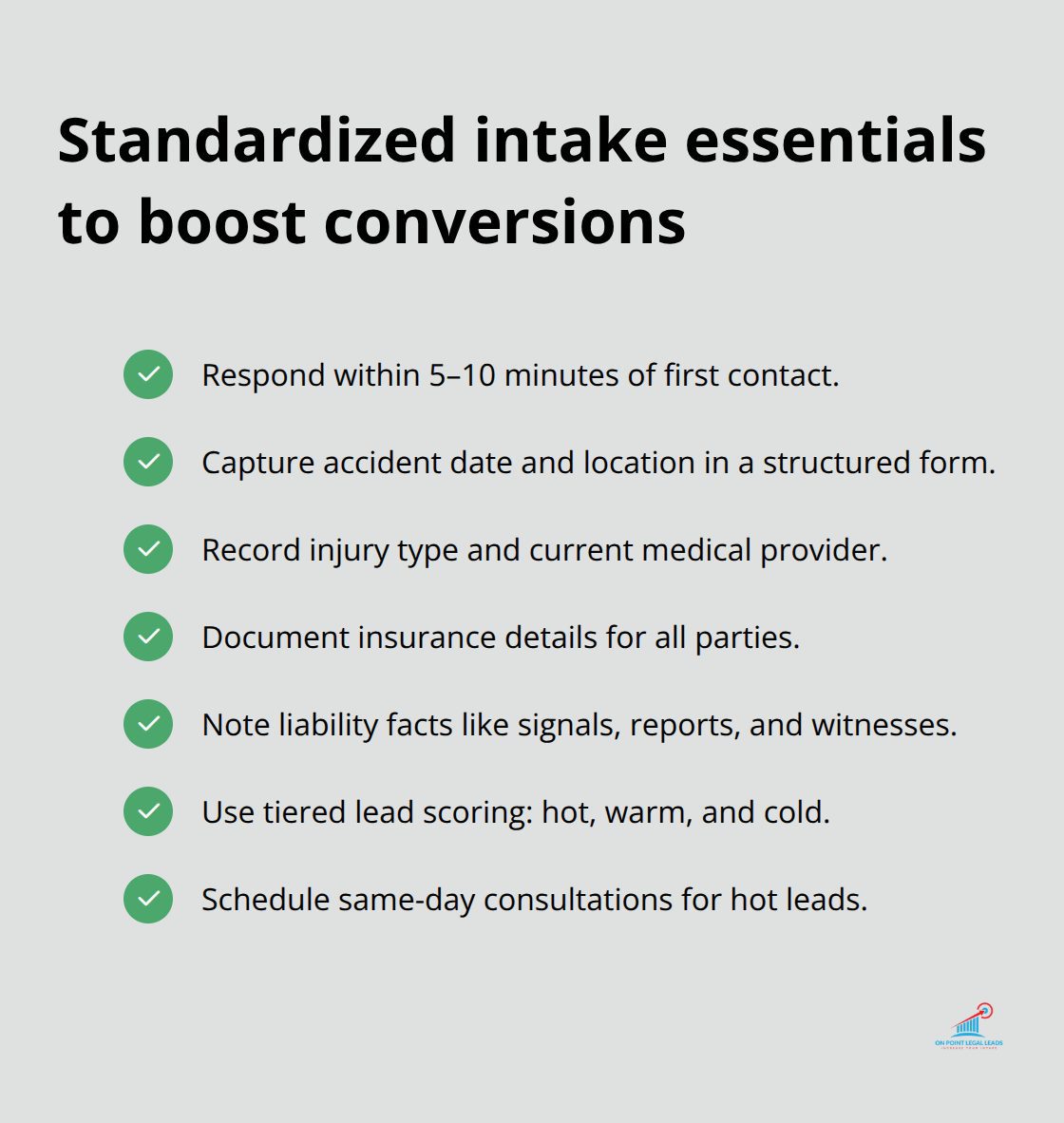
This approach prevents your team from treating a minor fender-bender with equal urgency as a catastrophic injury case.
Data-Driven Metrics Reveal Your Best MVA Lead Sources
Track conversion metrics relentlessly-measure how many leads convert to consultations, how many consultations convert to retainers, and which sources produce the highest-value cases. If shared leads convert at 8–12% but exclusive leads convert at 25–40%, reallocate your budget accordingly. Case value assessment requires understanding settlement ranges by injury type and jurisdiction. A soft-tissue injury in a low-cost state typically settles for $5,000–$15,000, while a fracture with surgery in an urban area commands $25,000–$75,000 or higher. When prospects ask about case value during intake, provide realistic ranges based on their specific injury profile rather than inflating expectations that damage your credibility later.
Documentation Creates Accountability and Optimization Opportunities
Document everything in your CRM system-accident details, injury specifics, insurance information, liability indicators, and screening decisions. This creates accountability, prevents duplicate intake work, and gives you data to optimize your lead sources over time. Firms that centralize lead data identify patterns: certain geographic areas produce higher-value cases, specific injury types convert faster, and particular lead sources yield better long-term clients. Once you’ve screened prospects and identified your strongest cases, the next step involves understanding how lead quality itself shapes your firm’s profitability and which lead models deliver the best return on your marketing investment.
The Role of Lead Quality in Motor Vehicle Accident Cases
Pre-Qualified Leads Eliminate Intake Friction
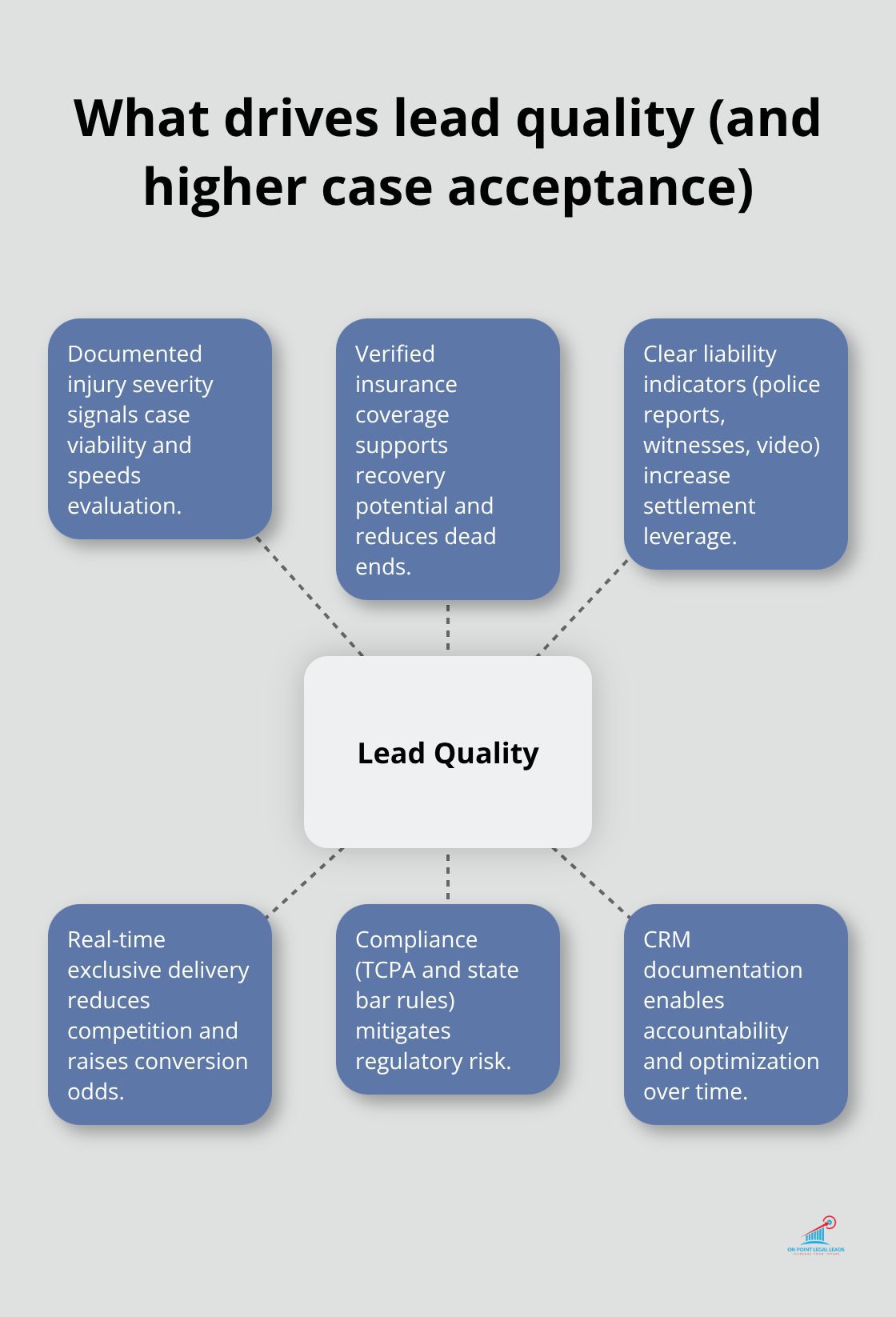
Pre-qualified leads transform your conversion model by removing the screening work that kills case closure rates with motor vehicle accident cases at most firms. When a prospect arrives with documented injury severity, verified insurance coverage, and clear liability indicators already screened, your team moves directly to consultation scheduling rather than spending 20 minutes gathering basic facts. Firms using pre-qualified leads close cases 40–60% faster than those relying on raw inbound calls because qualification happens before delivery, not after. We’ve seen the difference when we generate our internal motor vehicle accident cases.
The math shifts dramatically when you compare conversion models. If your intake process currently converts 25–30% of inbound prospects to retainers, pre-qualified leads skip the disqualification phase entirely and operate under a fundamentally different conversion structure. A prospect who reaches out after a crash and has already been vetted for injury severity, liability clarity, and insurance coverage represents a vastly different quality signal than someone calling your general number without any screening.
Exclusive MVA Leads Eliminate Competition During the Critical Window
The distinction between exclusive MVA leads and shared leads determines whether your conversion advantage persists or evaporates the moment prospects contact you. Exclusive leads convert at 25–40% higher rates than shared MVA leads because the prospect contacts only your firm during the critical window after a crash when hiring intent peaks. Shared leads create a race: the prospect receives calls from three to five competing attorneys simultaneously, and whoever answers first and schedules fastest wins.
This dynamic destroys your pricing power, shortens your consultation window, and forces aggressive closing tactics that damage long-term client relationships. Your firm invests identical intake resources per lead but faces 4–5x the competition for the same prospect’s attention. Exclusive leads eliminate this competition entirely, allowing your team to conduct thorough consultations, answer questions comprehensively, and build trust without rushing through a sales pitch. The cost difference reflects this reality: exclusive leads run $150–$500 each while shared leads cost $50–$150, but the higher per-lead cost vanishes when conversion rates improve by 300–400%.
Compliance Protects Your Firm From Regulatory Risk
Compliance considerations require careful attention throughout your lead generation operations. The Telephone Consumer Protection Act prohibits calling prospects without prior express consent, and every lead source must verify that prospects have opted in to legal marketing communications. Lead providers maintain strict TCPA compliance, ensuring your firm avoids costly FTC violations and regulatory scrutiny.
State bar rules governing referral arrangements, fee-sharing agreements, and advertising claims create additional compliance obligations that vary by jurisdiction. Verify that your lead provider screens prospects with documented consent mechanisms, maintains records demonstrating regulatory compliance, and delivers leads that meet your state’s specific ethics requirements rather than operating under a lowest-common-denominator compliance standard that exposes your firm to state bar complaints. Quality lead providers maintain strict compliance with TCPA regulations and legal advertising ethics rules, prioritizing transparency and consent to protect your firm from compliance risks while maintaining the highest professional standards.
We use TrustedForms by ActiveProspect as proof that the motor vehicle accident cases we sign came from an MVA lead that digitally records the user’s session. And that prevents issues with TCPA regulations by demonstrating the user provided consent and knowledge our legal intake center may legally reach out to that prospect.
Final Thoughts on Motor Vehicle Accident Cases
Motor vehicle accident cases require a systematic approach that combines speed, quality screening, and the right lead sources. Firms that win cases consistently build diversified pipelines that capture prospects during the critical window when hiring intent peaks. The data proves this: exclusive leads convert at 300–400% higher rates than shared alternatives, PPC delivers results within 24–48 hours, and SEO builds long-term authority that sustains case flow for years.
Your sustainable lead generation strategy starts with identifying which channels align with your firm’s capacity and case acceptance criteria. If you need immediate case volume, exclusive motor vehicle accident leads paired with geo-targeted PPC create fast results. If you’re building for long-term growth, layer in SEO and content marketing that establish topical authority and capture prospects conducting multiple searches before selecting representation.
Scalability requires infrastructure that most firms lack initially: implement a centralized CRM system that tracks lead source, conversion metrics, and case outcomes, then measure conversion rates ruthlessly to reallocate your budget toward the highest-performing channels. We at On Point Legal Leads specialize in delivering pre-qualified exclusive motor vehicle accident leads that skip the disqualification phase and connect your team directly with prospects ready to retain counsel. Contact On Point Legal Leads to discuss how exclusive leads can accelerate your case acquisition and support sustainable growth.